Thermal Cracking vs Catalytic Cracking: Key Differences Explained
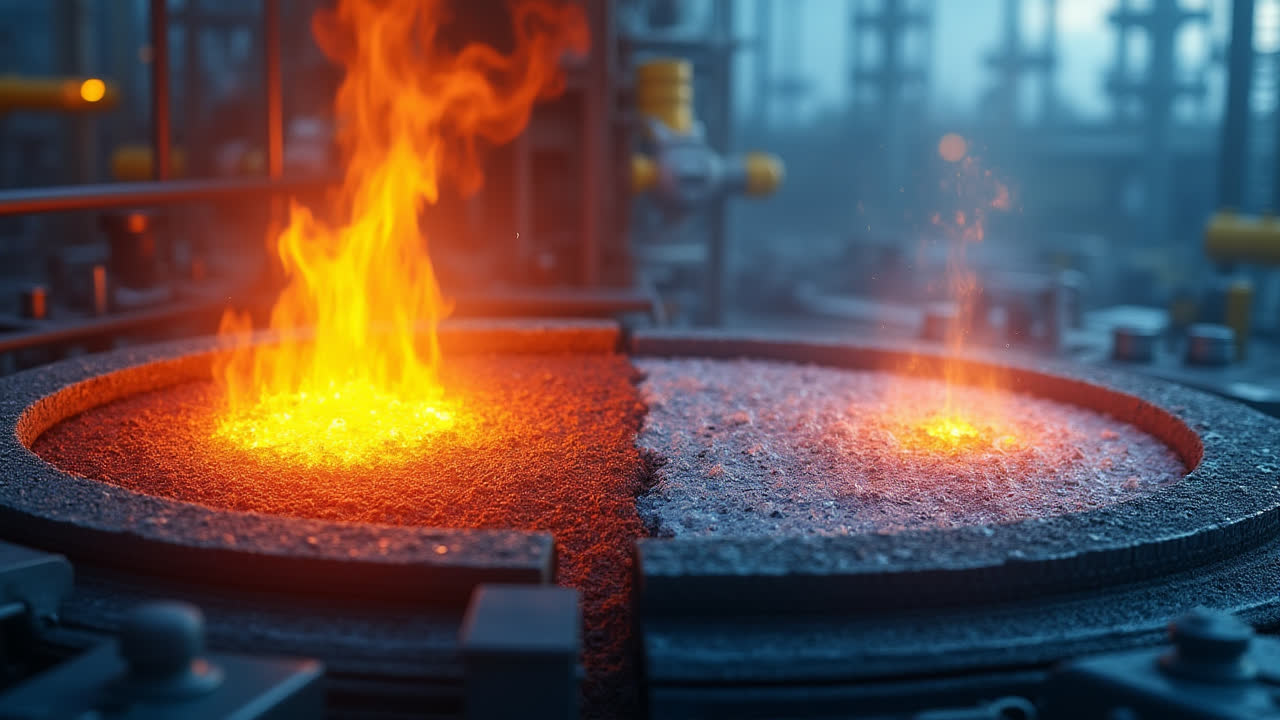
In the complex world of petroleum refining, thermal cracking and catalytic cracking stand as two fundamental processes that transform crude oil into valuable products we use every day. These processes might sound similar, but they operate on distinctly different principles and yield varied results. Having worked alongside refinery engineers for years, I've seen firsthand how these processes make modern fuel production possible.
The petroleum industry relies heavily on various cracking methods to break down large, complex hydrocarbon molecules into smaller, more useful ones. Without these processes, we wouldn't have the gasoline powering our cars or many of the petrochemical products we take for granted. But what exactly makes these two cracking methods different, and why would refineries choose one over the other?
The main distinction between these processes is quite straightforward: thermal cracking utilizes intense heat and pressure to break molecular bonds, while catalytic cracking employs special catalysts to achieve similar results at milder conditions. This fundamental difference leads to variations in efficiency, product quality, and application—differences that influence billion-dollar decisions in the oil industry.
Understanding the Basics of Cracking in Petroleum Refining
Before diving into the differences, let's understand what cracking actually means. In simple terms, cracking is the process of breaking down large hydrocarbon molecules into smaller ones. When crude oil comes out of the ground, it contains a complex mixture of hydrocarbons with varying molecular weights and chain lengths. Not all of these naturally occurring compounds are immediately useful—many are too large for commercial applications.
That's where cracking comes in. Through different cracking methods, refineries can convert these larger molecules into smaller, more valuable products like gasoline, diesel fuel, and chemical feedstocks. I remember visiting a refinery in Texas where the operators referred to cracking units as "molecule choppers"—a simplistic but effective way to visualize what happens inside these massive processing units.
Cracking became essential in the early 20th century when the demand for gasoline began outstripping the amount naturally present in crude oil. Without methods to "create" more gasoline from heavier petroleum fractions, our modern transportation system simply wouldn't exist as we know it today. The development of various cracking technologies represents one of the most significant innovations in industrial chemistry, transforming how we utilize this natural resource.
Thermal Cracking: Breaking Bonds with Heat and Pressure
Thermal cracking represents one of the earlier approaches to breaking down hydrocarbons. As the name suggests, this process primarily uses heat—and lots of it—to tear apart chemical bonds. During my first refinery tour years ago, the intense heat radiating from the thermal cracking unit made a lasting impression on me. At temperatures between 500-700°C and pressures around 70 atmospheres, the process literally forces molecules apart through thermal energy.
When large hydrocarbon molecules are subjected to these extreme conditions, the carbon-carbon and carbon-hydrogen bonds begin to rupture. This bond-breaking is highly endothermic, meaning it requires substantial energy input. The process results in smaller alkanes and alkenes, with the occasional formation of alkynes—all valuable products in the petrochemical industry.
Modern refineries typically employ thermal cracking for three main applications: visbreaking (reducing the viscosity of heavy residual oils), thermal gasoline production, and delayed coking. Each variant serves different purposes in the refining process. For instance, delayed coking focuses on maximizing the production of lighter products while handling the heaviest fractions of crude oil. During a conversation with a process engineer at a Gulf Coast refinery, he described thermal cracking units as "the workhorses that handle the toughest jobs" when dealing with heavy feedstocks.
Catalytic Cracking: The Chemical Assistant Approach
While thermal cracking relies on brute force, catalytic cracking takes a more sophisticated approach. This process utilizes special materials called catalysts—substances that facilitate chemical reactions without being consumed themselves. The introduction of catalytic cracking revolutionized the petroleum industry by offering a more efficient alternative to purely thermal methods.
In catalytic cracking, acid catalysts like zeolites (complex aluminosilicates) provide active sites where hydrocarbon molecules can break down more easily. These catalysts effectively lower the activation energy required for the cracking reaction, allowing the process to occur at more moderate temperatures (typically 450-530°C) and pressures (around 20 atmospheres). The first time I saw a fluid catalytic cracker (FCC) in operation, I was struck by how different it looked from thermal units—taller, with complex cyclone systems to recover the catalyst.
Two main variations of catalytic cracking exist in modern refineries: liquid phase and vapor phase cracking. Liquid phase cracking typically operates at around 500°C and 20 atmospheres using silica-based catalysts, resulting in products with octane numbers between 65-70. Vapor phase cracking runs at slightly higher temperatures (around 600°C) but lower pressures (10 atmospheres) with alumina catalysts, often in the presence of hydrogen (hence sometimes called hydrocracking).
One refinery manager I worked with described catalytic cracking as "precision cutting rather than brute-force breaking." This analogy captures the essence of how catalysts provide a more controlled environment for the cracking process, often resulting in more desirable product distributions with higher-value components.
Key Differences Between Thermal and Catalytic Cracking
| Characteristic | Thermal Cracking | Catalytic Cracking |
|---|---|---|
| Primary Mechanism | Uses intense heat to break bonds | Uses catalysts to facilitate bond breakage |
| Operating Temperature | 500-700°C (higher) | 450-530°C (lower) |
| Operating Pressure | Approximately 70 atmospheres (higher) | 10-20 atmospheres (lower) |
| Energy Requirements | Highly energy-intensive | More energy-efficient |
| Product Quality | More varied products, higher olefin content | More controlled product distribution, better gasoline quality |
| Octane Number of Products | Generally lower | Higher (65-70+) |
| Main Applications | Visbreaking, delayed coking, thermal gasoline | Production of high-octane gasoline components |
| Process Complexity | Simpler equipment design | More complex with catalyst handling systems |
Practical Applications and Industry Usage
Despite being older technology, thermal cracking hasn't disappeared from modern refineries. Each cracking method has found its niche in today's sophisticated refining operations. In my tours of various refineries across the country, I've noticed how facilities strategically employ both processes based on their specific needs and feedstock characteristics.
Thermal cracking continues to excel at processing the heaviest, most difficult fractions of crude oil. The delayed coking process—a thermal cracking variant—remains the primary method for dealing with the residual "bottom of the barrel" components that other processes struggle to handle. During a particularly memorable refinery visit in Louisiana, I watched as the thick, almost solid "coke" product was hydraulically cut from enormous drums—a dramatic demonstration of how thermal cracking handles the heaviest hydrocarbons.
Catalytic cracking, meanwhile, dominates in the production of gasoline and lighter products. The fluid catalytic cracking (FCC) unit has become the centerpiece of many refineries focused on maximizing gasoline output. The ability of catalytic processes to produce higher-octane components gives them a significant advantage in producing modern motor fuels. Additionally, catalytic processes typically offer better selectivity, meaning they can more precisely target the production of desired products while minimizing unwanted byproducts.
Many refineries employ a strategic combination of both technologies. As one veteran process engineer explained to me, "We use thermal processes to break down what catalysts can't handle, and catalytic processes to refine what thermal cracking produces." This complementary approach allows refineries to maximize efficiency and extract the most value from each barrel of crude oil.
The Future of Cracking Technologies
The petroleum refining industry continues to evolve, with ongoing innovations in both thermal and catalytic cracking technologies. Environmental regulations, changing fuel demands, and sustainability concerns are driving significant changes in how these processes operate. Having attended several industry conferences recently, I've noticed a clear trend toward reducing emissions and energy consumption in cracking operations.
Catalytic cracking technologies have seen remarkable advancements in catalyst design. Modern zeolite catalysts can be engineered with precise pore sizes and acidity levels to target specific reactions and product distributions. This level of molecular engineering was unimaginable when catalytic cracking was first introduced. Some of the newest catalysts I've seen demonstrated can significantly increase propylene yield—a valuable petrochemical feedstock—while maintaining gasoline production.
Even thermal cracking hasn't remained static. Innovations in materials and heat integration have improved energy efficiency, while advanced computer modeling helps optimize operating conditions. Some refineries are exploring hybrid approaches that combine elements of both thermal and catalytic processes to address specific challenges or feedstock characteristics.
Perhaps most interestingly, both technologies are being adapted for processing alternative feedstocks beyond conventional petroleum. During a recent industry symposium, I listened to presentations on using cracking technologies to process renewably-sourced oils and even plastic waste—potentially giving these mature technologies new roles in a more sustainable future.
Conclusion: Choosing the Right Cracking Method
The choice between thermal and catalytic cracking ultimately depends on numerous factors including available feedstock, desired products, existing infrastructure, and economic considerations. Most modern, complex refineries incorporate both technologies as part of an integrated processing strategy that maximizes efficiency and flexibility.
Through my years of experience in the industry, I've come to appreciate how these seemingly straightforward processes represent remarkable achievements in chemical engineering. The ability to precisely break specific molecular bonds under controlled conditions at industrial scales has transformed how we utilize one of our most important natural resources.
While the future may bring increased focus on alternative energy sources, petroleum refining—and the cracking processes at its heart—will remain essential for decades to come. Not just for transportation fuels, but for the countless petrochemical products that form the building blocks of modern life. Understanding the differences between thermal and catalytic cracking provides valuable insight into how refineries operate and adapt to changing market demands and environmental requirements.
Frequently Asked Questions
Which cracking process is more energy-efficient?
Catalytic cracking is generally more energy-efficient than thermal cracking. By using catalysts, the process can operate at lower temperatures (450-530°C vs. 500-700°C) and pressures (10-20 atm vs. 70 atm). The catalysts effectively lower the activation energy required for the cracking reactions, reducing the overall energy input needed. This efficiency difference can significantly impact operating costs for refineries, especially those processing large volumes. However, catalyst costs and replacement must be factored into the total economic equation when comparing the processes.
Can thermal and catalytic cracking be used together in the same refinery?
Yes, modern refineries frequently use both thermal and catalytic cracking processes in complementary ways. Thermal cracking methods like delayed coking are often used to process the heaviest fractions that catalytic processes struggle with, while catalytic cracking units handle intermediate fractions to produce high-quality gasoline components. This integrated approach allows refineries to maximize the value extracted from each barrel of crude oil. Many refineries have evolved to incorporate both technologies as part of their overall processing strategy, with products from one process sometimes becoming feedstock for another.
What types of catalysts are used in modern catalytic cracking?
Modern catalytic cracking primarily uses zeolite-based catalysts, which are complex aluminosilicate materials with precise pore structures. These zeolites, such as Y-zeolite and ZSM-5, provide specific active sites where hydrocarbon molecules can interact and break down in controlled ways. The catalysts are typically formulated with additional components like rare earth metals to enhance performance and stability. Catalyst technology continues to advance, with newer formulations designed to maximize specific product yields (like propylene) or process challenging feedstocks. These engineered materials represent one of the most sophisticated applications of materials science in the refining industry.
References:
- https://chemeng-processing.blogspot.com/2009/01/thermal-cracking.html
- http://chemistry.tutorvista.com/organic-chemistry/cracking.html
- http://www.chemguide.co.uk/organicprops/alkanes/cracking.html
- https://en.wikipedia.org/w/index.php?curid=35462168
- http://www.secinfo.com/dsvrp.uEe6.d.htm#1stPage
- https://commons.wikimedia.org/w/index.php?curid=32653449