TCTA vs ATPE: Key Differences Between These Cellular Proteins
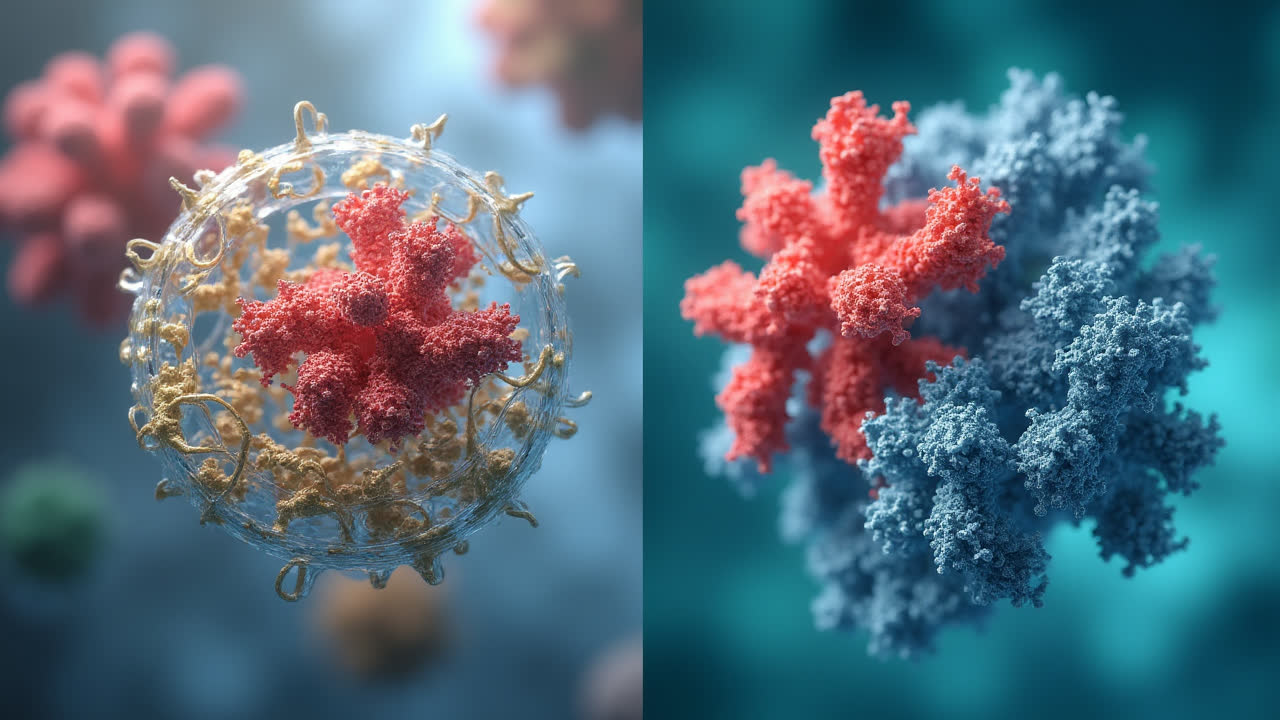
TCTA vs ATPE: Key Differences Between These Cellular Proteins
Have you ever wondered what makes our cells tick? Well, today we're diving into the fascinating world of cellular proteins, specifically looking at TCTA and ATPE. These two might sound like alphabet soup, but they're actually crucial players in our biological machinery. I'll break down their differences in a way that won't make your head spin - promise!
Let's start with the basics. Both TCTA and ATPE are proteins that hang out on various membranes in our cells, but that's pretty much where their similarities end. Trust me, once you understand what these proteins do, you'll never look at your cells the same way again. It's like discovering there's a whole secret society operating inside your body - which, in a way, there is!
Before we dive deeper, here's something that might surprise you: one of these proteins is exclusive to humans, while the other is found across the tree of life. Intrigued? Let's unpack this cellular mystery together!
What Exactly is TCTA?
Let me introduce you to TCTA, which stands for T-cell leukemia translocation-altered gene protein. Yeah, I know, scientists aren't great at naming things catchily! This protein is uniquely human - you won't find it in your pet goldfish or even your closest primate relatives. It's like humanity's cellular signature.
TCTA lives on our cell membranes, where it acts like a bouncer at an exclusive club. But instead of keeping rowdy partygoers out, it regulates something called osteoclast differentiation. In plain English? It helps control how our bones break down and rebuild themselves. Pretty important stuff!
Here's where it gets interesting: TCTA is what we call a "multi-pass membrane protein." Imagine it as a thread that weaves in and out of the cell membrane five times, creating different domains. Some parts stick out into the world outside the cell, while others dangle inside. It's like having multiple antennae for different cellular signals!
And get this - while TCTA is found throughout our bodies, it absolutely loves hanging out in our kidneys. Scientists have also spotted it in immune cells like monocytes and macrophages. Unfortunately, when TCTA goes rogue, it can contribute to certain types of leukemia. Sometimes our cellular friends can turn into foes!
Understanding ATPE: The Universal Energy Helper
Now let's meet ATPE, or ATP synthase CF1 epsilon. Unlike its human-exclusive cousin TCTA, ATPE is the social butterfly of the protein world - you'll find it in everything from bacteria to humans. It's part of an incredible molecular machine called ATP synthase, which is basically the power plant of our cells.
Think of ATP synthase as a tiny turbine that generates the cellular fuel called ATP. And ATPE? It's one of the essential components that makes this turbine spin. Without it, our cells would be like cars without engines - pretty useless!
ATPE hangs out in different spots depending on the organism. In our cells, it's found in mitochondria (our cellular power plants). In plants, it resides in chloroplasts where photosynthesis happens. And in bacteria? It sits right on their cell membrane. Talk about adaptable!
What makes ATPE special is its role as part of the catalytic subunit. Along with its protein buddies (called γ and δ), it forms a rotational motor mechanism. Yes, you read that right - we have actual rotating motors inside our cells! Sometimes truth really is stranger than fiction.
Location, Location, Location: Where These Proteins Call Home
When it comes to real estate, location matters - and the same goes for proteins! TCTA is firmly planted on human cell membranes, particularly loving those kidney cells. It's like that friend who never wants to leave their hometown.
ATPE, on the other hand, is the world traveler of proteins. In animal cells like ours, it resides in the inner mitochondrial membrane. But in plants? It's chilling in chloroplasts. And in bacteria, it's right there on the cell surface. This protein clearly doesn't believe in staying in one place!
The different locations reflect their different jobs. TCTA, being on the cell surface, can interact directly with the outside environment. It's like a cellular diplomat, managing relationships with neighboring cells. ATPE, tucked away in energy-producing organelles, focuses on keeping the lights on inside the cell.
What's fascinating is how these locations evolved. ATPE's presence across different life forms suggests it's an ancient protein that's been conserved throughout evolution. TCTA, being human-specific, is more like a recent evolutionary innovation - nature's latest experiment, if you will.
Functional Differences: What Do These Proteins Actually Do?
Here's where things get really interesting! TCTA acts as a regulatory protein, specifically inhibiting osteoclastogenesis. In simpler terms, it helps prevent our bones from being broken down too quickly. Think of it as the brake pedal in our skeletal system's remodeling process.
ATPE plays a completely different game. It's all about energy production! As part of ATP synthase, it helps convert ADP into ATP - the universal energy currency of life. Without this process, we'd have no energy for... well, anything! No thinking, no moving, no living.
The contrast is striking: TCTA is like a specialized manager overseeing bone health, while ATPE is more like a factory worker on the cellular assembly line. Both are essential, but they operate in completely different departments of the cellular corporation.
What I find particularly cool is how these functions reflect their evolutionary histories. ATPE's role in basic energy production explains why it's found everywhere - all life needs energy! TCTA's specialized function in bone regulation shows how evolution can create new proteins for specific needs as organisms become more complex.
Structural Characteristics: Built Different
Let's talk architecture! TCTA is what scientists call a multi-pass transmembrane protein. Picture it as a snake weaving through a fence - it crosses the cell membrane five times, creating distinct regions both inside and outside the cell. This structure allows it to act as a sophisticated sensor and regulator.
ATPE has a simpler design. It's primarily hydrophilic (water-loving) and sits in the intermembrane space. Rather than threading through membranes, it's more like a specialized tool that fits perfectly into the ATP synthase complex. Form follows function, as they say!
The structural differences aren't just academic curiosities - they directly relate to function. TCTA's complex membrane-spanning structure allows it to detect and respond to signals from both inside and outside the cell. It's like having ears on both sides of a wall!
Meanwhile, ATPE's simpler structure is perfect for its role in the rotating motor of ATP synthase. It doesn't need to span membranes because its job is to be part of a spinning molecular machine. Sometimes, simpler really is better!
| Feature | TCTA | ATPE |
|---|---|---|
| Full Name | T-cell leukemia translocation-altered gene protein | ATP synthase CF1 epsilon |
| Organism | Humans only | Eukaryotes and prokaryotes |
| Location | Cell membrane | Mitochondria, chloroplasts, cell membrane |
| Structure | Multi-pass transmembrane protein | Hydrophilic protein |
| Function | Inhibits osteoclastogenesis | Part of ATP synthase catalytic subunit |
| Expression | Highest in kidney | Universal in cells with ATP synthase |
| Medical Relevance | Associated with T-cell leukemia | Essential for cellular energy production |
| Evolutionary History | Recent, human-specific | Ancient, highly conserved |
Frequently Asked Questions
What is the main difference between TCTA and ATPE proteins?
The main difference is that TCTA is a human-specific protein that regulates bone cell development, while ATPE is a universal protein found across many organisms that helps produce cellular energy as part of ATP synthase. TCTA works on cell membranes to inhibit osteoclastogenesis, whereas ATPE functions in energy-producing organelles like mitochondria.
Why is ATPE found in more organisms than TCTA?
ATPE is found in more organisms because it's part of ATP synthase, which is essential for energy production in all living cells. This fundamental role in cellular metabolism has been conserved throughout evolution. TCTA, on the other hand, evolved specifically in humans to regulate bone metabolism, making it a more recent and specialized protein.
Can problems with TCTA or ATPE cause diseases?
Yes, problems with both proteins can lead to health issues. TCTA gene aberrations are associated with T-cell acute lymphoblastic leukemia (T-ALL). Issues with ATPE or other ATP synthase components can cause mitochondrial disorders, leading to energy deficiency symptoms affecting muscles, nerves, and other high-energy-demand tissues.
The Bottom Line: Two Proteins, Two Different Worlds
So there you have it - TCTA and ATPE might both be proteins that work with membranes, but that's where their similarities end. It's like comparing a specialized surgeon to a power plant engineer - both crucial, but operating in completely different realms!
TCTA is our uniquely human protein, keeping our bones in check and occasionally causing trouble when it malfunctions. ATPE is the universal energy worker, found everywhere life exists, quietly keeping the cellular lights on. One's a specialist, the other's a generalist - and both remind us how incredibly complex and beautiful our cellular machinery really is.
Next time someone mentions proteins, you can casually drop some knowledge about these cellular superstars. Who knows? Maybe you'll inspire someone else to dive into the fascinating world of molecular biology. After all, understanding these tiny workers helps us appreciate the miracle that is life itself!