Processor vs Coprocessor: Understanding the Key Differences
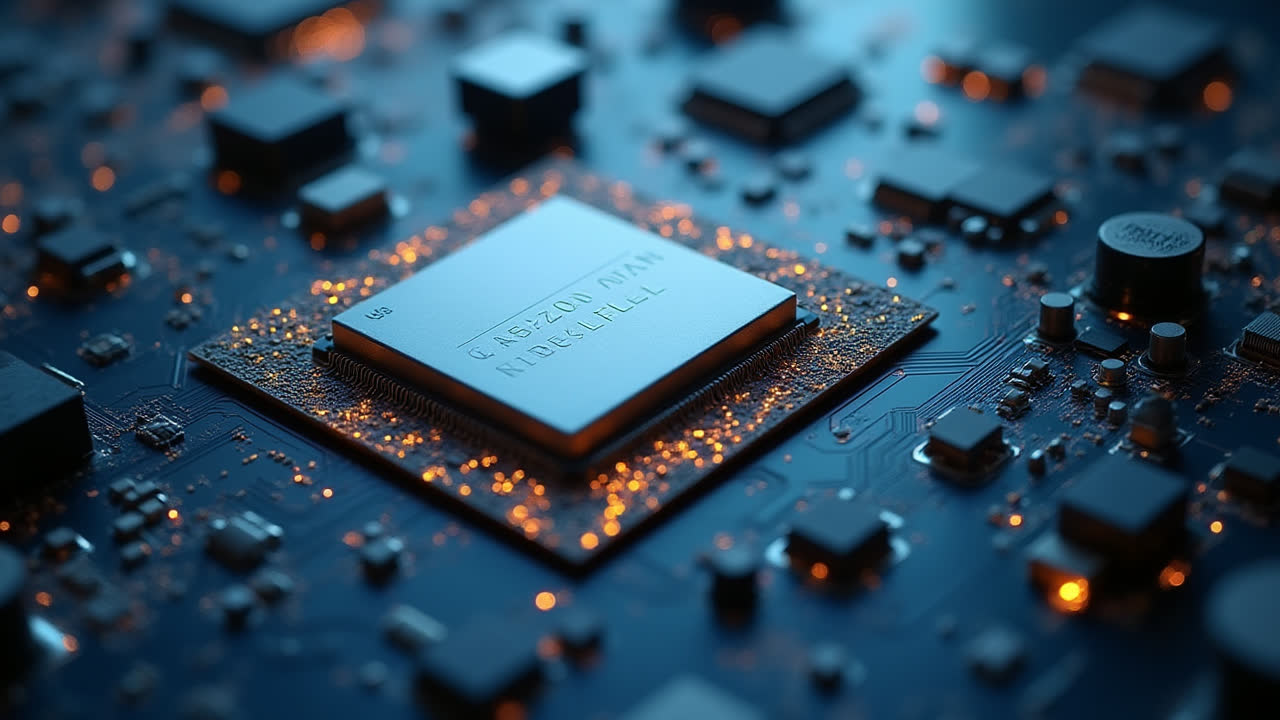
When exploring the internal components of a computer, you'll inevitably encounter the terms processor and coprocessor. While they may sound similar, these two components serve distinctly different purposes in your computing system. The primary distinction between them lies in their roles and functions—a processor handles the main computing tasks while a coprocessor provides specialized support for specific operations.
Have you ever wondered why your computer can handle both general computing tasks and specialized operations like 3D rendering or cryptography? The answer lies in understanding how processors and coprocessors work together. In today's increasingly complex computing landscape, knowing the difference between these components can help you better understand your system's performance capabilities.
I've spent years working with computer hardware, and I've noticed that many people tend to overlook the importance of coprocessors in modern computing. Yet these specialized units have revolutionized how our computers handle resource-intensive tasks. Let's dive deeper into what makes each of these components unique and how they complement each other within your computing system.
What is a Processor?
A processor, commonly known as the Central Processing Unit (CPU), serves as the brain of your computer. It's the primary component responsible for executing instructions from computer programs through basic arithmetic, logical, and input/output operations. When you click an application icon or type a sentence, the processor interprets these actions and carries out the necessary operations to complete your request.
The modern processor typically consists of two fundamental units: the Arithmetic Logic Unit (ALU) and the Control Unit (CU). The ALU handles mathematical calculations and logical operations, while the CU generates and sends timing and control signals to other components to synchronize tasks. Together, these units enable the processor to fetch, decode, and execute instructions in a continuous cycle known as the fetch-decode-execute cycle.
Most processors today contain multiple cores, essentially acting as several processors in one physical package. This multi-core architecture allows your computer to handle multiple tasks simultaneously through parallel processing. For instance, you might be editing a document while streaming music and running a virus scan in the background—each core handling different operations simultaneously.
The performance of a processor is typically measured by its clock speed (measured in GHz), number of cores, cache size, and architecture design. Higher clock speeds generally indicate faster processing of individual tasks, while more cores enable better multitasking capabilities. I remember upgrading from a dual-core to a quad-core processor years ago and being amazed at how much smoother everything ran, especially when running multiple applications simultaneously.
What is a Coprocessor?
A coprocessor is a specialized processing unit designed to supplement the functionality of the main processor. Unlike the general-purpose nature of the CPU, coprocessors are engineered to excel at specific types of computations. They effectively offload these specialized tasks from the main processor, allowing the CPU to focus on general computing operations while the coprocessor handles its specialty.
Coprocessors come in various forms, each designed for specific functions. Perhaps the most familiar example is the Graphics Processing Unit (GPU), which handles the rendering of images, videos, and animations. GPUs contain hundreds or thousands of smaller cores optimized for performing the same operation on multiple data points simultaneously—perfect for handling the parallel processing demands of graphics rendering.
Another common type is the math coprocessor (also called a Floating-Point Unit or FPU), which specializes in handling complex mathematical operations such as logarithms, trigonometric functions, and floating-point calculations. In the early days of computing, these were often separate chips, but modern CPUs typically integrate FPU functionality directly into their architecture.
Network processors represent another category of coprocessors, optimized for processing network packets in high-end systems. These specialized units can handle a large volume of incoming and outgoing network traffic, essential for servers and networking equipment. Similarly, cryptographic processors focus exclusively on encryption and decryption operations, providing enhanced security for sensitive data transactions.
The beauty of coprocessors lies in their ability to perform specific tasks more efficiently than a general-purpose CPU could. This specialization leads to significant performance improvements in targeted applications. I've personally experienced this when upgrading my computer's graphics card—tasks like video editing and gaming saw dramatic performance improvements, while basic word processing remained largely unchanged.
Key Differences Between Processors and Coprocessors
| Feature | Processor (CPU) | Coprocessor |
|---|---|---|
| Primary Function | General-purpose processing of all computer instructions | Specialized processing of specific types of operations |
| Dependency | Can function independently as the main computing unit | Depends on the main processor for operation and coordination |
| Instruction Set | Broad, general-purpose instruction set | Specialized instruction set optimized for specific tasks |
| Performance Focus | Balanced performance across various computing tasks | High performance in specific operations (graphics, math, etc.) |
| Physical Implementation | Always present as a distinct chip or integrated circuit | May be integrated into CPU or exist as a separate component |
| Core Architecture | Typically fewer, more powerful cores | Often many simplified cores (especially in GPUs) |
| Control | Controls the entire computer system | Controlled by the main processor |
| Examples | Intel Core i7, AMD Ryzen, Apple M1 | NVIDIA GeForce (GPU), Crypto coprocessors, Network processors |
How Processors and Coprocessors Work Together
The synergy between processors and coprocessors represents one of the most elegant aspects of modern computer architecture. Rather than operating as isolated components, they function as a coordinated team, with the main processor delegating specialized tasks to appropriate coprocessors. This division of labor significantly enhances overall system performance and efficiency.
When you launch a graphically intensive application like a video editing software, your CPU handles the general program execution, user interface, and file management aspects. However, when it comes to rendering the video preview or applying complex visual effects, the CPU recognizes these as tasks better suited for the GPU. It then packages the relevant data and instructions, sending them to the graphics coprocessor for efficient handling.
The communication between the main processor and coprocessors happens through specialized interfaces and protocols. For instance, GPUs connect to CPUs via interfaces like PCI Express, allowing for high-speed data transfer between the components. The processor and coprocessor must coordinate their activities precisely, with the main processor determining when to delegate tasks and the coprocessor returning results at the appropriate time.
This collaborative approach provides several advantages. First, it allows each component to focus on what it does best—the CPU handles the diverse general computing tasks while coprocessors tackle specialized operations with optimized hardware. Second, it enables parallel processing, where multiple operations occur simultaneously across different components. Finally, it provides a more scalable architecture, allowing manufacturers to enhance specific capabilities (like graphics processing) without redesigning the entire CPU.
I've observed this collaboration firsthand when working on 3D modeling projects. The CPU smoothly handles the software interface and basic operations, but when I render a complex scene, my computer's GPU kicks into high gear—fans spinning up as the specialized hardware processes the intricate lighting and texture calculations. Without this teamwork between processor and coprocessor, such resource-intensive tasks would take significantly longer.
Evolution and Integration of Processors and Coprocessors
The relationship between processors and coprocessors has evolved dramatically over the decades. In early computing systems, coprocessors were typically separate physical chips added to enhance specific capabilities. The classic example is the math coprocessor (like the Intel 8087) that users could install alongside their main CPU to improve mathematical computation performance.
As manufacturing technology advanced, we began to see greater integration of coprocessing functions directly into the main CPU. Modern processors now commonly incorporate several types of coprocessors within their architecture. For instance, virtually all contemporary CPUs include an integrated Floating-Point Unit rather than requiring a separate math coprocessor chip.
Similarly, many processors now feature integrated graphics processing capabilities, essentially incorporating a basic GPU directly into the CPU package. This integration provides convenience and cost savings for users with modest graphics needs, though dedicated graphics cards remain essential for demanding applications like gaming or professional video editing.
Despite this trend toward integration, we've simultaneously seen an explosion in the development of specialized external coprocessors. High-performance GPUs have evolved into incredibly powerful computing devices in their own right. In fact, modern GPUs are so powerful that they're now used not just for graphics but also for general-purpose computing tasks that benefit from their parallel processing architecture—a field known as General-Purpose GPU (GPGPU) computing.
Another fascinating development is the emergence of specialized AI coprocessors, designed specifically to accelerate machine learning operations. Apple's Neural Engine, Google's Tensor Processing Units (TPUs), and various neural processing units from other manufacturers represent this new frontier in coprocessor design, optimized for the unique computational patterns of artificial intelligence algorithms.
Frequently Asked Questions
Can a computer function without a coprocessor?
Yes, a computer can function without dedicated coprocessors, but with significant performance limitations in specialized tasks. The central processor (CPU) is capable of handling all computing operations—including graphics, network processing, and complex mathematics—but it would do so much less efficiently than specialized coprocessors. Modern computing demands have made coprocessors practically essential for a satisfactory user experience, especially for graphics-intensive applications like gaming or video editing. Most contemporary computers include at least some form of graphics coprocessor, whether as a dedicated GPU or integrated into the CPU.
Is a GPU always better than integrated graphics?
A dedicated GPU is not always necessary for every user, despite generally offering superior performance to integrated graphics. For basic computing tasks like web browsing, document editing, and media consumption, modern integrated graphics solutions provide adequate performance. However, dedicated GPUs significantly outperform integrated solutions for gaming, video editing, 3D modeling, and other graphics-intensive applications. The decision between integrated graphics and a dedicated GPU should be based on your specific usage requirements, budget constraints, and power considerations. Integrated graphics typically consume less power, generate less heat, and reduce system cost, making them ideal for lightweight, portable systems.
How do coprocessors affect overall system performance?
Coprocessors significantly enhance system performance by offloading specialized tasks from the main processor. This division of labor allows each component to focus on what it does best—the CPU handles general-purpose computing while coprocessors manage specialized operations with hardware optimized for those specific tasks. The performance impact is most noticeable in applications that heavily utilize the coprocessor's specialty. For example, a powerful GPU dramatically improves performance in games and graphic design software, but might have minimal impact on spreadsheet calculations. Similarly, a cryptographic coprocessor greatly accelerates encryption/decryption operations but won't affect text editing speed. The overall system performance boost depends on the balance between your computing needs and the capabilities of your specific coprocessors.
Conclusion
The distinction between processors and coprocessors represents a fundamental aspect of modern computer architecture. While the processor serves as the versatile, general-purpose brain of your computer system, coprocessors function as specialized assistants that excel at particular tasks. This division of labor significantly enhances computing efficiency and performance.
As computing technology continues to evolve, we're seeing both greater integration of coprocessing capabilities into main processors and the development of increasingly specialized external coprocessors. This dual trend reflects the computing industry's constant push to balance versatility with specialized performance.
Understanding the relationship between processors and coprocessors isn't just academic knowledge—it can help you make more informed decisions when purchasing or upgrading computer systems. By evaluating your specific computing needs, you can determine which types of coprocessors will provide the most benefit for your particular use cases.
Whether you're a gamer needing powerful graphics processing, a data scientist requiring AI acceleration, or simply a casual user seeking smooth everyday performance, the processor-coprocessor relationship plays a crucial role in your computing experience. The next time you marvel at your computer's ability to render complex 3D scenes or quickly encrypt sensitive data, remember that it's the teamwork between your processor and coprocessors that makes such feats possible.