Otter vs Beaver: 8 Key Differences You Need to Know
Understanding Otters: The Playful River Predators
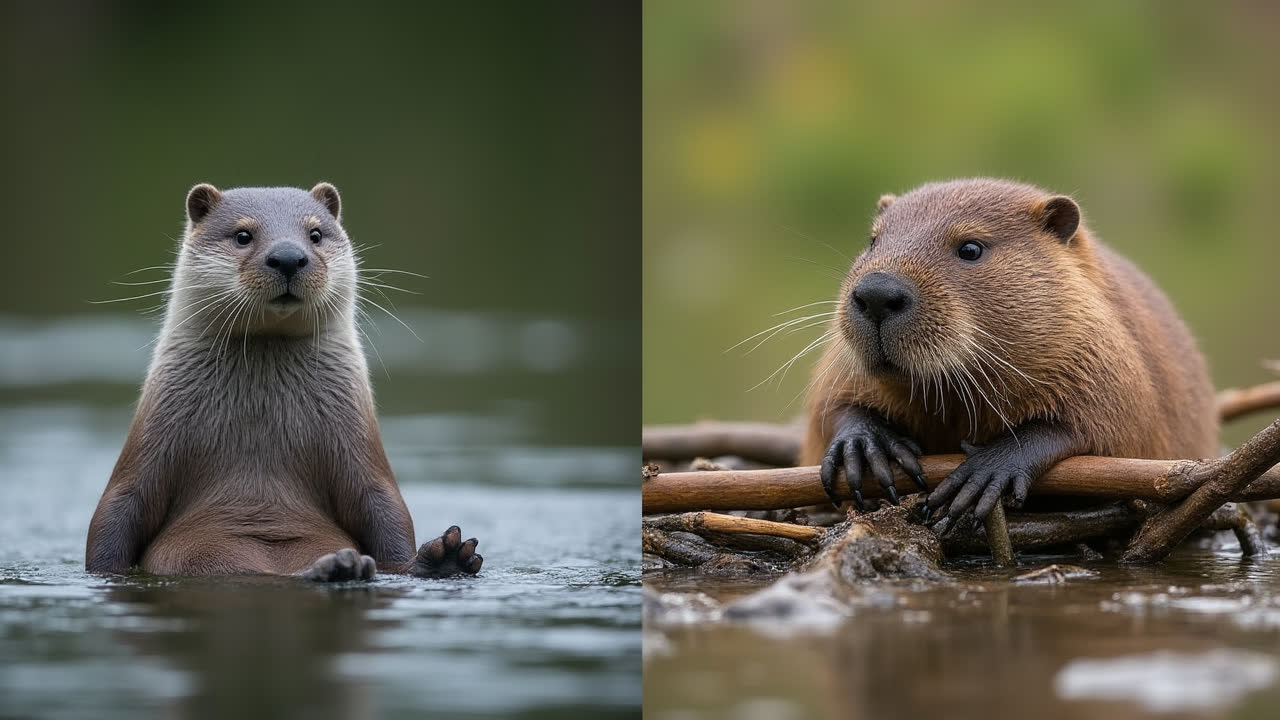
Otters are charismatic water mammals that capture our hearts with their playful antics and adorable appearance. These carnivorous mammals belong to the Mustelidae family, which also includes weasels, badgers, and wolverines. When I first encountered a river otter during a kayaking trip, I was mesmerized by its graceful swimming and curious nature.
There are approximately thirteen different species of otters worldwide, with sea otters and North American river otters being among the most well-known. Did you know that about 90% of the world's sea otters live in coastal Alaska? These remarkable creatures have evolved perfectly for their aquatic lifestyle, with long, streamlined bodies covered in dense, short fur that keeps them insulated in cold water.
One of the most fascinating things about otters is their intelligence and tool use. Sea otters are among the few animals that regularly use tools in the wild. They'll often carry a special rock in a pouch under their arm, using it to crack open shellfish while floating on their backs. I've always found it remarkable how they'll sometimes store their favorite rock for repeated use—almost like carrying around a personal nutcracker!
Otters are skilled hunters with impressive diving abilities, capable of reaching depths of up to 25 feet to find food. Their sensitive whiskers help them locate small prey like fish even in murky water. Their primary diet consists of fish, but they also enjoy sea urchins, crabs, and mussels. Their high metabolism requires them to eat approximately 15-25% of their body weight daily—imagine if we needed to eat that much!
Conservation efforts for otters have been crucial in recent decades. Many otter species faced serious population declines due to hunting for their fur and habitat loss. Thankfully, international protections like the Marine Mammal Protection Act in the United States have helped some populations recover. However, several otter species remain vulnerable or endangered, reminding us how important these charming animals are to healthy aquatic ecosystems.
Understanding Beavers: Nature's Engineers
Beavers stand out as some of the most impressive ecosystem engineers in the animal kingdom. These large rodents belong to the Castoridae family and are renowned for their dam-building abilities that can literally transform landscapes. The first time I saw a beaver dam up close, I was astounded by the complexity and size of the structure—truly a marvel of animal architecture!
There are only two species of beavers in the world: the North American beaver (Castor canadensis) and the Eurasian beaver (Castor fiber). Despite being separated by continents, both species share remarkable similarities in their appearance and behaviors. Beavers are substantially larger than otters, with adults typically weighing between 11-32 kg (24-71 pounds), making them among the largest rodents in the world.
What truly sets beavers apart is their incredible ability to reshape environments to suit their needs. Using their powerful jaws and large, chisel-like front teeth, beavers can fell trees many times their size. They use these materials along with branches, vegetation, rocks, and mud to construct elaborate dams across rivers and streams. This dam-building behavior creates wetland habitats that benefit countless other species—making beavers true "keystone species" in many ecosystems.
Unlike the carnivorous otters, beavers follow a strictly herbivorous diet. They primarily feed on tree bark, aquatic plants, leaves, and twigs. Their specialized digestive system allows them to extract nutrients from woody material that many other animals cannot digest. In autumn, beavers become especially busy gathering and storing food for the winter months when fresh vegetation becomes scarce.
Beavers form strong family bonds and typically mate for life—a relatively rare trait in the animal kingdom. Their offspring remain with the family unit for up to two years, helping with dam maintenance and caring for new kits. This social structure contributes to their success as a species. With an impressive average lifespan of around 24 years in the wild, beavers invest considerable time in maintaining their territories and family structures.
Like otters, beavers faced significant population declines due to extensive hunting for their fur, meat, and castoreum (a secretion used in perfumes and traditional medicines). Fortunately, conservation efforts in the 19th and 20th centuries have allowed many beaver populations to rebound. Today, they're increasingly recognized for the valuable ecosystem services they provide, including flood control, water purification, and creating habitat diversity.
Key Differences Between Otters and Beavers
While both otters and beavers are semi-aquatic mammals that might appear somewhat similar to the untrained eye, there are several distinctive characteristics that make identification straightforward once you know what to look for. Let's explore these key differences in detail.
| Characteristic | Otters | Beavers |
|---|---|---|
| Body Shape | Long, slim, streamlined bodies | Robust, rounded, bulky bodies |
| Tail | Long, sleek, tapered tail used for propulsion | Broad, flat, paddle-shaped tail covered with scales |
| Diet | Carnivorous (fish, shellfish, crustaceans) | Herbivorous (bark, leaves, aquatic plants) |
| Family | Mustelidae (related to weasels) | Castoridae (largest rodents) |
| Lifespan | Average 10 years in the wild | Average 24 years in the wild |
| Weight | 5-14 kg (11-31 pounds) depending on species | 11-32 kg (24-71 pounds) |
| Habitat Creation | Do not build structures; use existing dens or burrows | Build elaborate dams and lodges from wood and mud |
| Social Structure | Often find new partners each breeding season | Form monogamous pairs that typically mate for life |
One of the most immediately noticeable differences when comparing otters and beavers is their tail shape. An otter's tail is long and tapered, helping them navigate swiftly through water with snake-like movements. In contrast, a beaver's tail is unmistakably flat and paddle-shaped, used not only for swimming but also for slapping the water surface to communicate danger to other beavers. The sound of a beaver tail slap can be heard from quite a distance—something I discovered during a camping trip near a beaver pond!
Their feeding habits also differ dramatically. Otters are active predators, chasing and catching fish and other aquatic prey. They're fascinating to watch as they dive and resurface with their catch. Beavers, meanwhile, are peaceful vegetarians, preferring to gnaw on tree bark and munch on aquatic vegetation. This dietary difference is reflected in their teeth—otters have sharp teeth for catching and tearing prey, while beavers have those distinctive orange, chisel-like incisors that continuously grow throughout their lives.
Similarities Between Otters and Beavers
Despite their numerous differences, otters and beavers do share some common traits that sometimes lead to confusion between these two aquatic mammals. Understanding these similarities can help appreciate the evolutionary adaptations that allow both animals to thrive in similar environments.
- Aquatic Lifestyle: Both otters and beavers are highly adapted for life in and around water. They're excellent swimmers and spend significant portions of their lives in aquatic environments.
- Fur Characteristics: Both animals possess dense, waterproof fur that provides insulation in cold water. Their fur consists of two layers: a dense, soft underfur and longer guard hairs.
- Ecological Importance: Both species play significant roles in their ecosystems. Otters help control fish populations, while beavers create wetland habitats that benefit numerous other species.
- Parental Care: Both otters and beavers invest considerable time in raising and teaching their young essential survival skills.
- Conservation Challenges: Both animals have faced population declines due to hunting and habitat loss, though conservation efforts have helped many populations recover.
When you observe them in their natural habitats, you'll notice both animals demonstrate remarkable comfort and agility in water. They can remain submerged for extended periods and navigate effortlessly through their aquatic domains. This shared adaptation to aquatic environments is perhaps what most commonly leads people to confuse these otherwise distinct animals.
Ecological Roles and Importance
Both otters and beavers play vital roles in maintaining healthy aquatic ecosystems, though they contribute in vastly different ways. Understanding their ecological importance helps appreciate why conserving these animals is crucial for overall environmental health.
Otters serve as important indicator species for the health of aquatic environments. Their presence typically signals clean water and abundant fish populations. As predators, they help control the numbers of certain fish species, potentially increasing overall biodiversity by preventing any single species from becoming too dominant. River otters in particular help maintain the balance of freshwater ecosystems by controlling populations of crayfish and other invertebrates that might otherwise overgraze on aquatic vegetation.
Beavers, on the other hand, are considered ecosystem engineers and keystone species because their dam-building activities dramatically transform landscapes. Beaver dams create wetlands that slow water flow, reduce erosion, filter pollutants, and recharge groundwater supplies. These wetlands provide habitat for countless plant and animal species, from amphibians and water birds to specialized insects and plants. Research shows that areas with beaver activity typically have significantly higher biodiversity than similar areas without beavers.
I've personally witnessed how a beaver-created wetland transformed over just a few years from a simple stream into a complex ecosystem teeming with life. The pools created behind beaver dams provide ideal habitat for fish, including juvenile salmon in some regions. The flooded areas surrounding beaver ponds create ideal conditions for certain trees and plants that thrive in wet soil. Even when beavers abandon a site, their influence continues as beaver meadows slowly transform back into forested areas, creating a patchwork of habitats at different successional stages.
Conservation efforts for both species yield far-reaching benefits that extend well beyond protecting the animals themselves. When we protect otters and beavers, we're also protecting and enhancing entire ecosystems. This ecological multiplier effect makes these charismatic mammals particularly valuable from a conservation perspective.
Frequently Asked Questions About Otters and Beavers
How can you tell the difference between an otter and a beaver in water?
The most reliable way to distinguish between an otter and a beaver in water is by observing their swimming behavior and visible body parts. Otters typically swim with their bodies partially submerged and their head and back visible above the water surface. They move with a sinuous, snake-like motion and often roll and play while swimming. When diving, otters leave a smooth entry into the water.
Beavers, conversely, swim with just their head visible above water, in a straight line with minimal body movement. Their distinctive flat, paddle-shaped tail might occasionally be visible when they dive, and they often slap their tail loudly on the water surface as a warning signal. Beavers also leave a V-shaped wake while swimming, unlike the smoother wake of an otter.
Do otters and beavers ever live in the same areas?
Yes, otters and beavers can and do coexist in the same waterways, particularly in North America where their ranges overlap extensively. In fact, otters sometimes benefit from beaver activity, as the ponds and wetlands created by beaver dams provide excellent hunting grounds for otters to find fish and other prey.
Since otters and beavers occupy different ecological niches—otters being carnivorous predators and beavers being herbivorous engineers—they don't typically compete for food resources. However, they might occasionally compete for den sites, though otters are more likely to use abandoned beaver lodges than to displace active beaver families. This relationship demonstrates a fascinating ecological connection between these two aquatic mammals.
Are otters or beavers more beneficial to the environment?
It's difficult to claim that either otters or beavers are "more" beneficial to the environment, as they contribute in different but equally important ways. Beavers create physical habitats through their dam-building activities, which increases biodiversity, improves water quality, and helps with flood control and groundwater recharge. Their engineering works can transform entire landscapes and support countless other species.
Otters, as predators, help maintain balanced aquatic ecosystems by controlling populations of fish and invertebrates. They're also important indicator species—their presence usually signals a healthy aquatic environment with clean water and abundant prey. Both animals play crucial roles in their ecosystems, and the "best" one depends entirely on the specific ecological context and conservation goals for a particular area.
Conclusion
The world of aquatic mammals gives us fascinating examples of different evolutionary strategies for success. Otters and beavers, while superficially similar in their semi-aquatic lifestyles, represent distinct approaches to thriving in watery environments. Otters have evolved as sleek, agile predators with carnivorous diets and playful, inquisitive natures. Beavers, meanwhile, have become nature's engineers—transforming their surroundings through impressive construction abilities while maintaining a peaceful, herbivorous lifestyle.
The next time you're near a river, stream, or lake, take a moment to look for signs of these remarkable animals. You might spot the distinctive five-toed tracks of an otter along a muddy bank, or the unmistakable gnaw marks of a beaver on a tree trunk. Each sighting offers a window into the complex and interconnected nature of healthy aquatic ecosystems.
Both otters and beavers remind us of the importance of clean, healthy waterways and the need to protect these vital natural resources. Conservation efforts for these charismatic mammals yield benefits that extend far beyond the species themselves, creating a positive ripple effect throughout entire ecosystems. By understanding and appreciating the differences and similarities between these aquatic mammals, we gain deeper insight into the remarkable diversity of adaptations that allow life to flourish in every ecological niche on our planet.