Nicotinic vs Muscarinic Receptors: Complete Guide to Understanding Their Differences
Nicotinic vs Muscarinic Receptors: Understanding Their Crucial Differences
When exploring the intricate world of neuroscience, few topics are as fundamental as understanding the differences between nicotinic and muscarinic receptors. These two types of cholinergic receptors play vital roles in our nervous system, yet they function in remarkably different ways. As someone who's spent years studying neurophysiology, I've found that grasping these differences is essential for anyone interested in how our nervous system operates.
Both receptor types respond to the same neurotransmitter—acetylcholine—but their mechanisms, locations, and functions create a fascinating study in contrasts. Whether you're a medical student, healthcare professional, or simply curious about how your body works, this comprehensive guide will walk you through everything you need to know about these crucial neurological components.
But why should you care about these receptors? Well, they're involved in everything from muscle movement to heart function, memory formation, and even play roles in conditions like Alzheimer's disease and Parkinson's. Medications targeting these receptors are used to treat numerous conditions, from motion sickness to certain types of poisoning. I remember how understanding these receptors finally helped me grasp how so many different medications actually work in the body—it was like finding missing puzzle pieces!
What Are Cholinergic Receptors?
Before diving into the specific differences, let's establish some basics. Cholinergic receptors are specialized protein structures embedded in cell membranes that respond to the neurotransmitter acetylcholine (ACh). These receptors are integral to the proper functioning of both the central and peripheral nervous systems. When acetylcholine binds to these receptors, it triggers various physiological responses depending on the receptor type and location.
The two main categories of cholinergic receptors—nicotinic and muscarinic—were named after the substances that selectively activate them besides acetylcholine: nicotine (from tobacco plants) and muscarine (from certain mushrooms). Despite responding to the same primary neurotransmitter, these receptors differ dramatically in their structure, mechanism of action, location, and physiological effects. I've always found it fascinating how nature developed two completely different receptor systems for the same signaling molecule!
These receptors aren't just academic curiosities—they're targets for numerous medications and toxins. Understanding how they work helps explain why certain substances affect our bodies in specific ways. For instance, have you ever wondered why nicotine is so addictive or why some mushrooms can cause intense salivation? The answers lie in how these substances interact with these specialized receptors.
Nicotinic Receptors: Structure and Function
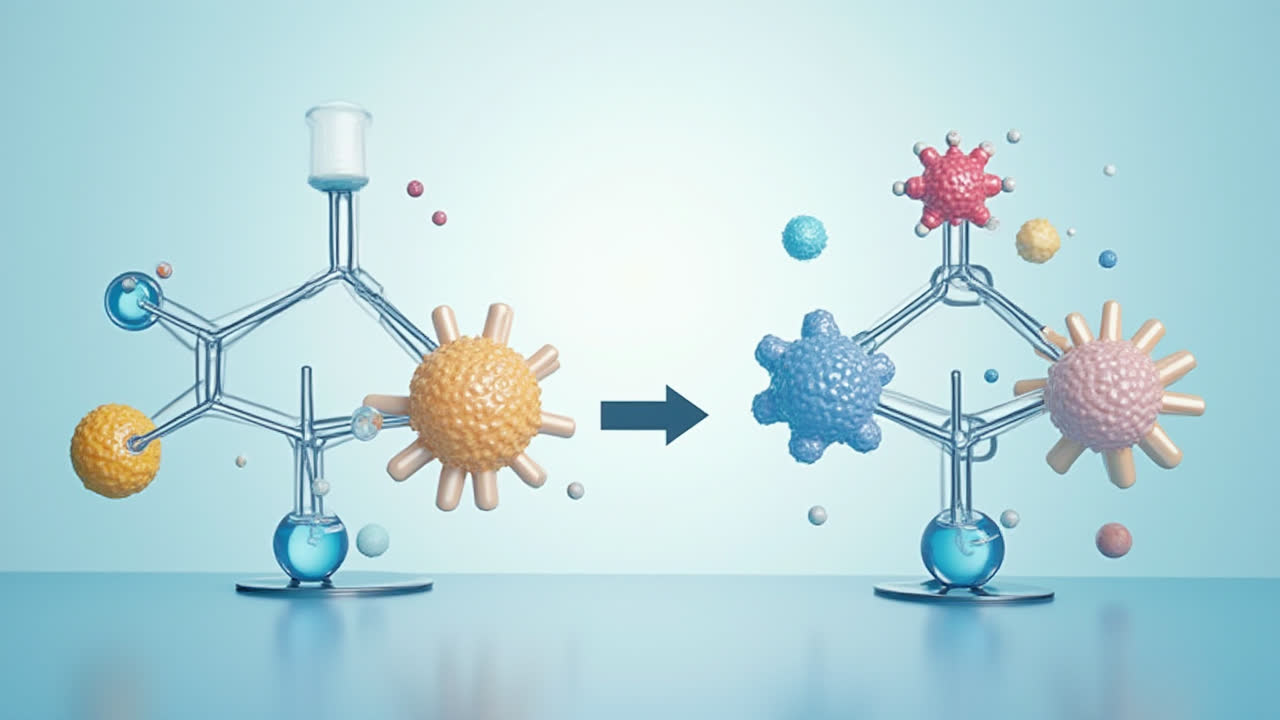
Nicotinic receptors (nAChRs) are ionotropic receptors, meaning they function as ion channels. When acetylcholine binds to a nicotinic receptor, it causes a conformational change that opens a channel in the cell membrane, allowing certain ions (primarily sodium, potassium, and calcium) to flow through. This ion movement typically results in rapid depolarization of the cell membrane, facilitating the fast transmission of nerve impulses across synapses.
Structurally, nicotinic receptors are pentameric—composed of five protein subunits arranged around a central pore. In mammals, sixteen different subunits have been identified, allowing for various combinations that create functionally distinct receptor subtypes. These subunits determine the receptor's properties, including its sensitivity to different agonists and antagonists, ion selectivity, and desensitization characteristics.
Nicotinic receptors are classified into two main types: N1 and N2. The N1 receptors, also called muscle-type receptors, are primarily found at neuromuscular junctions where they mediate muscle contraction. I remember when I first learned about this—it suddenly made sense why certain snake venoms that block these receptors cause paralysis! The N2 receptors, or neuronal-type receptors, are located in the brain and autonomic ganglia, where they participate in cognitive functions, memory, learning, arousal, reward mechanisms, motor control, and pain perception.
What makes nicotinic receptors particularly interesting is their rapid response time. When activated, they open almost immediately, allowing for the quick transmission of signals—a characteristic that's essential for processes like muscle movement. This speed is why they're referred to as "fast channels," and it's a key distinguishing factor from their muscarinic counterparts.
Muscarinic Receptors: Structure and Function
Muscarinic receptors (mAChRs) operate through an entirely different mechanism. Unlike their nicotinic counterparts, these are metabotropic receptors, meaning they don't form ion channels themselves but instead activate second messenger systems within the cell. They belong to the G-protein coupled receptor (GPCR) family, which is one of the largest and most diverse protein families in the human body.
When acetylcholine binds to a muscarinic receptor, it activates associated G-proteins, which then trigger various intracellular signaling cascades. Depending on the specific subtype of muscarinic receptor, this can lead to either excitatory or inhibitory effects on the target cell. This indirect action means muscarinic responses are typically slower but longer-lasting than nicotinic ones—something I've always thought of as the difference between a sprint and a marathon.
Muscarinic receptors are classified into five subtypes: M1, M2, M3, M4, and M5, each with distinct physiological roles. The M1, M3, and M5 receptors generally activate phospholipase C pathways, increasing intracellular calcium levels and producing excitatory effects. In contrast, M2 and M4 receptors typically inhibit adenylate cyclase, decreasing cyclic AMP (cAMP) levels and often resulting in inhibitory effects.
These receptors are widely distributed throughout the body but are particularly abundant in the brain, heart, and smooth muscle tissues. Their diverse locations explain why medications targeting muscarinic receptors can have such varied effects, from altering heart rate to affecting bladder function or salivary gland secretion. I once had a patient who experienced excessive dry mouth from an anticholinergic medication—a direct result of blocking M3 receptors in the salivary glands!
Key Differences Between Nicotinic and Muscarinic Receptors
| Characteristic | Nicotinic Receptors | Muscarinic Receptors |
|---|---|---|
| Receptor Type | Ligand-gated ion channels (ionotropic) | G-protein coupled receptors (metabotropic) |
| Subtypes | N1 (muscle) and N2 (neuronal) | M1, M2, M3, M4, and M5 |
| Mechanism of Action | Direct ion channel formation | Activation of second messenger systems |
| Response Speed | Fast (milliseconds) | Slow (seconds to minutes) |
| Primary Locations | Neuromuscular junctions, autonomic ganglia, CNS | Smooth muscle, cardiac tissue, glands, CNS |
| Effect Type | Always excitatory | Can be excitatory (M1, M3, M5) or inhibitory (M2, M4) |
| Ion Permeability | Primarily Na+, K+, and Ca2+ | Varies based on second messenger activation |
| Also Activated By | Nicotine | Muscarine |
Physiological Roles and Clinical Significance
Understanding the different roles of nicotinic and muscarinic receptors has profound implications for both basic physiology and clinical medicine. These receptors are involved in numerous bodily functions and are the targets for many therapeutic agents as well as toxic substances.
Nicotinic Receptor Functions
- Neuromuscular Junction: N1 receptors mediate the contraction of skeletal muscles, making them essential for all voluntary movement
- Autonomic Ganglia: N2 receptors facilitate the transmission of signals in both sympathetic and parasympathetic ganglia
- Central Nervous System: N2 receptors in the brain are involved in cognitive processes, memory, learning, reward pathways, and attention
Muscarinic Receptor Functions
- Cardiovascular System: M2 receptors in the heart reduce heart rate and contractility
- Respiratory System: M3 receptors cause bronchoconstriction
- Digestive System: M1 and M3 receptors increase glandular secretions and promote gastrointestinal motility
- Urinary System: M3 receptors contract the detrusor muscle of the bladder
- Central Nervous System: Various subtypes are involved in memory, learning, and movement coordination
From a clinical perspective, these receptors are targets for numerous medications. Drugs affecting nicotinic receptors include muscle relaxants used in anesthesia, while medications targeting muscarinic receptors include treatments for overactive bladder, Parkinson's disease, motion sickness, and certain types of poisoning.
I've always been fascinated by how understanding these receptor systems helps explain the diverse effects of both medications and toxins. For example, the deadly effects of certain nerve agents come from their ability to prevent the breakdown of acetylcholine, leading to overstimulation of both receptor types—resulting in effects ranging from excessive secretions (muscarinic) to muscle paralysis (nicotinic).
Similarities Between Nicotinic and Muscarinic Receptors
Despite their differences, it's worth noting that nicotinic and muscarinic receptors share several important commonalities:
- Both are activated by the same primary neurotransmitter: acetylcholine
- Both undergo conformational changes when acetylcholine binds
- Both are found in the peripheral and central nervous systems
- Both can be found on post-ganglionic neurons in both sympathetic and parasympathetic systems
- Both can respond to various pharmacological agents besides their primary agonists
These similarities highlight the evolutionary relationship between these receptor systems and help explain why certain medications and toxins can affect both receptor types, albeit often to different degrees. Understanding both the differences and similarities is crucial for developing selective therapeutic agents that target specific receptor subtypes while minimizing unwanted effects.
Frequently Asked Questions
How do nicotinic and muscarinic receptor antagonists differ in their effects?
Nicotinic receptor antagonists typically block transmission at the neuromuscular junction, causing muscle weakness or paralysis, and block transmission in autonomic ganglia, disrupting both sympathetic and parasympathetic functions. Common examples include curare (used in arrow poisons) and certain snake venoms.
Muscarinic receptor antagonists (also called anticholinergics) have very different effects, including pupil dilation, increased heart rate, reduced secretions (dry mouth, reduced sweating), bladder relaxation, and bronchodilation. Medications like atropine, scopolamine, and various antihistamines have anticholinergic properties. Tthe effects of these antagonists directly reflect the physiological roles of the receptors they block.
Why are nicotinic receptors faster-acting than muscarinic receptors?
Nicotinic receptors act faster than muscarinic receptors because they operate through fundamentally different mechanisms. Nicotinic receptors are ionotropic receptors that function as direct ion channels—when acetylcholine binds, the channel opens immediately, allowing ions to flow across the cell membrane and creating an electrical signal almost instantaneously (within milliseconds).
In contrast, muscarinic receptors are metabotropic receptors that work through G-protein coupled pathways. When acetylcholine binds to a muscarinic receptor, it activates G-proteins, which then initiate cascades of secondary messenger systems inside the cell. These biochemical cascades involve multiple steps and protein interactions, taking seconds to minutes to fully develop. This indirect signaling mechanism explains why muscarinic effects are slower to appear but often last longer than nicotinic effects.
How are disorders of cholinergic transmission treated?
Disorders of cholinergic transmission are treated with medications that target specific aspects of the cholinergic system, depending on whether the condition involves excess or deficient acetylcholine activity. For conditions with deficient cholinergic activity (like myasthenia gravis or Alzheimer's disease), acetylcholinesterase inhibitors are commonly used. These medications prevent the breakdown of acetylcholine, increasing its availability and enhancing its effects at both nicotinic and muscarinic receptors.
For conditions with excessive cholinergic activity (such as certain types of poisoning or overactive bladder), antagonists may be used. Atropine and other muscarinic antagonists block the effects of acetylcholine specifically at muscarinic receptors, while nicotinic antagonists can block effects at the neuromuscular junction or ganglia. The choice of medication depends on the specific receptor type involved in the disorder and the desired therapeutic effect, highlighting the importance of understanding the distinct roles of these receptor systems.
Conclusion
The distinctions between nicotinic and muscarinic receptors exemplify the remarkable complexity and specificity of our nervous system. Though both respond to the same neurotransmitter, they operate through entirely different mechanisms, are distributed differently throughout the body, and mediate distinct physiological functions.
Nicotinic receptors, as ligand-gated ion channels, provide the fast-acting responses necessary for processes like muscle activation and rapid neurotransmission. Muscarinic receptors, through their G-protein coupled pathways, allow for more nuanced, longer-lasting effects on various organ systems, from heart rate regulation to glandular secretion.
Understanding these differences isn't just academically interesting—it's fundamentally important for developing targeted therapeutics, explaining drug side effects, and comprehending the mechanisms of various neurological and muscular disorders. As research continues to uncover more details about these receptor systems, our ability to develop more selective and effective treatments will undoubtedly improve.
The next time you take a medication for motion sickness, observe the effects of nicotine, or learn about a neuromuscular condition, remember that behind these phenomena lie these two fascinating receptor systems—working in different ways but ultimately both responding to the same crucial neurotransmitter.