Nation vs Country: Understanding the Key Differences in 2026
Nation vs Country: Understanding the Key Differences in 2026
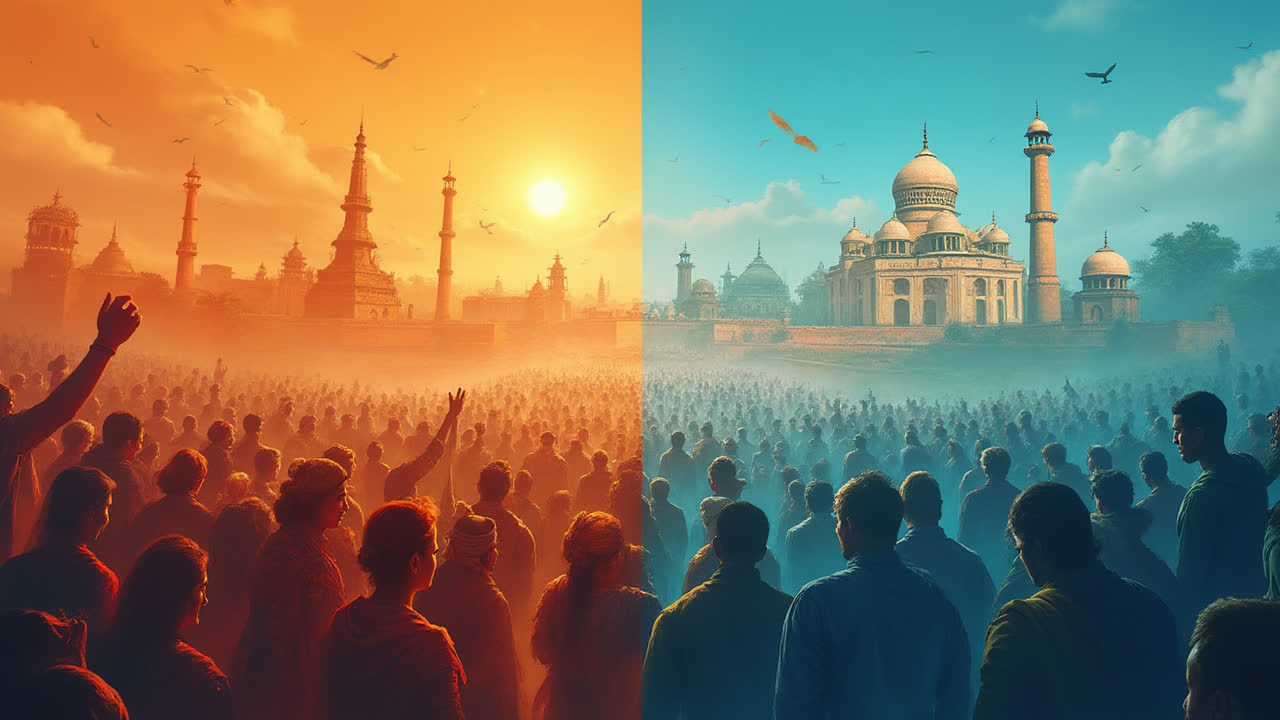
When it comes to discussing global politics and geography, the terms nation and country often get thrown around interchangeably. But here's the thing - while they're related concepts, they're actually quite different! Understanding this distinction can help you navigate conversations about world affairs more accurately and appreciate the nuanced nature of political boundaries.
Think about it: when you hear the word "France," do you think of a country with specific borders, or a group of people who share a common language and culture? This ambiguity highlights why distinguishing between nation and country matters so much in our globalized world.
What is a Nation?
A nation is essentially a cultural and political community - a group of people who share common bonds like language, culture, history, or ethnic origin. Imagine it as a family reunion on a massive scale, where millions of people feel connected by shared stories, traditions, and values.
The American political theorist Stalin once defined a nation as "a historically constituted, stable community of people, formed on the basis of a common language, territory, economic life, and psychological make-up manifested in a common culture." This might sound a bit dry, but it captures the essence of what makes people feel like they belong to the same group.
Nations can exist without having their own country. Take the Kurdish people, for example - they form a nation spread across several countries including Turkey, Iraq, Iran, and Syria. They share language, culture, and history, but don't have their own sovereign state.
Key Point: A nation is about people and shared identity, not necessarily about territory or government control.
What is a Country?
A country, on the other hand, is primarily a political and geographical concept. It's an area of land with defined boundaries that has its own government - basically, the place that shows up on maps with distinct borders.
Countries are the building blocks of our international system. When diplomats meet, when trade agreements are signed, when the Olympics happen - they're dealing with countries, not nations per se. Countries have embassies, passports, and seats at the United Nations.
Here's where it gets interesting: some countries are home to multiple nations. Canada, for instance, recognizes the Québécois as a nation within a united Canada. Similarly, the United States has long recognized Native American tribes as nations, even though they all exist within the country's borders.
The Concept of Nation-States
When a nation has its own country - meaning the people sharing a common identity also control their own territory and government - we call it a nation-state. Japan is often cited as a near-perfect example of this: most Japanese people share a common language, culture, and ancestry, and they have their own sovereign country.
However, true nation-states are becoming less common in our interconnected world. Immigration, global trade, and international cooperation have made most countries multicultural melting pots rather than single-nation territories.
Key Differences: Nation vs Country Comparison
| Aspect | Nation | Country |
|---|---|---|
| Definition | Cultural-political community of people with shared identity | Geographical territory with its own government |
| Primary Focus | People and cultural identity | Land, borders, and political control |
| Key Elements | Language, culture, history, ethnicity | Territory, government, sovereignty |
| Recognition | Based on shared identity and culture | Based on international diplomatic recognition |
| Concrete vs Abstract | More abstract concept | More concrete, physical concept |
| Political Power | Cultural influence; may or may not have political power | Exercises political control over territory |
| Example | Basque nation (spans Spain and France) | Spain (country with defined borders) |
| International Role | Cultural diplomacy and representation | Member of UN, signatory to treaties |
Why This Distinction Matters
Understanding the difference between nation and country is crucial for several reasons. First, it helps us appreciate the complexity of global politics. When we hear about separatist movements or calls for independence, we're often witnessing a clash between national identity and existing country borders.
Second, this knowledge fosters better cross-cultural understanding. Recognizing that multiple nations can coexist within one country helps us appreciate diversity and the importance of protecting minority rights.
Plus, let's be honest - getting this right makes you sound more informed in dinner party conversations! Nothing quite kills the mood like confidently mixing up these terms when discussing international affairs.
Common Misconceptions
One big misconception is that every country contains just one nation. As we've mentioned, this is far from true. The United States, for example, houses hundreds of Native American nations, various immigrant communities that maintain strong cultural identities, and regional variations that sometimes claim nation-like status.
Another myth is that nations must have their own countries to be "real" nations. Tell that to the Tibetan people, the Scots, or the First Nations of Canada! National identity exists independently of political borders.
Real-World Examples
Let's look at some practical examples to cement our understanding:
- Palestine: Often recognized as a nation with a distinct identity, but its status as a country remains politically contested
- United Kingdom: One country that contains multiple nations - English, Scottish, Welsh, and Northern Irish
- China: One country with Han Chinese as the majority nation, but also recognizing 55 other ethnic minority nations
- Germany: A country that existed before 1871 as multiple separate German-speaking nations
The Role of Language and Culture
Language often plays a pivotal role in defining nations. Consider how Spanish-speaking communities in the United States might identify as part of a Hispanic or Latino nation that transcends country boundaries. Similarly, Arabic-speaking peoples form a nation that spans multiple countries across the Middle East and North Africa.
Cultural practices, religious beliefs, and shared historical experiences also contribute to national identity. These invisible bonds can sometimes be stronger than the visible lines on political maps.
Evolution of the Concepts
The concepts of nation and country have evolved significantly over time. Medieval Europe, for instance, had kingdoms and principalities rather than modern nation-states. The idea of countries with fixed borders and nations with distinct identities really took off after the Treaty of Westphalia in 1648.
Today, we're seeing these concepts continue to evolve. Globalization is creating transnational identities, while simultaneously, we see movements seeking to align national and country boundaries more closely.
Impact on International Relations
The nation-country distinction significantly influences international relations. Countries are the primary actors in international law and diplomacy, signing treaties and joining organizations like the United Nations. But nations without countries can still exert influence through cultural diplomacy, diaspora communities, and international advocacy.
This dynamic creates interesting situations. For example, Quebec maintains its own international relations network despite being part of Canada, reflecting its status as a nation within a larger country.
Modern Challenges and Future Outlook
As our world becomes more interconnected, the boundaries between nation and country continue to blur. Immigration creates multicultural countries, while global communication helps maintain national identities across borders. Some scholars even speak of "imagined communities" that exist primarily in the digital sphere.
The future might see new forms of identity and governance that don't fit neatly into either nation or country categories. Virtual nations, stateless peoples, and supranational organizations all challenge our traditional understanding of these concepts.
Frequently Asked Questions
Can a nation exist without a country?
Yes, absolutely! Nations can exist without having their own sovereign country. Examples include the Kurdish nation, which spans multiple countries, and indigenous nations within larger countries like Canada or Australia. A nation is primarily about shared identity and culture, not necessarily about having political control over territory.
Is the United States one nation or multiple nations?
The United States is one country that contains multiple nations. The federal government recognizes 574 Native American tribes as distinct nations, and various ethnic and cultural groups maintain strong national identities within the country. Some regions, like Hawaii, also have populations that identify as nations within the larger American state.
What makes a nation different from an ethnic group?
While nations and ethnic groups share similarities, nations typically have a stronger political component and territorial connection. Ethnic groups mainly share ancestry and cultural traits, while nations often have a more developed sense of political identity and may seek self-governance or already have it within a larger state.
Conclusion
Understanding the difference between nation and country helps us navigate our complex world with greater clarity. While countries represent the political and geographical framework of our international system, nations embody the cultural and identity-based communities that give these political entities their human dimension.
Whether you're discussing international politics, planning your travels, or simply trying to understand global events, keeping this distinction in mind will enrich your perspective. After all, the world isn't just made up of lines on a map - it's a tapestry of peoples, cultures, and identities that sometimes align with borders and sometimes transcend them.
So next time someone mentions a nation or country, you'll know whether they're talking about a group of people who share an identity or a piece of territory with its own government. And who knows? This knowledge might just make you the most interesting person at your next social gathering!