Micropropagation vs Tissue Culture: Understanding Key Differences
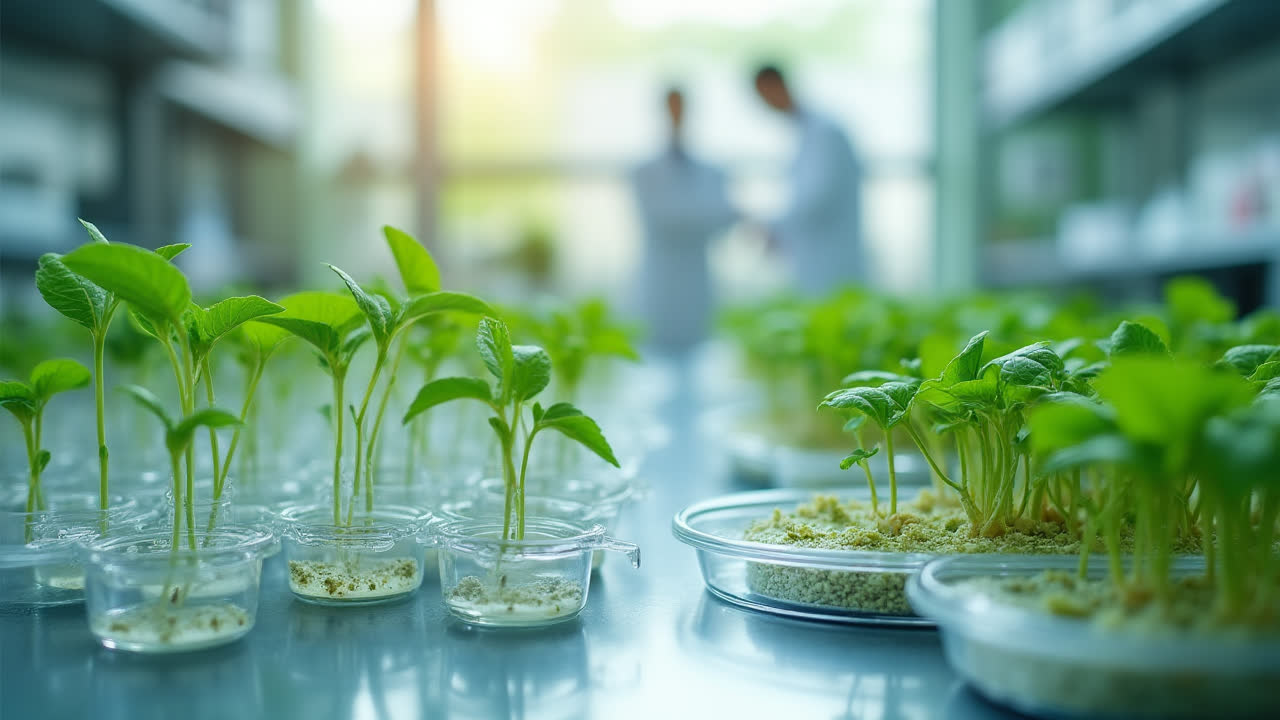
In the fascinating world of plant biotechnology, micropropagation and tissue culture stand as revolutionary techniques that have transformed how we propagate and conserve plant species. While these terms are often used interchangeably by gardening enthusiasts, they actually represent distinct processes with unique applications in modern agriculture and conservation. Having worked with these techniques in both research and commercial settings, I've seen firsthand how they've revolutionized plant production.
As someone who's spent countless hours in sterile labs watching tiny plant fragments grow into full specimens, I can tell you there's something almost magical about watching a small piece of plant tissue develop into hundreds of identical plants. But what exactly makes micropropagation different from tissue culture? And why does it matter to gardeners, conservationists, and commercial growers?
Understanding Micropropagation: The Mass Production Technique
Micropropagation is essentially a specialized application of tissue culture aimed at producing large numbers of identical plants. It's like having a plant cloning factory! The process begins with a small plant fragment and ends with potentially thousands of genetically identical plants. This vegetative propagation method has completely transformed commercial horticulture and agriculture.
I remember the first time I saw a commercial micropropagation facility—rows upon rows of clear containers filled with tiny plantlets, all developing under carefully controlled conditions. It was like looking at the future of agriculture. The technique works so well because it leverages the natural ability of plant cells to regenerate entire plants (a property called totipotency).
Micropropagation typically follows a structured process involving multiple stages: initial culture establishment, multiplication, rooting, and finally acclimatization to soil conditions. Each stage requires specific growth regulators and environmental conditions to succeed. The beauty of the process is its scalability—once you've established a successful protocol, you can theoretically produce unlimited numbers of plants from a single source.
The applications of micropropagation are incredibly diverse. Commercial growers use it to rapidly multiply valuable cultivars, conservation programs employ it to save endangered species, and researchers utilize it to develop new plant varieties with desirable traits. I've personally seen rare orchid species brought back from the brink of extinction through carefully managed micropropagation programs.
Demystifying Tissue Culture: The Foundation
Tissue culture serves as the foundational technique upon which micropropagation is built. It involves growing isolated plant cells, tissues, or organs under sterile conditions in nutrient media. Think of it as creating the perfect artificial environment for plant growth at a cellular level. While micropropagation focuses specifically on mass production, tissue culture encompasses a broader range of applications and techniques.
The process begins with selecting an explant—a piece of plant tissue that will be cultured. This could be anything from leaf segments to shoot tips, embryos, or even single cells. The choice of explant and subsequent treatment determines what type of growth will occur. Sometimes you want organized growth (like shoots or roots), while other times you might want unorganized cell division (callus formation).
What makes tissue culture truly fascinating is its versatility. Beyond just propagation, it allows for studies of plant physiology, genetic transformation, production of secondary metabolites, and even conservation of germplasm through cryopreservation. I once worked on a project using tissue culture to study how certain plants respond to environmental stress—something that would be much more difficult to control in whole plants growing in soil.
Different types of tissue culture serve different purposes. Seed culture helps germinate difficult seeds like orchids. Embryo culture can rescue embryos from seeds that would otherwise not develop properly. Callus culture produces undifferentiated cell masses that can be directed to form various plant structures. Protoplast culture removes cell walls to facilitate genetic manipulations. Each technique opens unique possibilities for plant science and agriculture.
Key Differences: How Micropropagation and Tissue Culture Diverge
| Aspect | Micropropagation | Tissue Culture |
|---|---|---|
| Definition | A specific application of tissue culture focused on mass production of clonal plants | The broader technique of growing plant cells, tissues or organs in artificial media |
| Primary Purpose | Commercial production of large numbers of identical plants | Research, conservation, propagation, and creating variability |
| Process Complexity | Structured with specific stages aimed at plant production | Varies widely depending on the specific application |
| End Goal | Transfer to soil and commercial distribution | May or may not result in whole plants depending on purpose |
| Steps Involved | Initiation, multiplication, rooting, and acclimatization | Explant selection, medium preparation, culture maintenance |
| Material Used | Usually meristematic tissue from shoot tips | Various plant parts depending on purpose (leaves, stems, roots, etc.) |
| Scale | Generally large-scale commercial operations | Can be small laboratory scale or larger depending on purpose |
| Applications | Mass production of disease-free plants, propagation of difficult species | Genetic studies, conservation, secondary metabolite production, breeding |
Practical Applications and Benefits
The real-world applications of these techniques are as diverse as they are valuable. I've consulted with commercial nurseries that completely transformed their business model after adopting micropropagation. One orchid grower went from producing a few hundred plants annually to over 10,000—all while maintaining perfect genetic uniformity and disease-free status.
Conservation efforts particularly benefit from these technologies. Have you ever wondered how botanical gardens manage to preserve critically endangered species? In many cases, micropropagation serves as a lifeline. I've visited conservation facilities where entire species—down to their last few wild specimens—are being maintained and multiplied through careful tissue culture techniques. It's like an insurance policy against extinction.
For commercial agriculture, the benefits are substantial. Micropropagation techniques allow for:
- Year-round production independent of growing seasons
- Disease elimination through meristem culture
- Rapid multiplication of new or valuable varieties
- Space-efficient production compared to traditional methods
- Preservation of genetic resources in germplasm banks
The economic impact is significant too. Consider banana production—virtually all commercial bananas are propagated through tissue culture rather than seeds (most commercial varieties are actually seedless). This allows for consistent quality and disease management across global production. Similar approaches are used for many ornamental plants, potato varieties, and other crops where genetic consistency is crucial.
Challenges and Limitations
Despite their tremendous benefits, these technologies aren't without challenges. I remember my first attempts at establishing a new species in tissue culture—despite following protocols that worked for related plants, I encountered persistent contamination issues. Sometimes the process feels more art than science, requiring experience and intuition alongside technical knowledge.
Cost remains a significant barrier, particularly for smaller operations. The equipment, sterile facilities, specialized media, and trained personnel all come with substantial investment requirements. Is it really worth it for a small nursery to invest in an in-house lab? Often not, which is why many outsource to specialized propagation services.
There are also biological limitations. Not all plant species respond equally well to tissue culture conditions. Some—particularly woody species like many trees—prove notoriously difficult to establish in culture. I've worked with certain oak species that stubbornly resist all attempts at micropropagation despite years of protocol adjustments.
Genetic stability can sometimes be a concern too. While propagation through organized meristems generally maintains genetic fidelity, callus-based systems occasionally produce somaclonal variations—genetic or epigenetic changes that result in plants with different characteristics from the parent. This can be useful for breeding but problematic when the goal is exact replication.
Future Directions and Innovations
The field continues to evolve at a remarkable pace. Automation is perhaps the most significant trend, with robotics increasingly handling the labor-intensive aspects of micropropagation. I recently visited a facility in the Netherlands that uses computer vision systems to automatically detect and subcultured vigorous shoots, significantly reducing labor costs.
Temporary immersion systems represent another innovation, where plants are only periodically exposed to liquid medium rather than being continuously cultivated on semi-solid media. This improves gas exchange and reduces vitrification (a physiological disorder common in tissue culture), while dramatically increasing propagation rates for some species.
Advances in LED lighting technology are also transforming the field. By tailoring the specific light spectrum to each species and growth stage, propagators can further optimize development rates and plant quality. I've seen facilities transition from fluorescent to LED lighting and achieve 30-40% increases in multiplication rates simply through optimized light spectra.
Integration with other biotechnologies presents exciting possibilities too. CRISPR gene editing combined with efficient tissue culture systems could accelerate development of improved varieties with disease resistance or climate resilience. The potential for addressing global agricultural challenges through these combined approaches is truly remarkable.
Frequently Asked Questions
What are the main advantages of micropropagation over traditional propagation methods?
Micropropagation offers several key advantages over traditional methods. It allows for extremely rapid multiplication rates—potentially thousands of plants from a single explant within months. It produces disease-free plants through meristem culture, which is particularly valuable for species prone to viral infections. It enables propagation of plants that are difficult or impossible to propagate by conventional means (like orchids). It requires minimal starting material, making it ideal for rare species conservation. Finally, it allows year-round production independent of seasons or environmental conditions, creating a more predictable production schedule for commercial growers.
Can all plant species be propagated through tissue culture?
While theoretically all plants possess the cellular totipotency needed for tissue culture, in practice not all species respond equally well to these techniques. Herbaceous plants, especially those from families like Orchidaceae and Araceae, typically respond very well. Woody species, particularly many trees, often prove more challenging due to issues like phenolic compound production (which can inhibit growth) and more complex developmental requirements. Some species require extensive protocol optimization, with adjustments to growth regulators, media composition, and environmental conditions before successful culture is possible. Even with decades of research, some plant species remain recalcitrant to tissue culture methods, though technological advances continue to expand the range of cultivable species.
What equipment is needed to start basic tissue culture at home?
While professional laboratories have sophisticated equipment, basic tissue culture can be attempted at home with more modest setups. Essential items include: a pressure cooker or autoclave for sterilizing media and equipment; a clean workspace that can be disinfected thoroughly (many hobbyists create DIY laminar flow hoods); containers for cultures (mason jars or specialized culture vessels); growth media components (agar, nutrients, vitamins, and plant growth regulators); sterilization agents (alcohol, bleach); basic tools like forceps and scalpels; and a dedicated growing area with controlled lighting. Success rates may be lower than in professional settings, but many hobbyists successfully propagate orchids and other responsive species with these basic setups. The most critical factor is maintaining sterility throughout the process, as contamination is the most common cause of failure in home tissue culture attempts.
Conclusion
The relationship between micropropagation and tissue culture represents a perfect example of how specialized applications emerge from fundamental techniques. While tissue culture provides the essential methodologies and principles, micropropagation applies these specifically toward mass production of plants.
For anyone interested in plant propagation—whether as a hobby, conservation effort, or commercial enterprise—understanding these distinctions helps in appreciating the remarkable capabilities these technologies offer. They've revolutionized how we produce, preserve, and improve plants, with impacts ranging from food security to biodiversity conservation.
As these technologies continue to advance and become more accessible, we can expect even greater innovations at the intersection of plant science and agriculture. The tiny plantlets growing in those sterile vessels represent not just individual plants, but a powerful approach to addressing some of our most pressing agricultural and environmental challenges.