Independence Day vs Republic Day: Understanding the Key Differences
Around the world, countries celebrate their national holidays with great enthusiasm and patriotic fervor. Two of the most significant celebrations in many nations are Independence Day and Republic Day. Though they might seem similar at first glance—both involving flag hoisting, parades, and national pride—they commemorate entirely different historical milestones in a country's journey. Have you ever wondered what exactly sets these two celebrations apart?
The main difference between Independence Day and Republic Day lies in what they represent: Independence Day marks a country's freedom from colonial rule or foreign dominance, while Republic Day celebrates the adoption of a republican constitution. In many countries, these dates are different and represent distinct transitions in their political evolution. I've always found it fascinating how these celebrations reflect the unique historical path each nation has taken toward self-governance.
Understanding these differences helps us appreciate the complex journey nations undergo in establishing their sovereignty and governance systems. Let's dive deeper into what makes each celebration unique, how they're observed around the world, and why some countries celebrate one but not the other.
What Is Independence Day?
Independence Day commemorates the anniversary of a nation gaining freedom from foreign rule or colonial power. It's essentially the birthday of a nation as a sovereign state. This day typically marks the end of a struggle—sometimes peaceful, often not—against occupation or colonial dominance. When I think about Independence Days around the world, I'm struck by how they represent pivotal moments when a people decided their destiny would be in their own hands.
For countries that were once colonies, this day holds profound historical significance. It represents the culmination of freedom movements, armed struggles, negotiations, and sacrifices made by countless individuals. Take India, for example—its Independence Day on August 15th commemorates the end of nearly 200 years of British colonial rule in 1947. The date marks when the Indian Independence Act came into effect, transferring legislative sovereignty to the Indian Constituent Assembly.
Similarly, the United States celebrates its Independence Day on July 4th, marking the adoption of the Declaration of Independence in 1776, which proclaimed freedom from Great Britain. The Philippines observes its Independence Day on June 12th, commemorating the declaration of independence from Spanish colonial rule in 1898 (though the country later experienced American and Japanese occupation).
Celebrations on Independence Day typically focus on honoring freedom fighters, remembering the struggle for liberation, and celebrating national identity. These festivities often include flag-raising ceremonies, military parades, cultural performances, fireworks, and various patriotic displays. In my experience, Independence Day celebrations tend to be more emotionally charged and deeply connected to a nation's identity and collective memory of struggle against oppression.
What Is Republic Day?
Republic Day, on the other hand, celebrates the day when a nation officially adopted a republican constitution, establishing itself as a republic. A republic is a form of government where power rests with the citizens who elect representatives to govern on their behalf. This contrasts with monarchies or other forms of government where power is hereditary or concentrated in the hands of a privileged few.
Republic Day marks a significant constitutional milestone rather than freedom from foreign rule. It celebrates the legal framework that defines how the country will be governed. For instance, India celebrates its Republic Day on January 26th—the day in 1950 when its constitution came into effect, replacing the Government of India Act of 1935 and transforming the nation into a republic. Though India had gained independence in 1947, it took nearly three years to draft and adopt its constitution.
Similarly, Italy celebrates Republic Day (Festa della Repubblica) on June 2nd, commemorating the 1946 referendum when Italians voted to abolish the monarchy and establish a republic. The celebrations on Republic Day often emphasize constitutional values, democratic principles, and civic responsibilities. You'll typically see grand parades showcasing military might, cultural diversity, and national achievements.
I've noticed that Republic Day celebrations tend to be more formal and state-centric compared to Independence Day festivities. They often feature constitutional ceremonies, presidential or prime ministerial addresses, and displays of a nation's progress and capabilities. For many countries, this day symbolizes their commitment to democratic principles and constitutional governance.
Key Differences Between Independence Day and Republic Day
| Aspect | Independence Day | Republic Day |
|---|---|---|
| Definition | Celebrates freedom from foreign rule or colonial power | Celebrates the adoption of a republican constitution |
| Historical Significance | Marks the end of foreign domination | Marks the beginning of constitutional governance |
| What is Honored | Freedom fighters, revolutionary leaders, national struggle | Constitution, founding fathers, democratic principles |
| Focus of Celebration | National freedom, sovereignty, cultural identity | Constitutional values, civic duties, governmental structure |
| Typical Festivities | Flag hoisting, patriotic songs, cultural programs, fireworks | Military parades, presidential speeches, awards ceremonies |
| Emotional Connection | Often more emotionally charged, celebrating liberation | Generally more formal, celebrating governance systems |
| Timing in National History | Usually occurs first in chronological order | Often follows independence after a constitution is drafted |
| Universal Observance | Not all countries have an Independence Day | Not all countries are republics or celebrate Republic Day |
Independence and Republic Days Around the World
The relationship between Independence Day and Republic Day varies widely across different countries. In some nations, these two significant milestones occurred simultaneously, while in others, they are separated by years or even decades. And of course, not all countries celebrate both days—some nations were never colonized, while others are not republics.
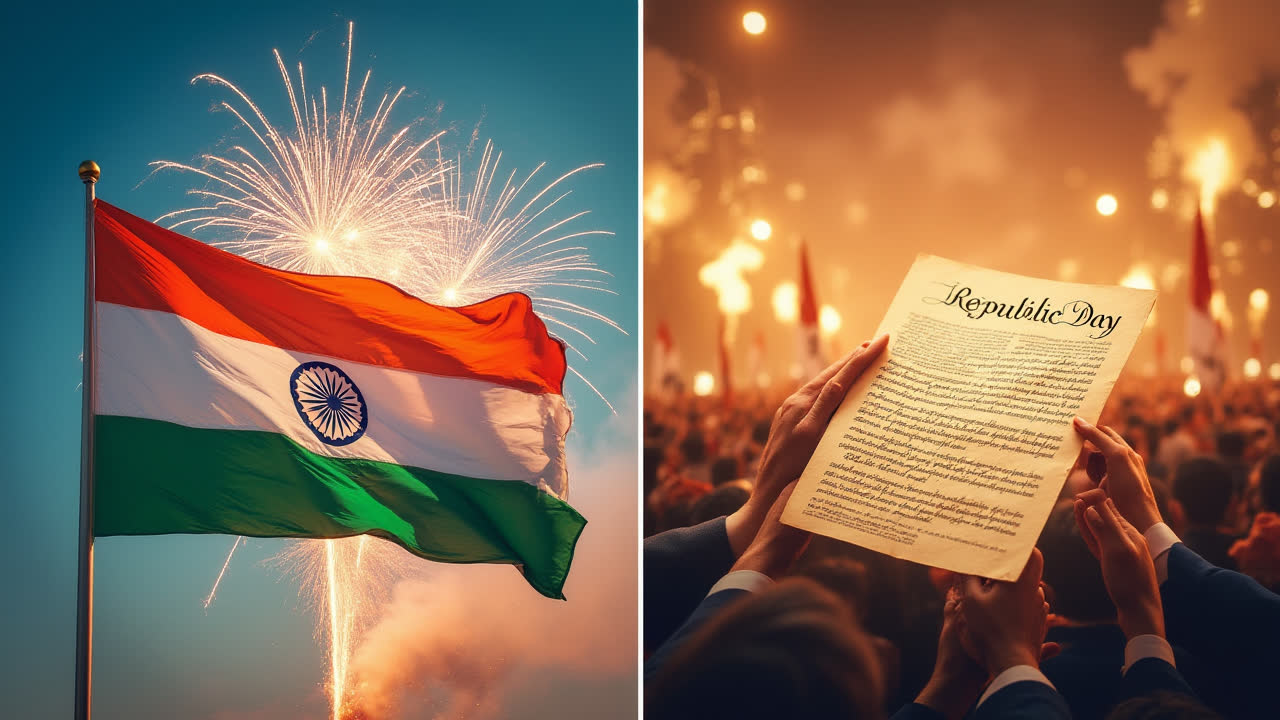
India presents one of the most interesting examples of the distinction between these celebrations. The country gained independence from British rule on August 15, 1947, but became a republic on January 26, 1950, when its constitution came into effect. Both days are celebrated as national holidays, but with different emphases. Independence Day celebrations in India focus on the freedom struggle and national identity, while Republic Day features impressive military parades and showcases India's cultural diversity and achievements.
In contrast, the United States celebrates only Independence Day as a major national holiday. While the U.S. is indeed a republic, it doesn't have a specific "Republic Day" because it became an independent nation and a republic almost simultaneously. The Declaration of Independence in 1776 and later the Constitution in 1789 established the U.S. as both an independent nation and a constitutional republic.
France presents yet another variation. Bastille Day, celebrated on July 14th, commemorates the storming of the Bastille prison in 1789—a pivotal event in the French Revolution. While not technically an "Independence Day" (as France wasn't a colony), it marks the uprising against monarchical oppression and is considered the national day. France has had several republics throughout its history but doesn't celebrate a specific Republic Day.
It's worth noting that some countries that were never formally colonized, like Thailand (formerly Siam), don't have an Independence Day but may have other significant national holidays. Similarly, constitutional monarchies like the United Kingdom, Japan, or Sweden don't celebrate Republic Day since they're not republics, though they have their own national days celebrating other aspects of their heritage.
The Significance of National Day Celebrations
Whether it's Independence Day or Republic Day, these national celebrations serve important social, cultural, and political functions. They reinforce collective identity, promote patriotism, and provide opportunities for citizens to reconnect with their national history and values. I've always felt that these celebrations help bridge generational gaps—they're occasions when stories of national formation are passed down, keeping historical memory alive.
These celebrations also serve as moments of national reflection. They prompt citizens to contemplate how far their nation has come since gaining independence or adopting a constitution, and what challenges remain in fulfilling the promises of freedom and democratic governance. In an increasingly globalized world, these national days have taken on added significance as ways to assert distinct cultural and political identities.
For diaspora communities, national day celebrations provide important connections to their homelands. They organize community events, cultural programs, and traditional feasts to commemorate these significant days even when far from home. This practice helps maintain cultural continuity and national identity across borders and generations.
From a political perspective, these national days also offer governments opportunities to showcase their achievements, military might, and cultural heritage. State ceremonies on these days often communicate important messages about national priorities and values to both domestic and international audiences. Government speeches delivered on these occasions frequently outline visions for the nation's future while drawing inspiration from its past.
Conclusion
Understanding the difference between Independence Day and Republic Day helps us appreciate the complex journey nations undergo in establishing their sovereignty and governance systems. While Independence Day celebrates freedom from foreign rule—the birth of a sovereign nation—Republic Day commemorates the adoption of a republican constitution that establishes how that nation will govern itself.
Not all countries celebrate both days, and the relationship between these celebrations varies according to each nation's unique historical path. Some countries became independent and republican simultaneously, while others experienced these transitions at different times. The varied ways in which these days are celebrated around the world reflect the diverse paths nations have taken toward self-determination and constitutional governance.
These national celebrations, regardless of their specific historical context, serve vital functions in maintaining collective memory, reinforcing national identity, and providing occasions for reflection on both achievements and ongoing challenges. They remind us that nationhood is both a historical achievement and an ongoing project—one that requires active citizenship and commitment to shared values.
Frequently Asked Questions
Can a country have both Independence Day and Republic Day on the same date?
Yes, a country can have both Independence Day and Republic Day on the same date if it gained independence and adopted a republican constitution simultaneously. This is relatively rare but can happen when a nation's independence movement includes a clear vision for republican governance from the outset. In most cases, however, these events occur at different times, as drafting and adopting a constitution typically takes time after independence is achieved. Countries like Ghana and Nigeria initially had their Independence Day and Republic Day on different dates, but later combined their celebrations into a single National Day.
Why don't all countries celebrate Republic Day?
Not all countries celebrate Republic Day because not all countries are republics. Constitutional monarchies like the United Kingdom, Japan, Sweden, Denmark, and Thailand have monarchs as their heads of state, even though many have democratic systems with elected parliaments. These nations don't celebrate Republic Day since they never became republics. Instead, they often celebrate other national days related to their monarchy, constitution, or cultural heritage. Additionally, some republics might emphasize their Independence Day celebrations over Republic Day, especially if independence was achieved through significant struggle.
What's the difference between a national day and Independence/Republic Day?
A national day is a broader term that refers to a designated date on which celebrations mark the nationhood of a country. Independence Day and Republic Day are specific types of national days. While many countries use their Independence Day or Republic Day as their national day, others choose different historically significant dates. For example, Australia's national day (Australia Day, January 26) marks the arrival of the First Fleet of British ships in 1788, not independence or becoming a republic. France's national day (Bastille Day, July 14) commemorates the storming of the Bastille during the French Revolution. Some countries may also change their national day over time to reflect evolving national identities or political changes.