Gravimetric vs Volumetric Analysis: A Comprehensive Comparison
Introduction to Analytical Chemistry Methods
In the world of analytical chemistry, determining the exact composition of substances is critical for research, quality control, and countless industrial applications. Gravimetric and volumetric analysis represent two fundamental quantitative methods that chemists rely on daily in laboratories worldwide. While both techniques aim to determine the amount of a specific constituent in a sample, they approach the problem from distinctly different angles.
Have you ever wondered how scientists can tell you the exact percentage of calcium in your dietary supplement or the precise concentration of chloride in your swimming pool? The answer lies in these analytical techniques. As someone who's spent countless hours in analytical labs, I can tell you that choosing between these methods often depends on the specific requirements of your analysis and the nature of your sample.
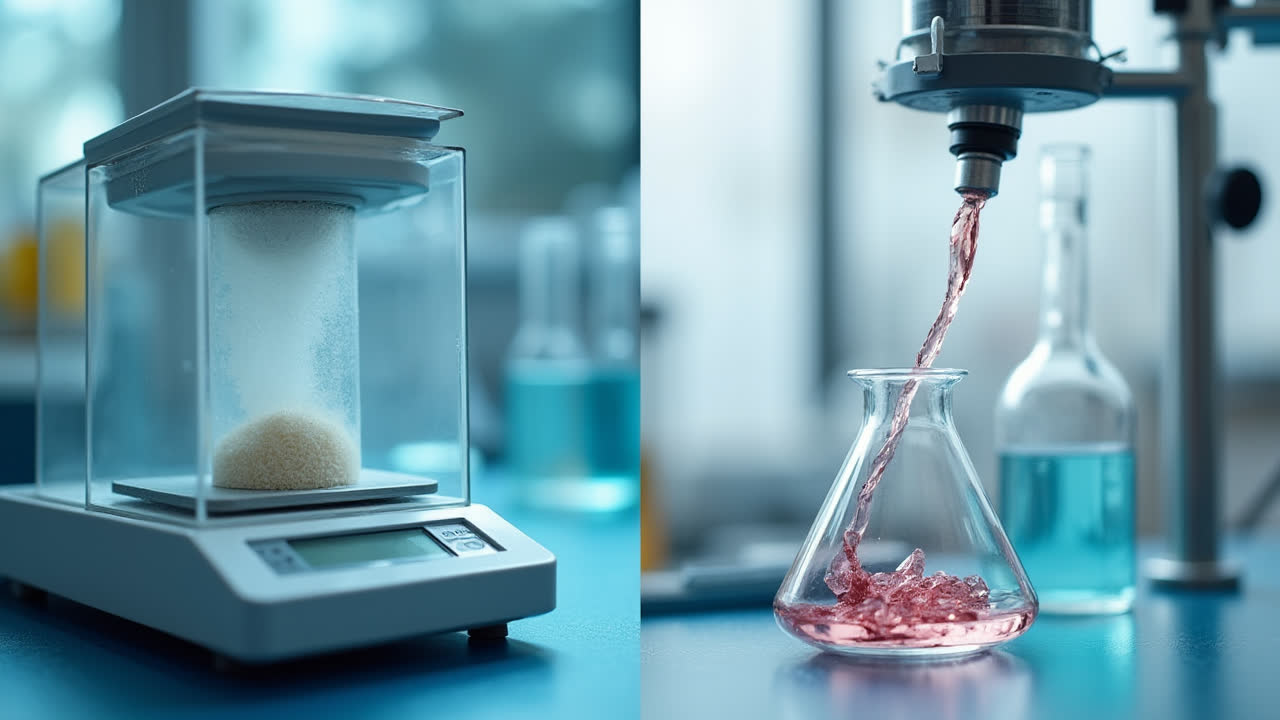
Gravimetric analysis determines the amount of an analyte (the substance being analyzed) by measuring its mass, while volumetric analysis quantifies the analyte by measuring its volume. This fundamental difference influences everything from the equipment used to the types of samples that can be effectively analyzed. Understanding these differences is essential for any chemistry student or professional working in analytical fields.
What is Gravimetric Analysis?
Gravimetric analysis is a quantitative determination method where the amount of an analyte is measured by its mass. The process typically involves converting the desired constituent in a liquid sample to a solid form (precipitate) that can be easily separated and weighed. This weight measurement then allows chemists to calculate the amount of the constituent in the original sample.
The methodology of gravimetric analysis follows a structured approach. First, a solution containing the analyte is prepared, ensuring proper dissolution. Next, a precipitating agent (reagent) is added to form an insoluble compound with the target analyte. This precipitation must be complete, with all analyte molecules participating in the reaction. The precipitate formed must be pure and have a known, stable chemical composition for accurate calculations.
I remember my first gravimetric analysis in college—determining the sulfate content in a water sample. The precision required was intimidating at first! You needed to be so careful with each step, from the slow addition of barium chloride to form barium sulfate precipitate to the meticulous drying and weighing process. It taught me the value of patience in analytical chemistry.
The separation of the precipitate from the solution can be accomplished through several methods:
- Traditional gravity filtration using filter paper
- Vacuum filtration using a Buchner funnel (significantly faster)
- Volatilization, where the liquid phase is evaporated, leaving the solid precipitate behind
Following separation, the precipitate is typically dried to remove any moisture, then carefully weighed using an analytical balance capable of measuring with extreme precision—often to the nearest 0.1 mg or better. Modern analytical balances can measure minuscule amounts of precipitate with remarkable accuracy, making gravimetric analysis suitable even for trace analysis in some applications.
What is Volumetric Analysis?
Volumetric analysis determines the amount of a constituent by measuring volume rather than mass. At its core lies the process of titration—a technique where a solution of known concentration (the titrant) is added gradually to a solution containing the analyte until the reaction between them is complete. This endpoint is typically indicated by a color change, either from the reaction itself or with the help of an indicator.
The beauty of volumetric analysis lies in its relative simplicity and speed compared to gravimetric methods. I've always appreciated how a complex analytical problem can be reduced to a simple color change in a flask. There's something almost magical about watching a solution transition from colorless to pink in an instant, signaling the precise endpoint of a titration.
The equipment required for volumetric analysis includes:
- Burettes: Calibrated glass tubes with a stopcock for dispensing measured volumes of titrant
- Pipettes: For transferring precise volumes of the analyte solution
- Erlenmeyer flasks: Wide-bottomed flasks that allow for easy swirling during titration
- Indicators: Substances that change color at the endpoint of the reaction
For accurate results, the titrant must react completely and quickly with the analyte in a well-defined, stoichiometric reaction. The concentration of the titrant must be precisely known, usually through standardization against a primary standard. The endpoint of the titration should coincide as closely as possible with the equivalence point—the point at which the titrant has exactly neutralized the analyte.
There are several types of volumetric analyses based on the nature of the chemical reaction involved:
- Acid-base titrations: Measuring the concentration of acids or bases
- Redox titrations: Involving oxidation-reduction reactions
- Complexometric titrations: Using complex formation reactions
- Precipitation titrations: Based on formation of precipitates
Key Differences at a Glance
Understanding the fundamental differences between these two analytical methods helps in selecting the appropriate technique for a particular analysis. Here's a quick overview of how gravimetric and volumetric analysis differ in their basic principles:
| Comparison Factor | Gravimetric Analysis | Volumetric Analysis |
|---|---|---|
| Primary Measurement | Mass of analyte | Volume of analyte or reagent |
| Primary Process | Precipitation and weighing | Titration |
| Key Equipment | Analytical balance, filtration apparatus | Burette, pipette, Erlenmeyer flask |
| Time Required | Generally longer (hours) | Generally shorter (minutes) |
| Precision | Very high for well-controlled methods | High, but can be affected by visual endpoint determination |
| Typical Units | Grams (g) or milligrams (mg) | Milliliters (mL) or microliters (μL) |
| Sample Size Requirements | Often requires larger samples | Can work with smaller sample volumes |
| Automation Potential | Limited, more manual steps | Higher, automatic titrators available |
Applications and Practical Examples
Both analytical methods find extensive applications across various industries and research fields, each with its particular strengths for specific types of analyses.
Gravimetric Analysis Applications
Gravimetric methods excel in situations requiring high precision and where suitable precipitation reactions are available. Some common applications include:
- Determination of sulfate content in water samples as barium sulfate
- Analysis of silver, lead, and mercury as halides
- Calcium determination as calcium oxalate
- Analysis of aluminum as aluminum oxide
- Determination of moisture content in various materials
- Pharmaceutical analysis for drug purity
In environmental analysis, gravimetric methods are often used to determine particulate matter in air samples or total dissolved solids in water. The mining industry relies heavily on gravimetric analysis for ore assays, particularly for precious metals like gold and silver.
Volumetric Analysis Applications
Volumetric methods are preferred when speed and simplicity are priorities, and where suitable titration reactions exist. Common applications include:
- Water hardness testing (calcium and magnesium content)
- Chloride determination in water samples
- Acid content in vinegar or citrus fruits
- Dissolved oxygen in water samples
- Vitamin C content in food and beverages
- Quality control in pharmaceutical manufacturing
In clinical laboratories, volumetric techniques are used for blood chemistry tests. The food and beverage industry uses volumetric methods extensively for quality control, from measuring acidity in dairy products to alcohol content in spirits.
Advantages and Limitations
As with any analytical method, both gravimetric and volumetric analyses have their strengths and weaknesses that make them more or less suitable for particular applications.
Gravimetric Analysis: Pros and Cons
The main advantages of gravimetric analysis include:
- Exceptional accuracy and precision when performed correctly
- Limited dependence on reference standards
- Results directly traceable to fundamental SI units (mass)
- Relatively simple equipment requirements
- Less affected by interference from other constituents when precipitation is selective
However, gravimetric methods also face limitations:
- Time-consuming process, often requiring hours or even days
- Labor-intensive with multiple manual steps
- Requires skilled technique for consistent results
- Challenging to automate
- Precipitates may absorb or occlude impurities, affecting accuracy
- Not suitable for trace analysis in some cases
Volumetric Analysis: Pros and Cons
The advantages of volumetric analysis include:
- Relatively rapid analysis time
- Easy to perform with basic laboratory skills
- Well-suited for routine analyses and quality control
- Easily automated with modern equipment
- Can be performed in the field with portable kits
- Works well with smaller sample volumes
The limitations of volumetric methods include:
- Dependent on the quality of standard solutions
- Endpoint determination can be subjective with visual indicators
- Requires regular standardization of solutions
- Some titration reactions may be slow or incomplete
- Temperature effects can influence accuracy
- Multiple interferences can complicate analysis
Modern Developments and Future Trends
While gravimetric and volumetric analyses are considered classical techniques, they continue to evolve with technological advancements. Today's laboratories often combine these traditional methods with modern instrumental techniques for enhanced efficiency and accuracy.
In modern gravimetric analysis, we're seeing innovations like:
- Microbalances capable of measuring sub-microgram masses
- Automated filtration systems reducing manual handling
- Thermogravimetric analyzers combining heating with precise mass measurement
- Software for complex stoichiometric calculations
For volumetric analysis, recent developments include:
- Automated titrators with precise endpoint detection
- Potentiometric and spectrophotometric endpoint determination
- Microfluidic titration systems for minimal reagent consumption
- Online titration systems for continuous process monitoring
The integration of these classical methods with modern data analysis and quality control systems ensures they remain relevant in today's analytical laboratories. For instance, many pharmaceutical companies still rely on these fundamental techniques for batch release testing, complemented by instrumental methods for comprehensive analysis.
Looking ahead, we'll likely see further miniaturization and automation of these techniques, reducing sample and reagent volumes while increasing throughput. The principles of gravimetric and volumetric analysis will continue to underpin analytical chemistry education and practice, even as new technologies emerge.
Frequently Asked Questions About Gravimetric and Volumetric Analysis
When should I choose gravimetric analysis over volumetric analysis?
Choose gravimetric analysis when you need extremely high accuracy and precision, especially for determining major constituents in a sample. It's particularly valuable when suitable precipitation reactions exist for your analyte and when time constraints are not a major concern. Gravimetric methods are often preferred for official analyses, reference method development, and situations where results need to be directly traceable to fundamental units without reliance on chemical standards. However, if you're conducting routine analyses with many samples or need rapid results, volumetric methods might be more appropriate.
What are the most common sources of error in gravimetric and volumetric analyses?
In gravimetric analysis, common errors include incomplete precipitation, co-precipitation of impurities, loss of precipitate during filtration, inadequate washing of precipitates, and issues with drying conditions affecting precipitate composition. Balance calibration and environmental factors like humidity can also introduce errors.
For volumetric analysis, major error sources include improper standardization of titrant solutions, endpoint determination difficulties, temperature fluctuations affecting volume measurements, parallax errors when reading burettes, and contaminated glassware. Human factors like inconsistent titrant addition rates or subjective endpoint detection can also significantly impact results.
Can gravimetric and volumetric methods be combined in a single analysis?
Yes, gravimetric and volumetric methods can be effectively combined in certain analytical procedures, creating hybrid techniques that leverage the strengths of both approaches. One common example is the preparation of standard solutions for volumetric analysis using gravimetric techniques—precisely weighing a primary standard before dissolution and dilution to volume. Another application is standardizing titrants gravimetrically before using them in volumetric analysis.
In some complex analyses, volumetric techniques might be used for sample preparation before gravimetric determination, or a precipitate formed during gravimetric analysis might be redissolved and determined volumetrically as a confirmation step. These combined approaches can provide internal validation and enhance overall analytical accuracy.
Conclusion
Gravimetric and volumetric analyses remain foundational techniques in analytical chemistry despite the proliferation of sophisticated instrumental methods. Their principles underpin much of modern quantitative analysis, and their practical applications continue to be relevant across numerous industries.
The choice between these methods often comes down to specific analytical requirements: gravimetric analysis offers exceptional accuracy but requires more time and labor, while volumetric analysis provides faster results with good precision for many applications. In many modern laboratories, these classical methods complement advanced instrumentation, providing validation and fundamental understanding of analytical principles.
As we've seen throughout this comparison, each method has its distinct advantages and limitations. By understanding these differences, analysts can make informed decisions about which technique is most appropriate for their specific analytical challenges. Whether you're determining the calcium content in a water sample, analyzing the purity of a pharmaceutical ingredient, or measuring environmental contaminants, these time-tested methods continue to serve as reliable tools in the analytical chemist's arsenal.
For students and professionals alike, mastering these fundamental techniques provides a solid foundation for understanding more complex analytical methods. The careful attention to detail, understanding of chemical equilibria, and procedural rigor required by gravimetric and volumetric analyses develop skills that transfer across the entire spectrum of analytical chemistry.
References:
- http://chemistry.tutorvista.com/analytical-chemistry/volumetric-analys
- http://www.britannica.com/science/gravimetric-analysis
- http://www.wiredchemist.com/chemistry/instructional/laboratory-tutoria
- https://commons.wikimedia.org/w/index.php?curid=1523830
- https://commons.wikimedia.org/w/index.php?curid=60258648