Flagella vs Sarcodina: 8 Key Differences in Protozoan Locomotion
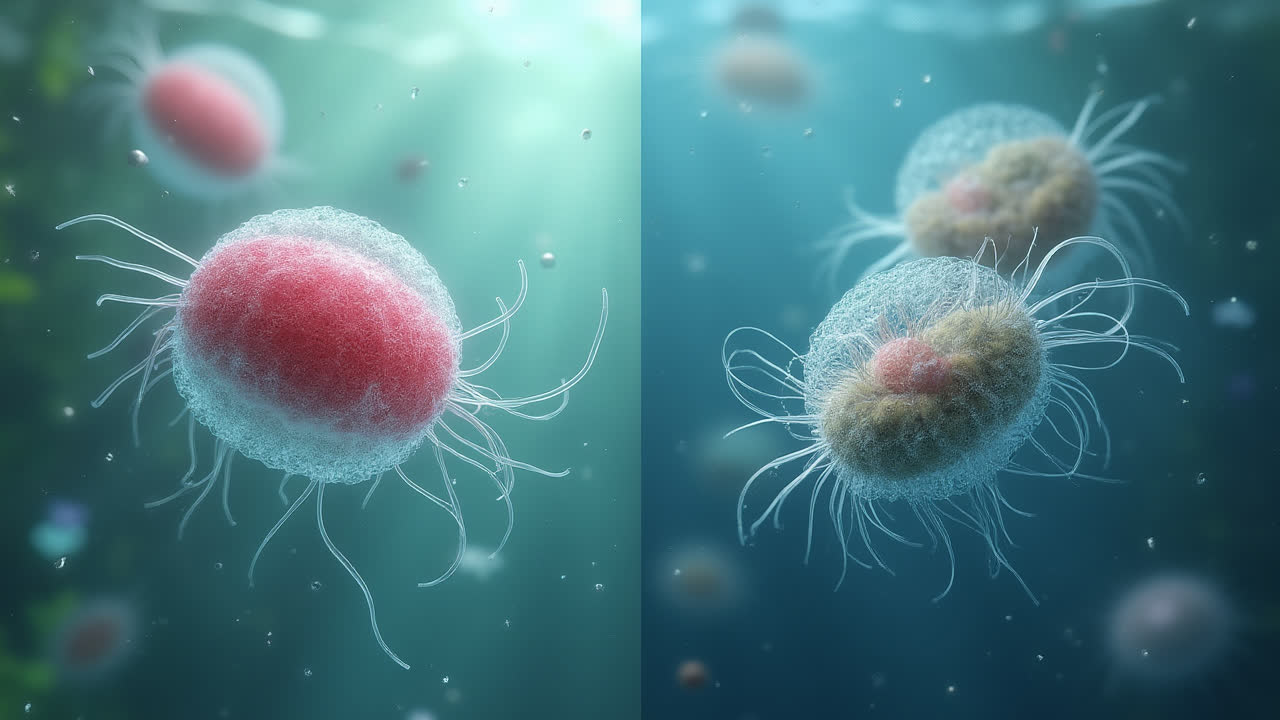
When examining the microscopic world of protozoans, one of the most fascinating aspects is how these tiny single-celled organisms move around. The way they navigate their environment isn't just a biological curiosity—it's fundamental to their survival. Among the various locomotion methods, flagella and Sarcodina represent two distinctly different approaches that have evolved in these ancient life forms. But what exactly makes them different? And why does it matter?
In the realm of protozoans, movement means everything—it's how they find food, escape predators, and reproduce. Some protozoans whip through their watery habitats using thread-like structures called flagella, while others, classified under Sarcodina, flow and extend their cell bodies using temporary projections called pseudopodia. The difference isn't just academic; it reflects millions of years of evolutionary adaptation to different ecological niches.
Today, we'll dive deep into the microscopic world to understand the key differences between flagella and Sarcodina. Whether you're a biology student, a curious mind, or someone who just loves the wonders of the natural world, this comparison will give you a new appreciation for these incredible microorganisms and their ingenious modes of movement.
Understanding Flagella: Nature's Microscopic Propellers
Flagella (singular: flagellum) are slender, whip-like structures that extend from the cell bodies of certain protozoans and serve as their primary means of locomotion. Think of them as nature's microscopic propellers—they create movement by lashing back and forth or rotating, propelling the organism through its liquid environment. What's particularly interesting is that different types of organisms have developed different versions of this remarkable structure.
In the protozoan world, flagella belong to the eukaryotic type, which means they have a complex internal structure known as the "9+2 axoneme." This refers to nine pairs of microtubules arranged in a circle around two central microtubules. This arrangement gives eukaryotic flagella their flexibility and distinctive whip-like motion. Protozoans that move using flagella are classified under Mastigophora (also called flagellates), a taxonomic group within the phylum Sarcomastigophora.
Have you ever wondered how these tiny structures generate enough force to move an entire cell? The motion of flagella isn't random—it's a precisely coordinated action powered by molecular motors called dynein. These motors cause the microtubules to slide against each other, resulting in the bending of the flagellum. The cell can control this bending to create different patterns of movement, allowing for surprisingly sophisticated navigation through their microscopic world.
Some common examples of flagellated protozoans include Trypanosoma (which causes sleeping sickness), Giardia (responsible for giardiasis), and Euglena (a fascinating organism that can perform both photosynthesis and heterotrophic nutrition). Most flagellates have one to eight flagella, though some can have many more. The number, length, and arrangement of flagella vary among species and often serve as identifying characteristics for taxonomists.
Flagella aren't just for movement, though that's their primary function. In some species, they also play roles in feeding, sensing the environment, and even in cellular attachment. This multifunctionality showcases the remarkable adaptability of these seemingly simple structures.
Exploring Sarcodina: Masters of Cytoplasmic Flow
While flagellates zip through water with their whip-like appendages, members of the Sarcodina group take a completely different approach to locomotion. Sarcodina is a subphylum within Sarcomastigophora that includes familiar protozoans like amoebas. Rather than using specialized structures that extend permanently from their bodies, these organisms literally flow their way through their environment using temporary extensions of their cytoplasm called pseudopodia (singular: pseudopodium).
Pseudopodia, which literally means "false feet," are temporary projections that form when the cytoplasm of the cell flows in a particular direction. This flow isn't random or uncontrolled—it's a directed process that involves the coordination of many cellular components, particularly the cytoskeleton. The formation of pseudopodia begins with the assembly of actin filaments that push the cell membrane outward. As the pseudopodium extends, the rest of the cell can then flow into this extension, effectively moving the entire organism forward. It's rather like watching a living blob reshape itself constantly to move.
What's fascinating about Sarcodina members is the variety of pseudopodia they can form. Some produce broad, lobe-like extensions (lobopodia), while others create thin, thread-like projections (filopodia), ray-like structures (axopodia), or even net-like formations (reticulopodia). Each type is adapted to different environmental conditions and lifestyles. For instance, the reticulopodia of foraminifera are excellent for capturing food particles from the surrounding water.
Sarcodina is a diverse group that includes several major types of organisms:
- Amoebas, like Amoeba proteus, which are perhaps the most familiar examples
- Heliozoans, which have ray-like pseudopodia and often look like tiny suns
- Radiolarians, marine protozoans with beautiful mineral skeletons
- Foraminifera, which form shells (tests) and are ecologically important in marine environments
Beyond just locomotion, pseudopodia serve another critical function: feeding. Many Sarcodina members are predatory and use their pseudopodia to engulf food particles or even other microorganisms in a process called phagocytosis. Some species, like Entamoeba histolytica, are parasitic and can cause diseases such as amoebic dysentery in humans. This demonstrates how these seemingly simple organisms can have significant impacts on other forms of life, including us.
Detailed Comparison: Flagella vs. Sarcodina
Now that we've explored both flagella and Sarcodina independently, let's put them side by side to better understand their differences and similarities. Though both serve the fundamental purpose of locomotion in protozoans, they represent distinctly different evolutionary adaptations to the challenges of microscopic life.
| Comparison Point | Flagella | Sarcodina |
|---|---|---|
| Definition | Slender, whip-like structures used for locomotion | Taxonomic group of protozoans using pseudopodia for movement |
| Structure | Permanent cellular appendages with 9+2 microtubule arrangement | Temporary cytoplasmic extensions with actin filament network |
| Movement Mechanism | Whip-like motion or rotation | Cytoplasmic flowing and extension |
| Taxonomic Group | Mastigophora (flagellates) | Sarcodina (amoeboid organisms) |
| Common Examples | Trypanosoma, Giardia, Euglena | Amoeba, Heliozoans, Radiolarians, Foraminifera |
| Relative Size of Group | Less common among protozoans | Large taxonomic group with many species |
| Secondary Functions | Sensing environment, feeding, attachment | Primary method for feeding (phagocytosis) |
| Energy Efficiency | High energy requirement but faster movement | Lower energy requirement but slower movement |
One thing that strikes me about these two locomotion methods is how they reflect different solutions to the same problem. Flagella represent a specialized, dedicated structure for movement—a bit like having a dedicated motor. Pseudopodia, on the other hand, represent a more flexible, adaptable approach where the entire cell participates in movement. Neither is "better" in an absolute sense; they're just different strategies that have proven successful in different ecological contexts.
I've sometimes thought of these different locomotion methods as analogous to different transportation technologies we humans use. Flagellated organisms are like motorboats, using a specialized propeller to move quickly through water. Sarcodina members are more like those futuristic vehicles in science fiction that can reshape themselves to adapt to different terrains. Both get the job done, just with different approaches and trade-offs.
Ecological and Evolutionary Significance
The differences between flagella and Sarcodina extend far beyond just how these organisms move—they reflect deeper ecological adaptations and evolutionary histories. These different locomotion strategies have allowed protozoans to occupy diverse niches in aquatic environments, from open water to sediments, and even within the bodies of other organisms.
Flagellated protozoans are generally better adapted to swimming freely in water. Their whip-like movement allows them to cover relatively large distances efficiently, making them well-suited for open water environments. Many flagellates are also capable of rapid directional changes, allowing them to respond quickly to environmental stimuli such as light, chemical gradients, or the presence of predators. Some parasitic flagellates have evolved specialized adaptations that allow them to navigate the complex environments of their hosts' bodies, such as the bloodstream or intestinal tract.
In contrast, Sarcodina members, with their pseudopodial movement, are often better adapted to crawling over surfaces or moving through sediments and detritus. The ability to extend pseudopodia in any direction gives them exceptional maneuverability in confined spaces. This movement method also synergizes perfectly with their feeding strategy of phagocytosis—the same extensions used for movement can engulf food particles or prey. Some amoeboid organisms have become highly specialized for particular microhabitats; for instance, soil amoebas have adapted to move efficiently through the water films surrounding soil particles.
From an evolutionary perspective, these different locomotion strategies represent divergent paths taken early in the evolution of eukaryotic cells. Both approaches have proven remarkably successful, persisting for hundreds of millions of years. Interestingly, modern phylogenetic studies have shown that Sarcodina is not a monophyletic group (derived from a common ancestor), suggesting that pseudopodial movement may have evolved independently multiple times. This convergent evolution highlights how effective this locomotion strategy is in certain environments.
I find it fascinating to consider how these microscopic movement mechanisms have rippled upward to affect entire ecosystems. Flagellated and amoeboid protozoans occupy different trophic roles in microbial food webs, affecting nutrient cycling and energy flow through ecosystems. Some, like marine foraminifera (Sarcodina members), even play roles in global geochemical cycles, contributing to the formation of vast limestone deposits over geological time scales. Who would have thought that such tiny organisms, moving in such different ways, could have such far-reaching impacts?
Conclusion: Two Paths to Microscopic Mobility
As we've explored throughout this article, flagella and Sarcodina represent two fundamentally different approaches to movement in the protozoan world. Flagella are specialized, whip-like structures that propel organisms through fluid environments with rapid, directed movements. They're the hallmark of the Mastigophora group and exemplify a strategy of using dedicated locomotory structures. On the other hand, Sarcodina members use temporary cytoplasmic extensions called pseudopodia, essentially flowing and reshaping their entire cell bodies to move—a strategy that combines locomotion seamlessly with feeding.
These differences aren't just biological curiosities—they reflect different evolutionary solutions to the challenges of life at the microscopic scale. Each approach comes with its own advantages and limitations, and each has proven remarkably successful over hundreds of millions of years of evolution. The diversity of movement strategies among protozoans reminds us of the incredible adaptability and ingenuity of life, even at its simplest levels.
Understanding these different locomotion methods gives us a window into the complex and fascinating world of microorganisms that surrounds us, yet often goes unnoticed. It also provides valuable insights for fields ranging from evolutionary biology to biomechanics, and even to human medicine, where parasitic protozoans continue to pose significant health challenges worldwide.
So next time you look at a drop of pond water under a microscope, or read about a protozoan-caused disease, take a moment to appreciate these remarkable locomotion strategies. Whether whipping through water with flagella or flowing forward with pseudopodia, these tiny organisms have mastered the art of movement in ways that continue to inspire scientific curiosity and wonder.
Frequently Asked Questions
What is the main functional difference between flagella and pseudopodia?
The main functional difference is that flagella are permanent, specialized structures dedicated primarily to locomotion, while pseudopodia are temporary cytoplasmic extensions that serve both for movement and feeding. Flagella create movement through whip-like motions or rotation, allowing for faster swimming in open water. Pseudopodia, on the other hand, form when the cell cytoplasm flows in a particular direction, creating extensions that allow the organism to crawl over surfaces and engulf food particles. This dual functionality makes pseudopodia particularly efficient for organisms that need to move and feed simultaneously in environments with abundant food particles.
Can a single protozoan have both flagella and pseudopodia?
Yes, some protozoans can indeed possess both flagella and pseudopodia, though usually not simultaneously in their life cycle. Certain species demonstrate what biologists call "pleomorphism," where they can change their body form and locomotion method depending on environmental conditions or life cycle stage. For example, some parasitic protozoans like Naegleria fowleri (the "brain-eating amoeba") can exist in both a flagellated form for swimming and an amoeboid form with pseudopodia for crawling and feeding. This adaptability allows them to respond to changing environments and is part of what makes some of these organisms such successful parasites. However, most protozoans specialize in one locomotion method or the other.
How do flagella and pseudopodia differ at the molecular level?
At the molecular level, flagella and pseudopodia employ entirely different protein systems and mechanisms. Eukaryotic flagella have a complex internal structure based on microtubules arranged in the characteristic "9+2" pattern, with nine outer doublet microtubules surrounding two central singlet microtubules. Movement is generated by dynein motor proteins that cause these microtubules to slide against each other, creating a bending motion. In contrast, pseudopodia formation relies primarily on actin filaments and associated proteins. The extension of pseudopodia involves the polymerization of actin at the leading edge, while myosin motors generate contractile forces that help pull the cell body forward. These fundamental differences in molecular machinery reflect the independent evolutionary origins of these two locomotion strategies.