Dork vs Nerd: 8 Critical Differences You Should Know
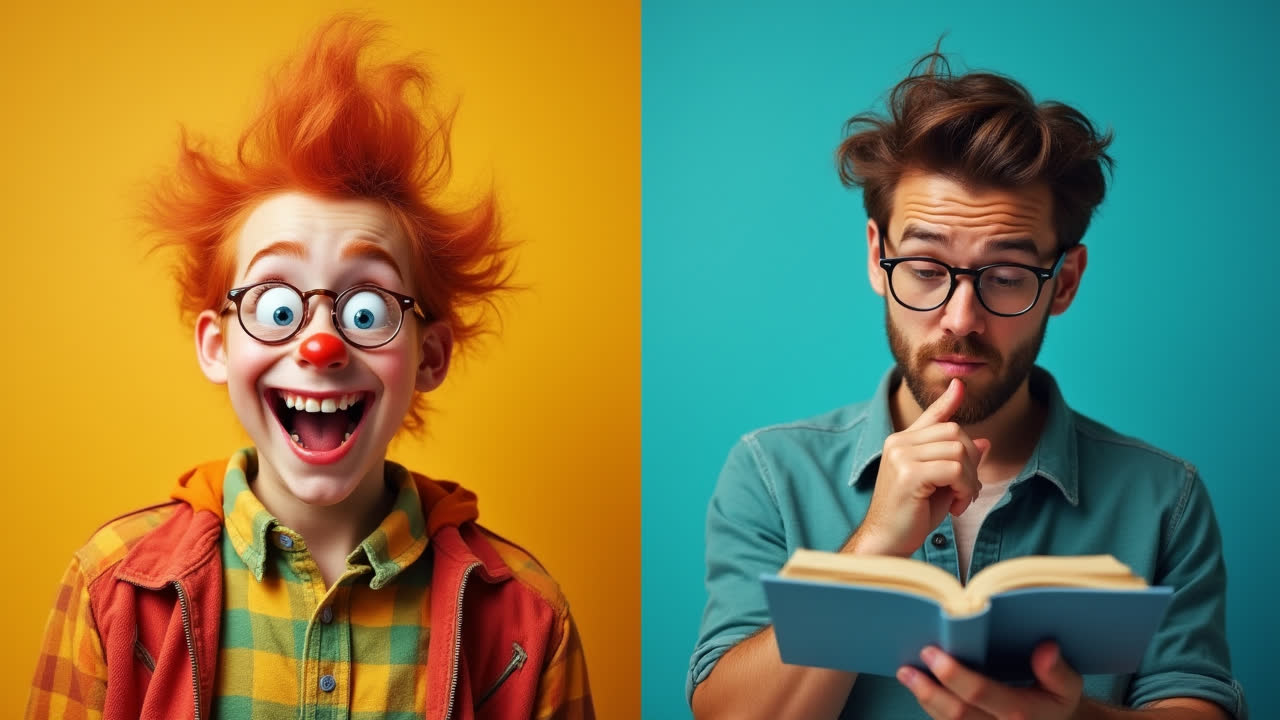
What Exactly Is a Dork?
The term dork emerged in American culture during the 1960s, making it a relatively recent addition to our social vocabulary. At its core, a dork refers to someone who displays socially awkward behavior, often accompanied by unstylish appearance or mannerisms. When I first heard this term in middle school, it was usually directed at kids who seemed oblivious to social norms - the ones who might wear mismatched socks or laugh too loudly at inappropriate times.
Dorks typically struggle with social awareness and may not recognize how their behavior comes across to others. Think about that friend who tells the same joke repeatedly without noticing nobody's laughing anymore - that's classic dorkish behavior. While dorks might possess average or even above-average intelligence, their defining characteristic isn't intellectual prowess but rather their social awkwardness.
The word originally carried a strongly negative connotation and was used derogatorily. However, in recent years, the term has undergone something of a transformation. When someone self-identifies as a dork, it often comes across as endearing or self-deprecating rather than truly negative. I've noticed many people proudly claim their "dorkiness" when referring to their quirky interests or occasional social blunders. This shift reflects our culture's growing acceptance and even celebration of individuality and authentic self-expression.
Dorks tend to be genuine and unapologetically themselves - they don't typically put on airs or try to be someone they're not. They might dance awkwardly at parties without caring who's watching or become wildly enthusiastic about topics that others find mundane. While they may not be the most polished individuals socially, dorks often bring refreshing authenticity to their interactions. Don't we all have a bit of dork in us sometimes?
Defining the Modern Nerd
Unlike dorks, nerds are primarily defined by their exceptional intelligence and dedication to intellectual or academic pursuits. The term "nerd" emerged earlier than "dork" and has undergone a more dramatic evolution in meaning. When I was growing up in the 90s, calling someone a nerd was definitely not a compliment - but today? It's almost a badge of honor in many circles.
The nerd stereotype typically includes high intelligence paired with intense focus on specific subjects - whether that's quantum physics, computer programming, chess strategy, or obscure fantasy literature. Nerds tend to dive deep into their areas of interest, often accumulating impressive knowledge that far exceeds casual enthusiasm. I once knew a guy who could recite every statistical detail about baseball games from the 1950s - classic nerd behavior, though admittedly impressive!
Social awkwardness is certainly part of the nerd archetype, but it's not necessarily because nerds lack social awareness (as dorks might). Rather, nerds may prioritize intellectual pursuits over social skills development or simply find more meaningful connections with those who share their specialized interests. Think about it - if you spend 40 hours a week mastering computer code, you might have less time to keep up with popular culture references or practice small talk.
Today's culture has largely embraced nerdiness, particularly as technology has become central to our daily lives. The rise of billion-dollar tech companies founded by self-proclaimed nerds has transformed the stereotype from social outcast to potential visionary. The popular phrase "nerds will inherit the earth" reflects this cultural shift. And let's face it - in an information-based economy, deep knowledge and technical skills often translate directly to career success and financial security.
Nerds typically form strong communities around their interests - whether that's online gaming guilds, hackathons, academic conferences, or comic book conventions. Within these spaces, what might be considered "nerdy" behavior in mainstream contexts becomes the norm, allowing nerds to connect authentically with like-minded individuals. Haven't we all experienced that joy of finding "our people" who share our particular passions?
Dork vs Nerd: Comprehensive Comparison
Now that we've explored both terms individually, let's place them side by side to highlight their key differences. While there's certainly overlap between dorks and nerds (and many people might identify with aspects of both), understanding these distinctions helps clarify the unique characteristics of each social archetype.
| Comparison Point | Dorks | Nerds |
|---|---|---|
| Primary Defining Feature | Social awkwardness and lack of self-awareness | High intelligence and intellectual interests |
| Intelligence Level | Average to above average, not defining | Usually above average to exceptional |
| Social Skills | Often genuinely unaware of social norms | May understand social norms but prioritize other interests |
| Typical Interests | Varied, often mainstream but approached awkwardly | Specialized, technical, academic or fantasy-based |
| Modern Perception | Endearing, amusing, authentic | Respected, potentially successful, knowledgeable |
| Origin of Term | 1960s in American slang | 1950s, first appeared in Dr. Seuss book |
| Self-identification | Often used self-deprecatingly | Increasingly used with pride |
| Cultural Evolution | Slight positive shift from negative origins | Major positive transformation in digital age |
Social Impact and Cultural Significance
The evolution of terms like "dork" and "nerd" reflects broader cultural shifts in how we value different personal qualities. In previous decades, social smoothness and conventional attractiveness were prized above intellectual pursuits or authentic self-expression. Today's culture, however, increasingly celebrates knowledge, expertise, and genuine individuality - traits often associated with nerds and dorks respectively.
This transformation is particularly evident in media representation. In older movies and TV shows, nerds were almost exclusively portrayed as victims or comic relief. Think of the stereotypical characters with thick glasses and pocket protectors who existed solely to be mocked by the "cool kids." Similarly, socially awkward dorks were presented as pitiful or ridiculous. But today? Some of our biggest fictional heroes are proudly nerdy - from the entire cast of Silicon Valley to Tony Stark's brilliant engineer persona in the Marvel universe.
The internet has played a significant role in this cultural rehabilitation. Online spaces have allowed both nerds and dorks to find their communities and celebrate their shared interests without geographic limitations. I've witnessed firsthand how online gaming communities or specialized forums can provide rich social connections for people who might struggle in conventional social settings. The internet has essentially created parallel social spheres where different qualities are valued.
Perhaps most importantly, our evolving understanding of neurodiversity has helped reframe many qualities previously dismissed as simply "dorky" or "nerdy." We now recognize that different cognitive styles and social approaches represent human variation rather than deficiency. Many traits associated with both dorks and nerds - intense focus, passionate interest in specific subjects, alternative approaches to social interaction - overlap with neurodivergent conditions like autism spectrum disorder. This growing awareness has helped foster greater acceptance of different ways of being.
Are You a Dork or a Nerd? Self-Identification Guide
Curious about where you might fall on the dork-nerd spectrum? While these categories aren't scientific classifications (and many people display characteristics of both), here are some tell-tale signs that might help you identify your social archetype:
You Might Be a Dork If...
- You frequently tell jokes that are met with awkward silence
- You get genuinely excited about things others find mundane
- You've been told your dancing is "unique" or "interesting"
- You often don't notice when you've committed a social faux pas
- You have a habit of talking too loudly or at inappropriate times
- You're known for your quirky but genuine personality
You Might Be a Nerd If...
- You can talk for hours about specialized topics that fascinate you
- You prefer deep conversations about ideas over small talk
- You've mastered skills that required intensive study
- You have collections or memorabilia related to your interests
- You notice details and inconsistencies that others miss
- You value logic and evidence-based reasoning highly
Of course, these categories aren't mutually exclusive. You might be a nerdy dork or a dorky nerd! And ultimately, embracing whatever combination of traits makes you uniquely yourself is far more important than fitting neatly into any social category. Haven't we moved beyond the need for rigid social classifications anyway?
The Value of Embracing Your Authentic Self
Whether you identify more as a dork, a nerd, both, or neither, perhaps the most important takeaway is the value of authentic self-expression. Society has increasingly come to recognize that conformity doesn't necessarily correlate with contribution or fulfillment. Some of our most innovative thinkers, creative artists, and impactful leaders have been those who didn't quite fit conventional social molds.
I've noticed in my own life that the moments of greatest connection and joy often come when I'm being genuinely myself - whether that means geeking out over a favorite book series or embracing my occasional social awkwardness. There's something liberating about accepting your own quirks rather than exhausting yourself trying to project a perfectly polished image.
This isn't to suggest that developing social skills or broadening your interests isn't valuable. Personal growth is important for everyone. But growth doesn't have to mean erasing the core aspects of your personality that make you unique. A dork can learn to read social cues better while maintaining their endearing enthusiasm. A nerd can develop conversational skills while still nurturing their deep intellectual passions.
In a world that increasingly values innovation, specialized knowledge, and authentic connection, perhaps we should all embrace a bit more of our inner dork or nerd. After all, wouldn't life be terribly boring if we all fit perfectly into conventional social expectations?
Frequently Asked Questions About Dorks and Nerds
Is being called a dork or nerd still considered an insult?
While both terms originated as insults, their meaning has evolved significantly in modern culture. Today, being called a nerd is often viewed positively, implying intelligence and valuable expertise. The term dork has also softened, though it still carries connotations of social awkwardness. Context and tone matter greatly - these words can still be used to mock, but many people proudly self-identify as dorks or nerds. In professional settings, nerd has become particularly positive, especially in technology and academic fields where deep knowledge is highly valued.
What's the difference between a geek, a nerd, and a dork?
These terms have overlapping but distinct meanings. A nerd is primarily characterized by high intelligence and academic interests, often accompanied by social awkwardness. A geek is someone with intense passion for specific interests (often technology, fantasy, or pop culture) but may have better social skills than a typical nerd. A dork is mainly defined by social awkwardness and lack of self-awareness rather than intellectual pursuits or specific passions. Think of it this way: nerds are known for what they know, geeks for what they love, and dorks for how they interact with others.
Can someone be both a dork and a nerd simultaneously?
Absolutely! Many people display characteristics of both dorks and nerds. Someone might have the high intelligence and specialized knowledge typical of nerds while also showing the social awkwardness and unfiltered enthusiasm of dorks. These categories aren't scientific classifications but social archetypes that exist on a spectrum. People are complex and multidimensional - they rarely fit perfectly into just one stereotype. Someone might be a nerd about mathematics but a dork in social situations, or show different traits depending on context and comfort level.