Disproportionation vs Comproportionation: Understanding Key Chemical Reactions
In the fascinating world of chemistry, disproportionation and comproportionation reactions represent two sides of the same coin. These important redox processes play crucial roles in numerous chemical systems, from everyday reactions in your kitchen to complex industrial processes. But what exactly sets these reactions apart, and why should chemists care about their distinctions?
Have you ever wondered why some chemical elements can undergo seemingly contradictory transformations simultaneously? Or perhaps you've been puzzled by how certain compounds can both donate and accept electrons in the same reaction? The answers lie in understanding these fundamental reaction types that form the backbone of redox chemistry.
In this comprehensive guide, we'll dive deep into the mechanisms, examples, and applications of disproportionation and comproportionation reactions. Whether you're a chemistry student looking to strengthen your understanding or a curious mind exploring the wonders of chemical transformations, this article will illuminate these fascinating processes that drive countless reactions in both laboratory settings and natural systems.
What is a Disproportionation Reaction?
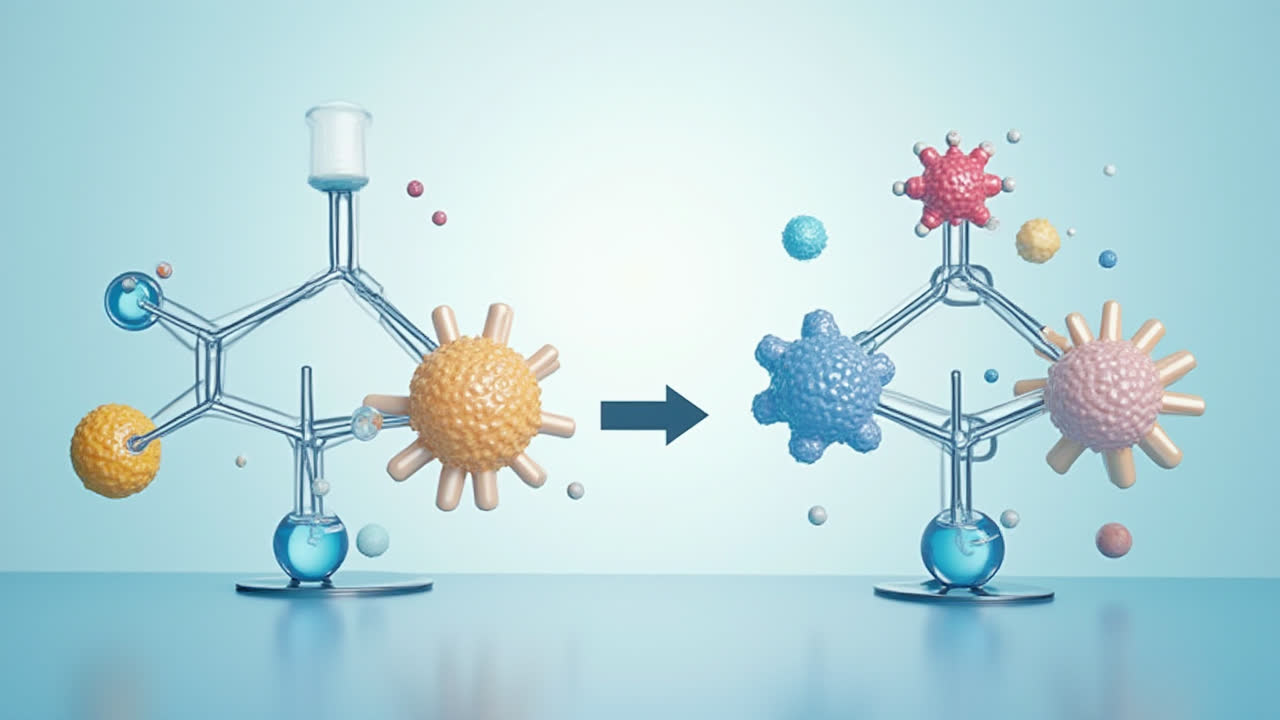
A disproportionation reaction occurs when a chemical species simultaneously undergoes both oxidation and reduction, producing two different products with the original element in different oxidation states. This unique process involves a single compound transforming into multiple compounds where the central element exists in both higher and lower oxidation states than it did in the reactant.
The concept might sound complex, but it's actually quite elegant. In these reactions, one portion of the reactant molecules gives up electrons (oxidation), while another portion gains those very electrons (reduction). The beauty of disproportionation lies in its self-contained nature – the same element acts as both the electron donor and acceptor.
One classic example that perfectly illustrates this phenomenon is the decomposition of hydrogen peroxide (H₂O₂). When hydrogen peroxide breaks down, either naturally or with a catalyst, some molecules are oxidized to form oxygen gas (O₂), while others are reduced to form water (H₂O). The reaction can be represented as:
2H₂O₂ → 2H₂O + O₂
In this reaction, oxygen atoms in hydrogen peroxide (which have an oxidation state of -1) are simultaneously converted to oxygen atoms with oxidation states of -2 (in water) and 0 (in molecular oxygen). This redistribution of oxidation states is the hallmark feature of disproportionation reactions.
Disproportionation reactions aren't just chemical curiosities – they have significant practical applications. For instance, the disproportionation of chlorine gas in alkaline solutions produces bleach (sodium hypochlorite) and is fundamental to water treatment processes. Similarly, the disproportionation of copper(I) compounds is exploited in various industrial processes and plays a role in certain corrosion mechanisms.
What is a Comproportionation Reaction?
Comproportionation (also called synproportionation) represents the opposite process to disproportionation. In these reactions, two different compounds containing the same element but in different oxidation states react to form a product where that element exists in an intermediate oxidation state.
Think of comproportionation as a chemical "meeting in the middle." The element in a higher oxidation state is reduced, while the same element in a lower oxidation state is oxidized. The result? A product with an oxidation state that falls between the two reactants – a beautiful chemical compromise.
A well-known example of comproportionation involves iron ions. When ferrous ions (Fe²⁺) and ferric ions (Fe³⁺) are combined under specific conditions, they can form compounds containing iron with an effective oxidation state of +2.5. This "averaging out" of oxidation states is what makes comproportionation reactions so interesting from both theoretical and practical perspectives.
Another illustrative example is the reaction between elemental copper (Cu⁰) and copper(II) ions (Cu²⁺) in an acidic solution to produce copper(I) ions (Cu⁺):
Cu + Cu²⁺ → 2Cu⁺
Comproportionation reactions find applications in various fields, particularly in metallurgy and materials science. They're used to synthesize mixed-valence compounds and play roles in numerous catalytic processes. In some cases, comproportionation reactions are employed to prepare compounds that would be difficult to obtain through other synthetic routes.
Key Similarities Between These Reactions
Despite their opposite natures, disproportionation and comproportionation share several important characteristics that place them in the same family of chemical processes:
- Both are classified as redox reactions, involving changes in oxidation states
- They both deal with the same element undergoing oxidation and reduction
- Both reactions are governed by thermodynamic principles and driven by energy considerations
- These reactions often require specific conditions (temperature, pH, presence of catalysts) to proceed efficiently
- Both have significant applications in industrial chemistry and natural processes
Understanding these similarities helps chemists recognize the underlying principles that govern electron transfer processes in a wide range of chemical systems. It's fascinating how nature uses these complementary mechanisms to achieve chemical equilibrium and drive important transformations in both living and non-living systems.
Comprehensive Comparison: Disproportionation vs. Comproportionation
| Characteristic | Disproportionation | Comproportionation |
|---|---|---|
| Definition | A single species undergoes both oxidation and reduction simultaneously | Two species with different oxidation states combine to form a product with an intermediate oxidation state |
| Direction | One compound splits into two different products | Two compounds combine to form one product |
| Oxidation States | Results in higher and lower oxidation states than the original | Results in an intermediate oxidation state between the reactants |
| Common Examples | Decomposition of H₂O₂, reactions of halogens in water | Reaction between Cu and Cu²⁺, formation of mixed-valence compounds |
| Thermodynamic Tendency | Favored when the intermediate oxidation state is less stable | Favored when the intermediate oxidation state is more stable |
| Chemical Equation Pattern | 2A⁽ⁿ⁺⁾ → A⁽ⁿ⁻ᵏ⁾⁺ + A⁽ⁿ⁺ᵏ⁾⁺ | A⁽ⁿ⁻ᵏ⁾⁺ + A⁽ⁿ⁺ᵏ⁾⁺ → 2A⁽ⁿ⁺⁾ |
| Industrial Applications | Water treatment, synthesis of bleach, certain metallurgical processes | Preparation of mixed-valence compounds, metal refinement |
| Biological Relevance | Involved in some metabolic processes and detoxification mechanisms | Less common in biological systems but present in some electron transport chains |
Practical Applications and Significance
Beyond their theoretical importance, both disproportionation and comproportionation reactions have numerous practical applications that impact our daily lives and industrial processes.
Applications of Disproportionation
Disproportionation reactions are workhorses in various chemical industries. The production of chlorine-based bleaching agents relies heavily on the disproportionation of chlorine in alkaline solutions. When chlorine gas is bubbled through sodium hydroxide solution, it undergoes disproportionation to form sodium hypochlorite (bleach) and sodium chloride:
Cl₂ + 2NaOH → NaClO + NaCl + H₂O
In water treatment facilities, similar disproportionation reactions are employed to generate disinfectants that help eliminate harmful microorganisms. Moreover, certain disproportionation processes play crucial roles in electrochemical systems, including some types of batteries and fuel cells.
Have you ever wondered why copper coins tarnish over time? That's actually a disproportionation reaction in action! Under certain conditions, copper(I) compounds can disproportionate to form copper(0) and copper(II) compounds, contributing to the corrosion patterns we observe.
Applications of Comproportionation
Comproportionation reactions are equally important in practical applications. In metallurgy, these reactions are often used to prepare specific metal compounds with precise oxidation states. For instance, the preparation of certain copper(I) compounds involves the comproportionation of copper metal and copper(II) salts.
The field of catalysis also benefits from comproportionation processes. Many catalytic systems involve mixed-valence compounds that can be prepared through carefully controlled comproportionation reactions. These catalysts find applications in various industrial processes, from petroleum refining to pharmaceutical synthesis.
In materials science, comproportionation reactions help create compounds with unique electronic properties. Some mixed-valence materials prepared through comproportionation exhibit interesting electrical conductivity, magnetic properties, or optical characteristics that make them valuable for technological applications.
Factors Affecting Reaction Direction
What determines whether a system will undergo disproportionation or comproportionation? Several factors influence the direction these reactions will take:
- Stability of oxidation states: If an intermediate oxidation state is unstable compared to higher and lower states, disproportionation is favored. Conversely, if the intermediate state is particularly stable, comproportionation is more likely.
- Solution conditions: pH, temperature, and the presence of complexing agents can dramatically affect which reaction pathway predominates.
- Electronegativity: Elements with multiple accessible oxidation states that differ significantly in stability are more prone to disproportionation reactions.
- Concentration effects: The relative concentrations of species can drive reactions toward either disproportionation or comproportionation based on Le Chatelier's principle.
Understanding these factors allows chemists to control reaction conditions to favor their desired pathway. This control is crucial for designing efficient synthetic routes and optimizing industrial processes that rely on these reaction types.
Frequently Asked Questions
What is another name for a comproportionation reaction?
A comproportionation reaction is also commonly referred to as a synproportionation reaction. Both terms describe the same chemical process where two reactants containing the same element in different oxidation states combine to form a product with that element in an intermediate oxidation state. This terminology is widely used in advanced chemistry courses and research literature.
How can you identify a disproportionation reaction?
You can identify a disproportionation reaction by checking if a single reactant species is transformed into two different products where the same element appears in both higher and lower oxidation states than in the reactant. Calculating oxidation states before and after the reaction is the most reliable method. If one element in a single compound undergoes both oxidation and reduction simultaneously, producing compounds with that element in different oxidation states, you're looking at a disproportionation reaction.
Why are these reactions important in industrial chemistry?
These reactions are important in industrial chemistry because they provide efficient pathways for the synthesis of valuable compounds and materials. Disproportionation reactions are crucial in water treatment (producing disinfectants like hypochlorite), while comproportionation reactions are used in metallurgy to prepare specific metal compounds with precise oxidation states. These processes often offer economic advantages over alternative synthetic routes and can be optimized for large-scale production with minimal waste generation, making them environmentally and economically attractive for industrial applications.
Conclusion
Disproportionation and comproportionation reactions represent two fascinating sides of redox chemistry. Though opposite in nature, they share common principles related to electron transfer and oxidation state changes. Understanding these reactions provides valuable insights into the behavior of elements across different oxidation states and helps explain numerous natural and industrial processes.
By recognizing the key differences between these reaction types – disproportionation splitting one compound into two with different oxidation states, and comproportionation combining two compounds to form one with an intermediate oxidation state – chemists can better predict reaction outcomes and design more efficient chemical processes.
Whether you're studying these concepts for academic purposes or applying them in a laboratory or industrial setting, appreciating the distinctive characteristics of disproportionation and comproportionation reactions will enhance your understanding of chemical transformations and their role in both natural systems and human technology.