Contactors vs Relays: Complete Guide with Differences and Applications
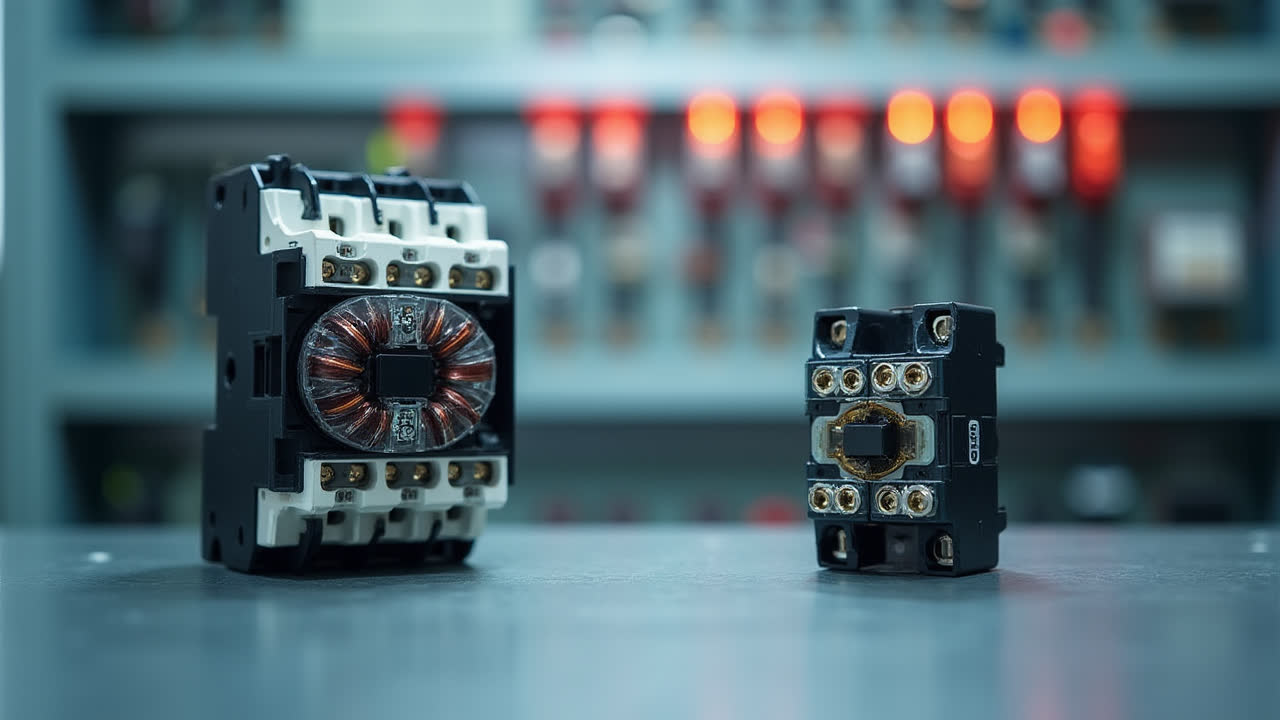
Contactors vs Relays: Understanding the Key Differences and Applications
Introduction to Switching Devices in Electrical Circuits
When it comes to controlling electrical circuits, two components frequently come up in discussions: contactors and relays. Both serve similar functions as switching devices, but they're designed for different applications and load capacities. I've worked with these components for years, and the confusion between them is something I encounter almost daily among beginners and even some experienced technicians.
In simple terms, contactors and relays are electrical devices that control the flow of electricity in circuits by opening or closing contacts. Think of them as automated switches that can be triggered remotely. While they operate on similar principles, the contexts in which you'd use them differ significantly. The primary distinction lies in their current handling capacity – relays typically handle smaller currents in control circuits, while contactors are designed for heavy-duty applications with larger currents in power circuits.
Throughout my career as an electrical engineer, I've seen numerous instances where using the wrong switching device led to equipment failure, sometimes with costly consequences. This comprehensive guide aims to clarify the differences, explain the working principles, and help you choose the right component for your specific needs. Whether you're a student, DIY enthusiast, or professional electrician, understanding these fundamental components will enhance your electrical knowledge and improve your project outcomes.
Understanding Relays: Working Principle and Applications
A relay is essentially an electrically operated switch that uses an electromagnet to mechanically operate a set of contacts. I remember my first hands-on experience with a relay during a college project – the distinctive click it made when activating still brings back memories. This simple yet ingenious device has been a fundamental component in electrical systems for over a century.
The basic structure of a relay includes an electromagnet, an armature, a spring, and a set of electrical contacts. When current flows through the electromagnet, it creates a magnetic field that attracts the armature. This movement changes the state of the electrical contacts – either opening or closing them. What makes relays particularly useful is their ability to control a high-power circuit with a low-power signal, effectively isolating different voltage levels.
Relays typically consist of three contact points: the common contact, the normally closed (NC) contact, and the normally open (NO) contact. In its de-energized state, the common contact connects to the NC contact. When the electromagnet is energized, the common contact moves to connect with the NO contact instead. This switching action allows a relay to control two different circuits based on whether its coil is energized or not.
I've used relays in countless applications over the years. They're ideal for control circuits where precision and reliability are essential but current requirements remain relatively low. Common applications include automotive systems (like controlling headlights or horn circuits), home appliances, industrial automation, and protective relaying in power systems. One particularly interesting project I worked on involved using relays to create a simple home automation system before commercial smart home products became widely available.
Relays come in various types to suit different applications. Electromechanical relays are the traditional type with physical moving parts. Solid-state relays use semiconductor devices instead of mechanical components, offering faster switching speeds and longer operational life due to the absence of moving parts. Reed relays use a reed switch enclosed in a coil and are known for their high switching speeds. Time-delay relays incorporate timing circuits to delay the opening or closing of contacts, which can be crucial in sequencing operations.
Understanding Contactors: Working Principle and Applications
Contactors operate on the same electromagnetic principle as relays but are designed for heavy-duty applications. If relays are the precision instruments of the electrical world, contactors are the workhorses. My first encounter with a contactor was during an industrial placement, where I was amazed by the substantial size difference compared to the relays I was familiar with.
Structurally, a contactor includes a coil, an electromagnet, an armature, and multiple contact points. When the coil is energized, it creates a magnetic field that pulls the armature, closing the contacts and allowing current to flow through the main circuit. What sets contactors apart is their robust construction designed to handle high currents and voltages, often in three-phase systems. They're built to withstand the arcing that occurs when heavy loads are switched.
Unlike most relays, contactors typically have multiple sets of contacts that all open or close simultaneously. They're designed for frequent operations under load and can handle thousands of operations before requiring maintenance. I once worked with a manufacturing plant where contactors were switching large motors hundreds of times daily – a task that would quickly destroy a standard relay.
Contactors find their place in industrial and commercial settings where controlling high-power equipment is necessary. They're commonly used to control electric motors, lighting systems, heating elements, and other high-current loads. In residential applications, you might find them in electric water heaters, air conditioning systems, or electric vehicle charging stations. I've personally designed systems using contactors for controlling industrial heaters, pumps, and large HVAC systems.
Modern contactors often come with additional features like auxiliary contacts for status indication, arc suppression mechanisms, and various coil voltage options. Some specialized types include vacuum contactors for high-voltage applications and definite purpose contactors designed for specific applications like motor starting or heating loads. The versatility of contactors makes them indispensable in power distribution and industrial automation systems.
Key Differences Between Contactors and Relays
While contactors and relays share similar operating principles, several critical differences determine which device is appropriate for a specific application. Understanding these differences has saved me from making costly mistakes in system design numerous times.
| Feature | Contactors | Relays |
|---|---|---|
| Current Capacity | High current (typically above 10A, often hundreds of amps) | Lower current (typically below 10A) |
| Application | Power circuits, high-power equipment control | Control circuits, low-power switching |
| Size | Larger, bulkier construction | Smaller, more compact |
| Noise Level | Usually noisier during operation | Quieter, though still audible |
| Contact Arrangement | Multiple power contacts, often 3-phase compatible | Typically fewer contacts, often single-phase |
| Arc Suppression | Built-in arc suppression mechanisms | Limited or no arc suppression |
| Typical Lifespan | Designed for frequent operation under load | May have longer life in low-current applications |
| Cost | Generally more expensive | Usually more affordable |
Beyond these technical specifications, the context in which these devices are used also differs significantly. Relays are often found in electronic control systems, signal processing, and protection circuits where precise control is needed. Contactors, meanwhile, are workhorses of industrial power systems, handling the heavy lifting of switching large loads. I've noticed that in many modern systems, relays often control contactors – creating a hierarchy of control that leverages the strengths of both devices.
Choosing Between a Contactor and a Relay
Selecting the right switching device for your application is crucial for system reliability and safety. I've been called in to troubleshoot many systems where inappropriate component selection led to premature failure. Here are some key considerations to help you make the right choice:
Consider a Relay When:
- You're working with control circuits rather than power circuits
- The current requirements are relatively low (typically under 10A)
- Space constraints are a concern, and you need a compact solution
- You need to switch many different circuits with one control signal
- Your application requires sensitive detection of electrical conditions
- You need specialized functions like latching or time-delay operations
Consider a Contactor When:
- You're switching high-power loads like motors or heating elements
- Current requirements exceed 10A or involve three-phase power
- The switching device will operate frequently under full load
- The application involves inductive loads that create significant arcing
- You need built-in overload protection (available in some contactor types)
- The system must withstand harsh industrial environments
In many cases, the decision is straightforward based on current requirements alone. However, borderline cases require closer examination of other factors. I recall a project where we initially selected relays for a system that technically fell within their current rating, but the inductive nature of the load and switching frequency led us to upgrade to contactors for better reliability and longer service life.
It's also worth noting that hybrid solutions are becoming more common. I've designed systems using solid-state relays for control functions combined with contactors for power switching, getting the best of both worlds – precise control with robust power handling. Modern industrial automation often employs this layered approach to control systems.
Installation and Maintenance Considerations
Proper installation and maintenance are crucial for both contactors and relays to ensure long service life and reliable operation. Through years of field experience, I've developed some practical guidelines that can help avoid common pitfalls.
Installation Best Practices:
When installing either device, proper mounting is essential. Contactors should be mounted vertically on a stable surface to allow proper heat dissipation. I've seen installations where contactors were mounted horizontally, leading to overheating and premature failure. Relays are typically more flexible in mounting orientation but should still be secured properly to prevent vibration damage.
Wiring is another critical aspect. Always follow manufacturer guidelines for terminal tightening torque – too loose, and you'll get overheating; too tight, and you risk damaging the terminals. I recommend using ferrules on stranded wire ends for better connections. For contactors handling large currents, proper wire sizing is essential to prevent overheating. I once troubleshot a system where undersized wiring to a contactor was causing mysterious intermittent failures due to thermal issues.
Maintenance Requirements:
Both devices require regular inspection, though contactors generally need more attention due to their high-power applications. Regular maintenance should include checking for contact wear, proper operation, and signs of overheating. For contactors, listen for any unusual noises during operation that might indicate mechanical problems.
Contact replacement is a common maintenance task for contactors in high-use applications. I've found that having a preventive maintenance schedule where contacts are inspected based on the number of operations can significantly reduce unexpected downtime. For relays, especially in critical applications, regular testing of proper operation can catch potential issues before they cause system failures.
Environmental factors also play a role in maintenance requirements. In dusty or corrosive environments, more frequent inspection and cleaning may be necessary. I worked in a coastal facility where the salt air accelerated corrosion on electrical components, requiring more frequent maintenance than inland installations. For outdoor installations, proper enclosures are essential for protecting these devices from the elements.
Frequently Asked Questions about Contactors and Relays
Can a relay be used instead of a contactor?
A relay cannot typically replace a contactor in high-current applications. While both devices operate on similar principles, relays are designed for lower current applications (usually under 10A) and lack the robust construction and arc suppression capabilities of contactors. Using a relay where a contactor is required can lead to contact welding, overheating, and potential fire hazards due to arcing. However, for low-current applications within a relay's rating, it can be a more economical and space-efficient choice than a contactor.
How long do contactors and relays typically last?
The lifespan of contactors and relays is typically measured in switching operations rather than years. Quality relays can last for 1-10 million operations under light loads, while contactors are usually rated for 100,000 to 1 million operations under full load. However, actual lifespan varies dramatically based on factors like load type (resistive vs. inductive), operating conditions, and quality of the device. In my experience, I've seen well-maintained contactors in industrial settings last 15-20 years with periodic contact replacement, while relays in control panels often operate reliably for decades if not subjected to overcurrent or environmental stress.
What causes contactors and relays to fail prematurely?
Several factors can lead to premature failure. The most common causes I've encountered include: operating beyond rated current capacity, which leads to overheating and contact welding; voltage spikes that damage the coil; excessive dust or corrosive environments affecting mechanical operation; vibration causing mechanical wear; frequent short-cycling that accelerates contact wear; and voltage fluctuations that affect coil performance. In industrial settings, I've found that inadequate protection from transient voltages is often overlooked and can significantly reduce the lifespan of both contactors and relays. Regular maintenance inspections can catch many of these issues before they lead to complete failure.
Conclusion: Making the Right Choice for Your Application
Understanding the differences between contactors and relays is essential for designing efficient, reliable electrical systems. The primary consideration – current capacity – typically makes the choice clear in most applications. Relays excel in control circuits where precision and sensitivity are prioritized, while contactors are indispensable for power circuits where robust handling of high currents is required.
As electrical systems continue to evolve, we're seeing interesting developments like hybrid electromechanical/solid-state switching devices that combine the benefits of both technologies. I've recently worked with some of these newer components that offer the isolation benefits of traditional devices with the longevity of solid-state switching, though they come at a premium price point.
Whether you're designing a simple control circuit or a complex industrial system, taking the time to select the appropriate switching device will pay dividends in reliability and longevity. I've learned through experience that cutting corners on component selection often leads to costly failures down the road. When in doubt, it's always better to choose a component with higher ratings than required rather than pushing the limits of a borderline specification.
Remember that electrical safety should always be your top priority. Both contactors and relays play important roles in creating safe electrical systems, but they must be properly selected, installed, and maintained to fulfill that role effectively. I hope this guide helps you make informed decisions for your specific applications and contributes to the success of your electrical projects.