Chemosynthesis vs Photosynthesis: Understanding Energy Production
Chemosynthesis vs Photosynthesis: Two Essential Energy Production Methods
When we think about how living things get their energy, chemosynthesis and photosynthesis stand as nature's two primary powerhouses. These biological processes have shaped life on Earth in fascinating ways, and understanding them gives us incredible insight into how organisms survive in various environments. Have you ever wondered how some creatures thrive in the deepest, darkest parts of the ocean while others need sunlight to flourish?
Understanding Chemosynthesis: Nature's Dark Energy Solution
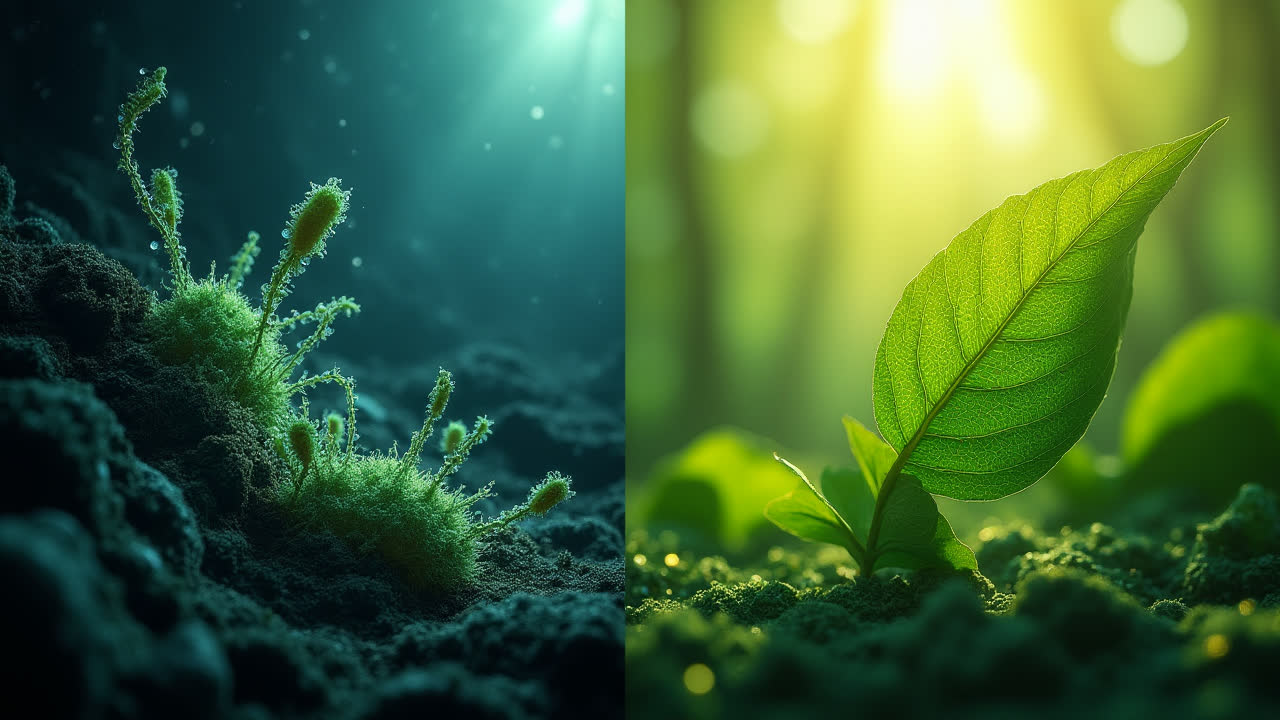
Chemosynthesis is genuinely one of Earth's most remarkable biological processes. It's like watching a master chef create a gourmet meal without any kitchen lights on. This process kicks in where sunlight can't reach, transforming chemical energy from inorganic compounds into organic food. I find it absolutely mind-blowing that some organisms can "eat" pure chemicals and convert them into glucose!
Deep in the ocean's trenches, where the pressure would crush submarines like paper balls, microbes perform this chemical magic. They're like tiny alchemists, turning substances like hydrogen sulfide and hydrogen gas into food molecules. The chemical equation looks something like this: 12H2S + 6CO2 → C6H12O6 (Glucose) + 6H2O + 12S. It's not just a science equation—it's a survival story written in atoms and molecules.
What really gets me is how these chemosynthetic creatures form the base of entire ecosystems in places we'd consider impossible for life. Giant tube worms, which can grow up to 8 feet long, host chemosynthetic bacteria in their tissues. These worms essentially farm their own food factories! They've replaced their digestive systems with bacterial colonies that convert chemicals into nutrients. Talk about trust in your gut bacteria!
Photosynthesis: The Sunlight Revolution
Now, let's talk about photosynthesis—the process we're all familiar with, even if we don't realize it. Every time you enjoy a crisp apple or admire a leafy green tree, you're looking at photosynthesis in action. It's the process where plants, algae, and some bacteria use sunlight to convert carbon dioxide and water into glucose and oxygen. The equation 6CO2 + 12H2O + Light Energy → C6H12O6 + 6O2 + 6H2O tells the story of how sunlight becomes sugar.
But here's something cool that not everyone knows: there are actually two types of photosynthesis. Most plants use oxygenic photosynthesis, which produces oxygen as a handy side product (thanks, plants!). However, some bacteria practice anoxygenic photosynthesis, which doesn't release oxygen. It's like comparing a full-featured smartphone to a basic model—both make calls, but one has more bells and whistles.
The beauty of photosynthesis lies in its efficiency and accessibility. Sunlight is free, abundant (in most places), and renewable. It's nature's solar power system that's been running for billions of years without any maintenance contracts or software updates needed. When I look at a forest, I don't just see trees—I see millions of tiny solar panels working in perfect harmony.
Head-to-Head Comparison: Chemical Beauty vs. Solar Power
| Feature | Chemosynthesis | Photosynthesis |
|---|---|---|
| Energy Source | Chemical energy from inorganic compounds (hydrogen sulfide, hydrogen gas) | Light energy from the sun |
| Location | Deep ocean vents, caves, subsurface environments | Surfaces exposed to sunlight (leaves, algae, upper ocean layers) |
| Organisms Involved | Bacteria, archaea (chemotrophs) | Plants, algae, cyanobacteria, some bacteria (phototrophs) |
| Oxygen Production | No oxygen release | Releases oxygen (in oxygenic photosynthesis) |
| Pigments Required | None | Chlorophyll, carotenoids, phycobilins |
| Cellular Structures | No special organelles needed | Chloroplasts in plants, thylakoids in bacteria |
| Ecological Impact | Supports hydrothermal vent ecosystems | Supports most Earth's ecosystems |
| Global Energy Contribution | Lower overall contribution | Primary energy source for Earth's biosphere |
Why These Differences Matter
You might wonder, "So what? Why should I care about these molecular processes?" Well, these differences tell us incredible stories about adaptation and survival. While photosynthesis rules the surface world and supports most life as we know it, chemosynthesis shows us that life finds a way even in the most extreme conditions.
Consider this: if chemosynthesis didn't exist, vast areas of our planet's deep ocean would be barren wastelands. Instead, these regions teem with bizarre and wonderful life forms that seem straight out of science fiction. Giant clams, eyeless shrimp, and forests of tube worms all thrive thanks to this chemical wizardry. It's like discovering an entire civilization living in your basement—except this basement is thousands of feet underwater.
The applications for understanding these processes go beyond academic curiosity. Scientists are exploring whether chemosynthetic organisms could survive on other planets where sunlight can't penetrate but chemical energy might exist. Mars, for instance, might have underground water systems with dissolved chemicals that could support chemosynthetic life. It's not just about understanding Earth—it's about imagining life throughout the universe.
The Future: Learning from Nature's Energy Experts
As we grapple with energy challenges and climate change, both chemosynthesis and photosynthesis offer valuable lessons. Researchers are studying how we might mimic photosynthesis for more efficient solar energy collection. Imagine solar panels that work as efficiently as leaves! Similarly, understanding chemosynthesis could help us develop new ways to produce food or fuel from chemical reactions, potentially revolutionizing how we approach energy in dark or sealed environments like space stations.
There's something poetic about these two processes: one reaches for the light, while the other embraces the dark. Both create life-sustaining energy from different starting points. It's a reminder that in nature, as in life, there's rarely just one right way to solve a problem. Whether basking in sunlight or thriving in chemical darkness, life finds its energy and persists.
Frequently Asked Questions
Can an organism use both chemosynthesis and photosynthesis?
Generally, organisms specialize in one process or the other based on their environment and evolutionary adaptations. However, some bacteria can switch between metabolic strategies depending on environmental conditions, though they don't perform both simultaneously. For example, certain bacteria might use photosynthesis when light is available and switch to chemosynthesis in darker conditions.
Which process is older in evolutionary terms?
Chemosynthesis is believed to be the older process, emerging when Earth's atmosphere lacked oxygen and sunlight couldn't penetrate the thick early atmosphere. Early life likely relied on chemical energy from volcanic and hydrothermal sources. Photosynthesis evolved later, probably around 2.5-3 billion years ago, when organisms developed the ability to harness sunlight energy.
How does the energy yield compare between these two processes?
Photosynthesis typically yields more energy per unit of substrate than chemosynthesis. This is because light energy is more abundant and readily available in surface environments. Chemosynthesis relies on specific chemical concentrations, which can vary greatly. However, in environments where sunlight is absent, chemosynthesis is infinitely more efficient since photosynthesis simply cannot occur.