Brandy vs Whiskey: Understanding the Key Differences
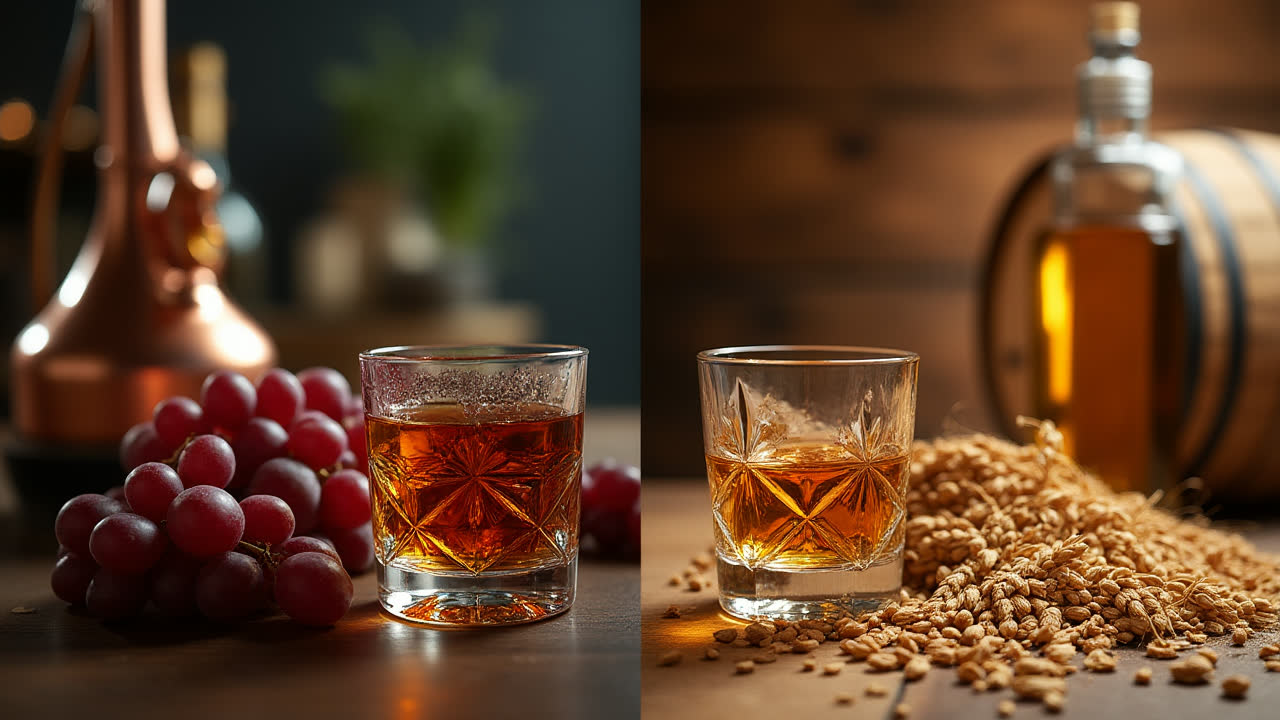
Ever found yourself staring at a bar menu, wondering about the difference between that amber glass of brandy and the golden hue of whiskey? You're not alone. Brandy and whiskey are two of the world's most beloved spirits, each with rich histories stretching back centuries. Despite their similar appearance in the glass, these two classics couldn't be more different in their production, flavor profiles, and cultural significance.
I've spent years exploring the nuances of fine spirits, and I'm always surprised by how many misconceptions exist about these two drinks. Whether you're a seasoned connoisseur or just beginning your spirits journey, understanding what sets brandy and whiskey apart will enhance your appreciation and help you discover which one suits your palate best.
What Exactly Is Brandy?
Brandy is essentially distilled wine, originating from the Dutch term "brandewijn" meaning "burned wine." The process begins with fermenting fruit juice—typically grapes—into wine, which is then distilled and aged in wooden casks. This aging process gives brandy its characteristic amber color and complex flavor profile.
While grape-based brandies like Cognac and Armagnac might be the most famous, don't forget that brandy can be made from virtually any fruit. Apple brandies (like Calvados), pear brandies, and even more exotic variants made from berries or stone fruits each bring their unique character to the spirit. I once had a remarkable plum brandy in Eastern Europe that completely changed my understanding of what this spirit could be!
The alcohol content of brandy typically ranges from 35% to 60% ABV (alcohol by volume). What I find fascinating is how the brandy-making tradition varies from country to country—Spanish brandy offers different notes than French, which differs again from American or Armenian varieties. Each has developed distinct approaches to distillation, aging, and blending that reflect local tastes and traditions.
Most quality brandies are aged for at least two years in oak barrels, though premium varieties may age for decades. During this time, the spirit develops its characteristic smoothness, absorbing vanilla and caramel notes from the wood while the harsh edges of the alcohol mellow into a more complex, rounded profile. The result? A spirit with a beautiful caramel shade and a surprisingly nuanced flavor that can range from sweet and fruity to rich and oaky.
Understanding Whiskey
Whiskey (or whisky, depending on where it's made) takes a completely different approach. Rather than starting with fruit, whiskey begins with grains—barley, corn, rye, wheat, or combinations thereof. These grains are malted (germinated then dried), mashed, fermented into a beer-like liquid, distilled, and then aged in wooden casks—almost always oak.
The type of grain used dramatically affects the final flavor profile. Bourbon, for instance, must be made from at least 51% corn, giving it a naturally sweeter profile than Scotch, which is traditionally made from malted barley. Rye whiskey brings spicier notes, while wheat creates a softer, more delicate spirit. I remember my first taste of a high-rye bourbon—the explosion of pepper and cinnamon notes completely caught me off guard!
Whiskey generally has an alcohol content between 40% and 50% ABV, though some cask-strength varieties can reach well above 60%. What's particularly interesting about whiskey is how strongly the production region influences the final product. Scottish whiskies often have smoky, peaty characteristics from the malting process, while American bourbons tend toward sweeter, vanilla-oak profiles due to the new charred oak barrels used in aging.
Unlike brandy, which can be considered mature after just two years, most quality whiskeys require at least three years of aging, with many premium varieties spending 10, 15, or even 20+ years in the barrel. During this extensive aging process, the whiskey undergoes a complex chemical transformation, developing its characteristic malty, smoky, and sometimes briny flavors. The longer aging period also contributes to whiskey's more robust, complex flavor profile compared to many brandies.
Key Differences Between Brandy and Whiskey
| Characteristic | Brandy | Whiskey |
|---|---|---|
| Base Ingredient | Fermented fruit juice (primarily grapes) | Fermented grain mash (barley, corn, rye, wheat) |
| Production Process | Distilled from wine or fermented fruit juice | Distilled from beer-like wort made from malted grains |
| Minimum Aging Period | Generally 2 years for quality brandy | Generally 3+ years (varies by regulation) |
| Flavor Profile | Fruity, floral, sweet with notes of vanilla, caramel | Malty, oaky, sometimes smoky with notes of spice |
| Alcohol Content | 35-60% ABV | 40-50% ABV (typical) |
| Historical Origins | 15th century Italy and Netherlands | 15th century Scotland and Ireland |
| Common Varieties | Cognac, Armagnac, Pisco, Calvados | Scotch, Bourbon, Rye, Irish, Japanese |
| Typical Serving | Often served as a digestif in a snifter | Neat, on rocks, or in cocktails in a tumbler |
Flavor Profiles and Drinking Experience
Perhaps the most notable difference between these spirits for the average drinker is their flavor profile. Brandy typically offers a sweeter, fruitier experience—after all, it begins as fruit. Good brandies present complex layers of flavor ranging from dried fruits and caramel to floral notes and vanilla. The mouthfeel is often described as smooth and warming.
Whiskey, by contrast, delivers a more robust, cereal-based profile. Depending on the style, you might encounter notes of oak, vanilla, caramel, and spice, along with more distinctive characteristics like smoke, peat, nuts, or honey. The mouthfeel can range from light and delicate to rich and chewy, often with more pronounced alcohol heat than brandy.
How we drink these spirits also differs culturally. Brandy is traditionally served as a digestif after dinner in a tulip-shaped glass or snifter, which captures and concentrates the aromas. It's typically enjoyed neat, sometimes slightly warmed by cupping the glass in the palm. Have you ever noticed how the brandy's aroma transforms as it warms in your hand? That's part of the intended experience!
Whiskey enjoys more versatility in its service. While connoisseurs often prefer it neat or with a drop of water to open up the flavors, it's equally at home in a wide range of cocktails. From the sophisticated Old Fashioned to the refreshing Whiskey Sour, these drinks showcase the spirit's adaptability. I've found that even whiskey skeptics can be converted by finding the right cocktail that balances its robust character with complementary flavors.
Cultural Significance and Regional Variations
The cultural significance of these spirits extends far beyond their taste. Brandy has deep roots in European wine-producing regions, particularly France, Spain, and Italy. Cognac—perhaps the most revered brandy—comes exclusively from the Cognac region of France and follows strict production regulations. Similarly, Armagnac from nearby Gascony offers a more rustic, intense alternative that locals will insist is superior to its more famous cousin.
Whiskey, meanwhile, has become inextricably linked with the national identities of Scotland, Ireland, and later America. Each country has developed distinctive styles: Scotland's peaty single malts, Ireland's triple-distilled smoothness, America's sweet bourbons and spicy ryes. Japan has also emerged as a major whisky producer, creating meticulously crafted spirits that regularly win international awards.
What fascinates me is how these spirits reflect their places of origin. The clean, crisp water sources of Scotland's Highlands, the limestone-filtered water of Kentucky, the terroir of Cognac's vineyards—all these elements become part of the finished product. When you drink these spirits mindfully, you're experiencing not just a beverage, but centuries of tradition, craft, and local pride.
Both spirits have their devoted followings, with enthusiasts debating the merits of different regions, producers, and vintages with passion that rivals wine connoisseurs. Whether you're exploring the peaty intensity of Islay Scotches or the elegant refinement of XO Cognacs, there's always something new to discover in both the brandy and whiskey worlds.
Health Considerations and Moderation
Like all alcoholic beverages, both brandy and whiskey should be consumed in moderation. Despite occasional claims about health benefits, neither provides substantial nutrition. Both contain alcohol, which can have negative health effects when consumed excessively.
That said, when enjoyed responsibly as part of a balanced lifestyle, both spirits can be incorporated into most diets. They contain no carbohydrates, fat, or sugar (unless added after distillation in flavored varieties), making them potentially compatible with many dietary approaches. But let's be honest—we don't drink these spirits for their nutritional profile, but for their flavor, complexity, and the experience they provide!
I've always found that treating these fine spirits with respect—savoring small amounts occasionally rather than consuming them frequently or in large quantities—not only benefits health but also enhances appreciation. When you slow down and really focus on the nuances in your glass, you'll discover complexities that might otherwise be missed.
Frequently Asked Questions About Brandy and Whiskey
Is brandy stronger than whiskey?
In terms of alcohol content, brandy can sometimes be stronger than whiskey, though it varies by specific product. Brandy typically contains between 35-60% alcohol by volume (ABV), while whiskey generally ranges from 40-50% ABV. However, there are high-proof whiskeys that exceed this range, just as there are lower-alcohol brandies. The perceived strength in taste can differ as well—many people find whiskey's flavor more intense and robust compared to brandy's smoother, fruitier profile, even when the actual alcohol content is similar.
Can brandy be substituted for whiskey in cocktails?
Yes, brandy can be substituted for whiskey in many cocktails, though the result will have a different flavor profile. Classic whiskey cocktails like the Old Fashioned, Manhattan, or Whiskey Sour can be made with brandy for a fruitier, smoother variation. This substitution works particularly well in winter cocktails where the warm, fruit-forward notes of brandy complement seasonal ingredients. However, in cocktails where whiskey's distinctive grain character is central to the drink's identity (like a Mint Julep), the substitution may create something that, while delicious, is notably different from the original.
What's the best way to start appreciating fine brandies and whiskeys?
The best way to develop an appreciation for fine brandies and whiskeys is through thoughtful tasting and comparison. Start with approachable, mid-range examples of each spirit rather than immediately jumping to the most expensive or intensely flavored varieties. For whiskey beginners, Irish whiskeys and bourbons often provide accessible entry points before exploring smokier Scotches. With brandy, VS or VSOP Cognacs offer good introductions to the style. Consider attending tastings at reputable bars or liquor stores, where knowledgeable staff can guide your experience. Take notes on what you taste, smell, and feel, and don't rush—developing a palate for fine spirits is a journey, not a destination.
Conclusion: Choosing Between Brandy and Whiskey
So which is better, brandy or whiskey? That's rather like asking whether red or white wine is superior—it's entirely subjective and depends on your personal preferences, the specific occasion, and even the season. Many enthusiasts develop an appreciation for both, selecting different spirits for different moments.
If you prefer sweeter, fruit-forward flavors with a smooth finish, brandy might become your spirit of choice. If you're drawn to more robust, complex cereal notes with distinctive regional characteristics, whiskey could be your perfect match. Why not explore both worlds? The journey of discovery is half the fun.
Whether you're sipping a fine Cognac after dinner or enjoying a peaty Scotch by the fireplace, remember that these spirits represent centuries of tradition, craftsmanship, and cultural identity. They're not just drinks—they're liquid history, deserving of attention and appreciation. Cheers to your exploration of these fascinating spirits!
Related Posts