Amplitude Modulation vs Frequency Modulation: Complete Comparison Guide
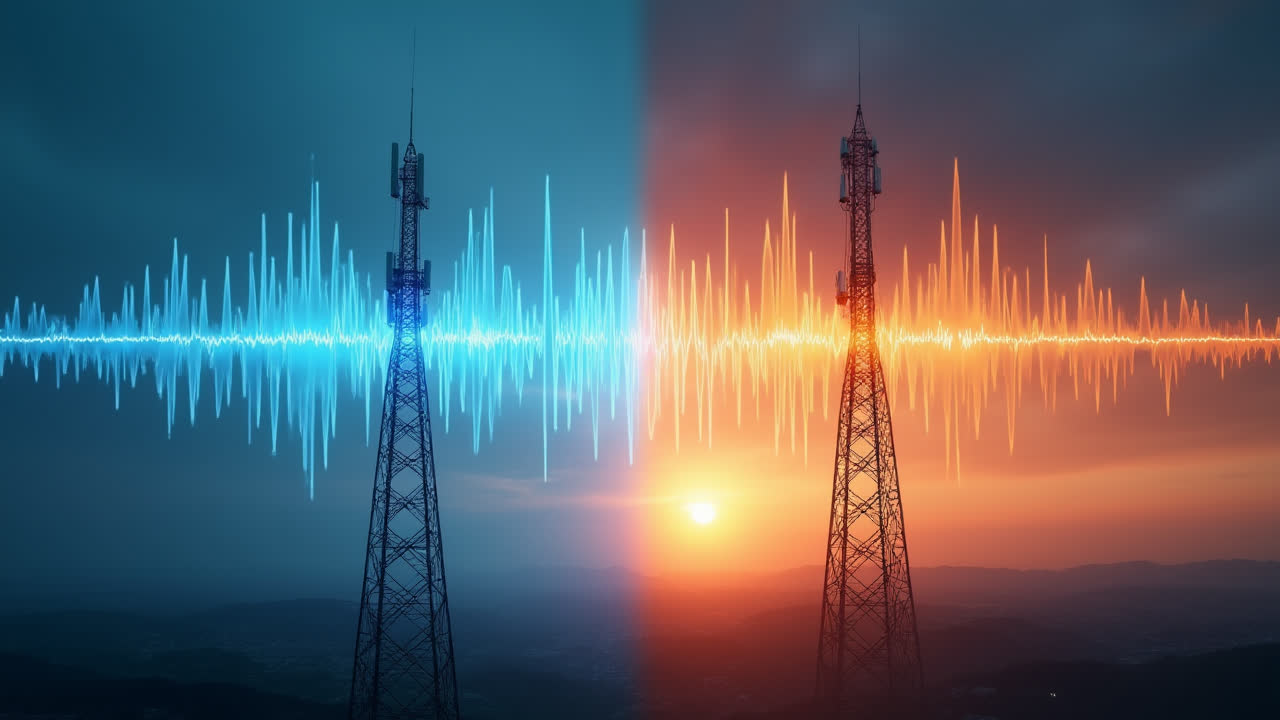
Introduction to Signal Modulation
Have you ever wondered how your favorite radio stations transmit music and voice through thin air? The magic behind wireless communication lies in a process called modulation. In our increasingly connected world, understanding the differences between various modulation techniques has never been more relevant.
Modulation is essentially the process of modifying a carrier wave to transmit information. Think of it as writing a message on a paper airplane before sending it flying—the paper airplane is your carrier, and the message is your data. Two of the most common and historically important modulation techniques are Amplitude Modulation (AM) and Frequency Modulation (FM).
While both methods achieve the same goal of transmitting information wirelessly, they take fundamentally different approaches, resulting in varied performance characteristics, applications, and limitations. I've personally worked with both technologies during my time in broadcasting, and the differences are fascinating both technically and practically.
In this comprehensive guide, we'll explore how AM and FM work, compare their strengths and weaknesses, and examine their real-world applications. Whether you're a student studying telecommunications, a radio enthusiast, or simply curious about how your devices communicate, this article will provide valuable insights into these foundational wireless technologies.
What is Amplitude Modulation (AM)?
Amplitude Modulation, commonly abbreviated as AM, was one of the earliest modulation techniques developed and revolutionized long-distance communication. In AM, the amplitude (height or strength) of the carrier wave is modified according to the information signal while keeping the frequency constant.
Imagine you're holding one end of a rope and waving it up and down at a steady rate. The height of your waves represents the amplitude, and the rate at which you wave represents the frequency. In AM, you would vary how high you wave the rope (amplitude) based on the message you want to send, while keeping the waving speed (frequency) the same.
One of the key characteristics of AM is its simplicity. The technology required to generate and receive AM signals is relatively straightforward, which is why it was adopted so quickly in the early days of radio. I remember building a simple AM receiver as a science project in high school—just a few components and suddenly voices emerged from thin air!
AM signals have some notable properties that influenced their applications. They can travel impressive distances, particularly at night when they bounce off the ionosphere. This phenomenon, known as skywave propagation, allows AM radio stations to be heard hundreds or even thousands of miles from their broadcast origin. During my cross-country road trips, I've sometimes picked up AM stations from three states away after sunset—something that rarely happens with FM broadcasts.

What is Frequency Modulation (FM)?
Frequency Modulation, or FM, takes a different approach to encoding information. Rather than changing the amplitude of the carrier wave, FM varies the frequency of the carrier signal proportionally to the information signal, while keeping the amplitude constant.
Going back to our rope analogy, with FM you would keep the height of your waves consistent (constant amplitude) but change how quickly you wave the rope (frequency) based on your message. When the information signal increases in amplitude, the carrier frequency increases, and when it decreases, the carrier frequency decreases.
FM technology emerged later than AM, gaining popularity in the 1940s and 1950s. The development of FM addressed many of the limitations of AM broadcasting, particularly in terms of audio quality and noise resistance. I still remember my father telling me about the first time he heard FM radio—he described it as "like having the musicians in the room with you" compared to the tinny sound of AM broadcasts.
Because FM signals maintain constant amplitude, they're inherently more resistant to noise and interference, which typically affect signal amplitude. This is why FM radio typically sounds clearer than AM, especially during storms or near electrical equipment. Additionally, FM's wider bandwidth allows for the transmission of stereo audio, which revolutionized music broadcasting.
However, FM signals generally don't travel as far as AM signals and are more line-of-sight dependent. They don't bounce off the ionosphere like AM signals do, which limits their range but also means they're more consistent and predictable in their coverage area. During my time working at a college radio station, we were constantly reminded of our limited broadcast radius—our tiny FM signal barely reached the edge of town, while the AM stations could be heard counties away.

Comprehensive Comparison: AM vs FM
| Comparison Point | Amplitude Modulation (AM) | Frequency Modulation (FM) |
|---|---|---|
| Modulation Principle | Varies amplitude of carrier wave | Varies frequency of carrier wave |
| Sound Quality | Lower fidelity, more noise interference | Higher fidelity, clearer sound, supports stereo |
| Transmission Range | Longer range, can travel thousands of kilometers | Shorter range, more line-of-sight dependent |
| Bandwidth Required | Narrower (typically 10 kHz) | Wider (typically 200 kHz) |
| Power Efficiency | Less power efficient | More power efficient |
| Noise Immunity | More susceptible to atmospheric noise | More resistant to noise and interference |
| Frequency Range (Radio) | 535-1705 kHz (Medium Wave) | 88-108 MHz (VHF Band) |
| Common Applications | AM radio, aircraft communications, shortwave | FM radio, TV sound, two-way radios, Bluetooth |
Real-World Applications and Impact
Both AM and FM modulation techniques have found numerous applications beyond just radio broadcasting. Their distinct characteristics make them suitable for different use cases in our modern communication infrastructure.
AM technology is still widely used in aviation communications due to its longer range and simpler equipment requirements. When pilots communicate with air traffic control, especially over long distances, they often use AM radio. Additionally, international shortwave broadcasting, which can reach across continents, utilizes AM modulation. I've personally tuned into BBC World Service broadcasts from London while traveling in Southeast Asia—all possible because of AM's impressive range.
FM, on the other hand, has become the standard for high-quality audio broadcasting, including music and speech. Its noise resistance makes it ideal for urban environments with lots of electrical interference. Beyond radio, FM modulation is used in television audio, two-way radio systems, and even some wireless microphones. The Bluetooth technology in your wireless headphones also uses a form of frequency modulation to transmit audio from your phone.
The development of these modulation techniques has had profound effects on society, culture, and technology. Radio broadcasting transformed how information and entertainment were distributed in the 20th century, and these technologies formed the foundation for many of the wireless communication systems we rely on today. I remember my grandmother telling stories about families gathering around the AM radio during World War II to hear news updates—a stark contrast to our current age of on-demand digital content, but stemming from the same basic technology.
As we move deeper into the digital age, newer digital modulation techniques have emerged, but the principles pioneered by AM and FM remain relevant. Many modern communication systems still incorporate elements of these analog modulation techniques, albeit in more sophisticated forms. Even as we transition to digital radio standards, understanding AM and FM provides essential background for comprehending how wireless communication works.
Future Trends and Digital Evolution
While AM and FM have served us well for nearly a century, digital modulation techniques are increasingly replacing these analog methods. Digital Audio Broadcasting (DAB) and HD Radio are examples of technologies that aim to overcome the limitations of traditional AM and FM broadcasting while preserving their strengths.
These digital technologies offer improved sound quality, greater resistance to interference, and the ability to transmit additional data alongside audio. I recently upgraded my car stereo to one with HD Radio capability, and the difference in sound quality is remarkable—traditional FM stations that support HD Radio suddenly sound like CD quality when the digital signal kicks in.
However, the transition to digital hasn't been without challenges. Digital broadcasts often require entirely new equipment for both broadcasters and listeners, and coverage areas can be different from their analog counterparts. In many parts of the world, traditional AM and FM broadcasting remains dominant due to the vast installed base of receivers and established infrastructure.
Despite these challenges, the principles of modulation pioneered by AM and FM continue to influence modern communication systems. Understanding these foundational techniques provides valuable insight into how more complex digital modulation schemes work. As one of my engineering professors used to say, "You can't understand where we're going if you don't know where we've been."
Frequently Asked Questions
Why does FM radio sound better than AM radio?
FM radio sounds better than AM radio for several key reasons. First, FM uses a wider bandwidth (200 kHz compared to AM's 10 kHz), allowing it to transmit a broader range of audio frequencies. This means FM can reproduce higher frequencies that are important for music fidelity. Second, FM is inherently more resistant to noise and interference since noise typically affects signal amplitude, not frequency. Since FM keeps amplitude constant and varies frequency, the noise doesn't affect the signal as much. Finally, FM broadcasts can support stereo transmission, creating a more immersive listening experience that AM cannot provide due to bandwidth limitations.
Why can AM radio stations be heard from farther away than FM stations?
AM radio stations can be heard from greater distances than FM stations primarily because of the wave propagation characteristics of their respective frequencies. AM broadcasts (535-1705 kHz) use lower frequencies that can follow the curvature of the Earth to some extent and, more importantly, can bounce off the ionosphere—a layer of the atmosphere that reflects certain radio waves. This phenomenon, called skywave propagation, allows AM signals to travel hundreds or even thousands of miles, especially at night when the ionosphere is more reflective. FM broadcasts (88-108 MHz) use much higher frequencies that generally travel in straight lines and pass through the ionosphere rather than bouncing off it. This makes FM transmission more line-of-sight dependent and limits its range to roughly 50-100 miles under ideal conditions.
Are AM and FM technologies still relevant in the digital age?
Yes, AM and FM technologies remain highly relevant despite advances in digital communication. First, they form the infrastructure backbone for broadcast radio, which reaches billions of people worldwide with minimal receiver cost—important in developing regions. Second, these technologies continue to be used in critical applications like aviation communication (AM) and emergency broadcasting systems. Third, the principles of amplitude and frequency modulation underpin many modern digital modulation techniques. While digital alternatives like DAB and internet streaming are growing, the simplicity, reliability, and universal accessibility of AM/FM ensure they'll remain important for years to come. Additionally, during emergencies when internet and cell networks fail, traditional radio broadcasts often continue to function, providing crucial information when other technologies cannot.
Conclusion
Amplitude Modulation and Frequency Modulation represent two fundamental approaches to wireless communication that have shaped our world in countless ways. While they both accomplish the same basic goal—transmitting information through the air—they do so using different methods, resulting in distinct performance characteristics and applications.
AM's simplicity and impressive range made it the pioneer of broadcast radio, while FM's superior sound quality and noise resistance made it the preferred choice for high-fidelity audio transmission. Together, these technologies have connected people across vast distances, delivered news and entertainment to billions, and laid the groundwork for the wireless revolution we continue to experience today.
As we look to the future, digital modulation techniques will continue to evolve and improve upon the foundation established by AM and FM. However, understanding these classic modulation methods remains essential for anyone interested in telecommunications, broadcasting, or wireless technology.
What's your experience with AM and FM radio? Do you still tune in to traditional radio broadcasts, or have you completely switched to digital alternatives? The evolution of how we communicate continues, but the principles pioneered by these modulation techniques remain as relevant as ever.