Acoelomate vs Coelomate: Essential Differences Explained
Understanding the Basics of Animal Body Organization
Have you ever wondered how animals are classified based on their internal structure? The presence or absence of a body cavity is one of the most fundamental ways to categorize animals in the animal kingdom. Acoelomate and coelomate animals represent two distinct organizational structures that shape how these creatures function, move, and develop. This distinction might seem technical at first glance, but it profoundly impacts everything from an animal's mobility to its digestive efficiency.
In the fascinating world of animal classification, bilaterally symmetrical animals (bilaterians) are grouped based on several characteristics, including the presence or absence of a fluid-filled cavity known as a coelom. This cavity, when present, serves as a crucial buffer between the digestive tract and the body wall. I've always found it interesting how such a seemingly simple structural difference can have such far-reaching implications for an animal's survival strategies. When exploring nature, I often notice that the most complex creatures almost always have this specialized body cavity.
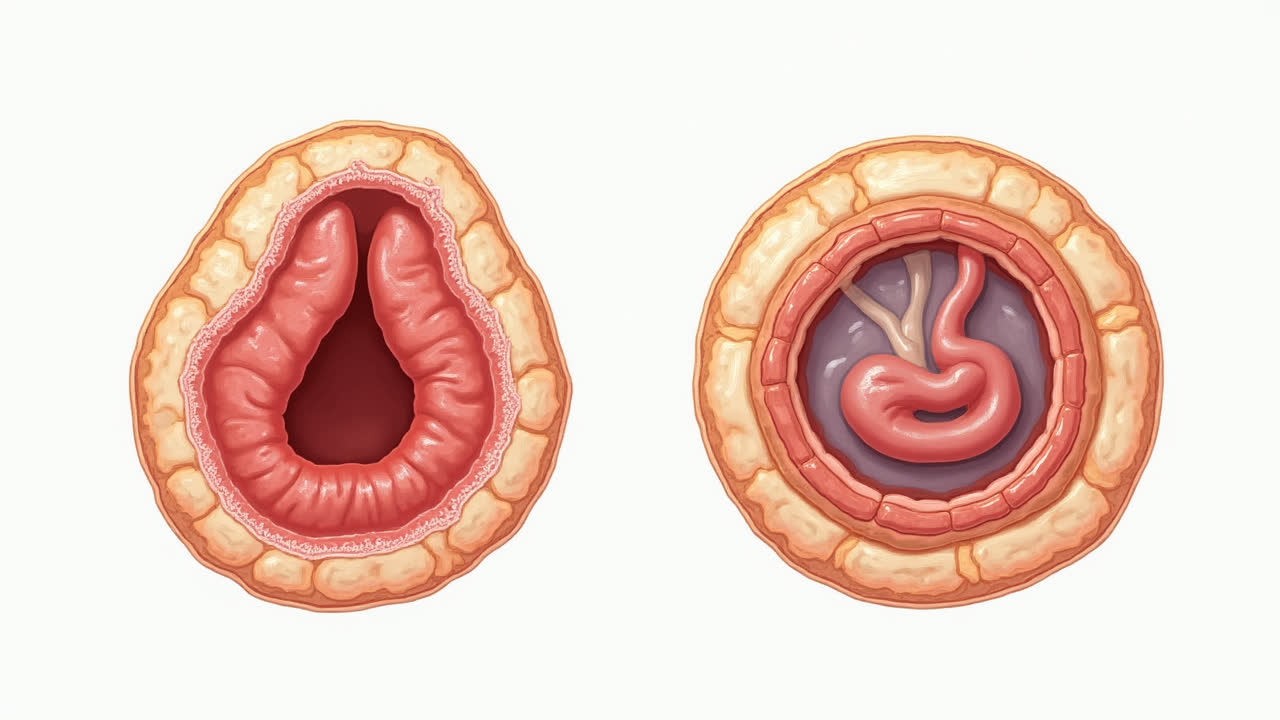
Animals with three distinct germ layers (ectoderm, mesoderm, and endoderm) during embryonic development are called triploblastic. Both acoelomates and coelomates are triploblastic, but they differ significantly in how their mesoderm develops. In acoelomates, the mesoderm completely fills the space between the digestive tract and the body wall, while in coelomates, the mesoderm forms a lining around a fluid-filled cavity. This distinction may seem subtle, but it represents a major evolutionary advancement.
What Are Acoelomates?
Acoelomates are invertebrate animals that lack a true body cavity or coelom. The term "acoelomate" literally means "without a coelom." In these animals, the space between the digestive tract and the body wall is completely filled with tissues derived from the mesoderm. This solid organization means that all internal organs are packed tightly together with no fluid-filled space surrounding them. I remember my first biology class where we examined flatworms under a microscope - it was fascinating to see how all their organs were compressed together like a packed suitcase!
Most acoelomates have relatively simple body plans compared to animals with body cavities. Their bodies tend to be flattened, which facilitates the diffusion of oxygen and nutrients to all cells. Without a fluid-filled coelom to act as a hydrostatic skeleton, acoelomates generally have limited mobility and rely on other mechanisms for movement. The flatworm's rippling motion as it glides along surfaces is a perfect example of how these creatures have adapted to life without a coelom.
The phylum Platyhelminthes (flatworms) represents the classic example of acoelomates. This group includes free-living flatworms like planarians as well as parasitic forms such as tapeworms and flukes. These organisms possess a single digestive opening that serves as both mouth and anus, a characteristic feature of animals with a simpler body organization. Despite lacking a coelom, some flatworms like planarians show remarkable regenerative abilities - I once saw a demonstration where a planarian was cut into multiple pieces, and each piece regenerated into a complete organism!
Acoelomates typically have simplified organ systems. Their digestive systems are often incomplete, their nervous systems are rudimentary, and they lack specialized respiratory or circulatory systems. The absence of a coelom means that these animals must rely on simple diffusion for gas exchange and nutrient distribution. Additionally, their excretory systems usually consist of specialized cells or simple tubules that help eliminate metabolic wastes. Despite these limitations, acoelomates have successfully adapted to various environments, particularly aquatic and parasitic niches.
What Are Coelomates?
Coelomates represent a significant evolutionary advancement in animal body organization. These animals possess a true coelom, which is a fluid-filled cavity completely lined by tissues derived from the mesoderm. This coelom essentially creates a "body within a body" structure, where internal organs float within a protective, fluid-filled space. The first time I dissected an earthworm in my zoology lab, I was amazed at how its organs were neatly suspended in the coelom, allowing for independent movement and growth.
The presence of a coelom provides numerous advantages. First, it acts as a hydrostatic skeleton, allowing for more complex and efficient movement. Second, it provides cushioning and protection for internal organs. Third, it creates a compartmentalized body where organs can function independently. And fourth, it allows for greater body size and complexity. These advantages have made coelomates the dominant form of animal life on Earth today.
Coelomates can be further classified based on how their coelom forms during embryonic development. Schizocoelom develops when the mesoderm splits to form the coelom, as seen in protostomes like annelids, arthropods, and mollusks. Enterocoelom forms from outpouchings of the embryonic gut, characteristic of deuterostomes like echinoderms and chordates. There's also the haemocoelom, a modified coelom filled with blood rather than coelomic fluid, found in some arthropods and mollusks.
The coelomate body plan has allowed for the evolution of highly specialized organ systems. These animals typically have complete digestive systems with separate mouth and anus, efficient circulatory systems, specialized respiratory structures, and complex nervous systems. The coelom provides space for organs to expand and develop, allowing for greater physiological complexity. Additionally, coelomates often show segmentation, where the body is divided into repeating units, further enhancing specialization and efficiency.
Examples of coelomates span a wide range of complexity, from relatively simple annelids (earthworms) to highly complex vertebrates including humans. Other coelomate groups include arthropods (insects, crustaceans), mollusks (snails, clams, octopuses), echinoderms (sea stars, sea urchins), and all chordates. Each of these groups has exploited the advantages of the coelomate body plan in different ways, leading to remarkable diversity in form and function.
Comparing Acoelomates and Coelomates: Key Differences
| Characteristic | Acoelomates | Coelomates |
|---|---|---|
| Body Cavity | Absent; no true coelom | Present; true fluid-filled coelom |
| Mesoderm Development | Forms solid mass of tissue | Forms lining around fluid-filled cavity |
| Organ Protection | Limited; organs directly affected by external pressures | Enhanced; organs cushioned by coelomic fluid |
| Body Complexity | Generally simpler body plans | More complex organization possible |
| Movement Efficiency | Limited; no hydrostatic skeleton | Enhanced; coelom functions as hydrostatic skeleton |
| Segmentation | Typically unsegmented | Often segmented |
| Taxonomic Distribution | Found only in protostomes | Found in both protostomes and deuterostomes |
| Examples | Flatworms (Platyhelminthes), ribbon worms | Annelids, arthropods, mollusks, echinoderms, chordates |
Evolutionary Significance of the Coelom
The evolution of the coelom represents one of the most significant advancements in animal body design. It first appeared over 500 million years ago and provided early animals with numerous advantages that facilitated their diversification and success. Paleontologists believe that the earliest coelomates emerged during the Cambrian explosion, a period of rapid evolutionary innovation that saw the emergence of most major animal phyla that exist today.
The development of a coelom provided several key evolutionary advantages. Perhaps most importantly, it allowed for the development of more efficient internal transport systems. With organs suspended in fluid rather than embedded in solid tissue, materials could move more freely throughout the body. This improved transport efficiency permitted the evolution of larger body sizes, as nutrients and gases could reach all parts of the organism more effectively.
Another major advantage of the coelomate design is the ability to develop specialized regions of the digestive tract. In acoelomates, the digestive tract is often simple and straight, with limited specialization. In contrast, coelomates can develop complex, coiled intestines with different regions specialized for different digestive functions. Think about our own digestive system - from the acid-producing stomach to the nutrient-absorbing small intestine to the water-recovering large intestine. This kind of specialization simply wouldn't be possible without the space provided by a coelom.
The coelom also permitted the evolution of more sophisticated locomotion. By functioning as a hydrostatic skeleton, the fluid-filled coelom provides resistance against which muscles can work, allowing for more precise and powerful movements. This is particularly evident in annelids like earthworms, which use their compartmentalized coelom for their characteristic peristaltic locomotion. I've spent hours watching earthworms move through soil, marveling at how they utilize their coelom to push through dense earth with seemingly little effort.
From an ecological perspective, the evolution of the coelom opened up new niches for animals to exploit. Coelomates were able to burrow more efficiently, swim more powerfully, and develop more complex predatory and defensive adaptations. This led to an explosion of new ecological roles and relationships, ultimately contributing to the rich biodiversity we see today.
Frequently Asked Questions About Acoelomates and Coelomates
Can acoelomate animals survive in terrestrial environments?
Acoelomate animals are generally poorly adapted to terrestrial life. Their lack of a coelom means they don't have the efficient internal transport systems or water conservation mechanisms needed for life on land. Most acoelomates are aquatic or parasitic, living in moist environments that prevent desiccation. The few acoelomates that can be found in terrestrial environments, such as some land planarians, are typically restricted to extremely humid habitats like forest floors or underneath logs where they can maintain body moisture. They also tend to be active mainly at night when humidity is higher and evaporation risk is lower.
Why are most parasitic flatworms acoelomates?
Parasitic flatworms (like tapeworms and flukes) maintain their acoelomate body plan because it's well-suited to their parasitic lifestyle. Living inside another organism provides them with a stable, nutrient-rich environment where many of the advantages of having a coelom are unnecessary. Their flattened bodies allow for efficient nutrient absorption directly through their body surface, eliminating the need for complex circulatory systems. Additionally, many parasitic flatworms have evolved specialized attachment structures like hooks or suckers that help them remain in place within their host, compensating for their limited mobility. The simplicity of the acoelomate body plan also allows these parasites to devote more energy to reproduction, which is critical for parasites that must produce enormous numbers of offspring to ensure that at least some find new hosts.
Are there any intermediate forms between acoelomates and coelomates?
Yes, there are intermediate forms known as pseudocoelomates. These animals, which include roundworms (nematodes) and rotifers, possess a body cavity that is not completely lined by mesoderm-derived tissue. Unlike the true coelom of coelomates, the pseudocoelom develops between the mesoderm and endoderm, rather than within the mesoderm itself. This pseudocoelom provides some of the advantages of a true coelom, such as a fluid-filled space for organs and a simple hydrostatic skeleton, but lacks the complete mesodermal lining. Pseudocoelomates represent an evolutionary intermediate stage between acoelomates and coelomates, though it's important to note that modern pseudocoelomates are not "primitive" organisms but rather highly successful animals that have adapted this body plan to their specific ecological niches. Some biologists consider the pseudocoelomate condition to be an evolutionary stepping stone toward the development of the true coelomate body plan.
Conclusion
The distinction between acoelomate and coelomate animals represents a fundamental aspect of animal body organization and has profound implications for how these creatures function and adapt to their environments. While acoelomates like flatworms have succeeded with their simpler body plan in specific niches, the evolution of the coelom has undoubtedly been one of the most significant innovations in animal evolution, opening up new possibilities for size, complexity, and ecological diversity.
Understanding these different body plans helps us appreciate the incredible diversity of animal life and the various evolutionary pathways that have led to this diversity. From the simple flatworm to the complex vertebrate, each body plan represents a successful adaptation to particular environmental challenges and opportunities. Whether an animal possesses a coelom or not, its body organization is perfectly suited to its unique way of life, demonstrating nature's remarkable ability to find multiple solutions to the challenges of survival.
As we continue to explore and understand animal diversity, the acoelomate-coelomate distinction serves as a reminder of how seemingly simple structural differences can have far-reaching consequences for an organism's biology, ecology, and evolutionary potential. In the grand tapestry of animal life, both acoelomates and coelomates have found their place, each contributing to the rich biodiversity that makes our planet so extraordinary.