Acclimation vs Adaptation: What's the Crucial Difference?
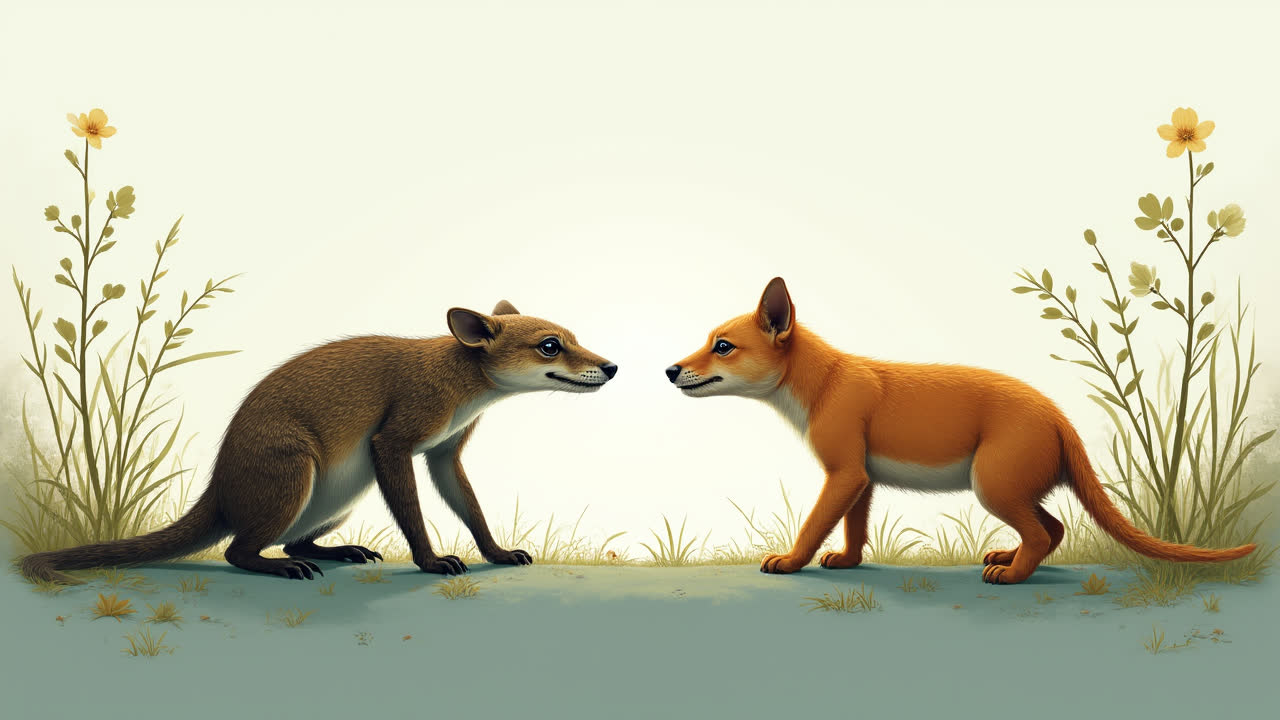
Have you ever wondered how plants and animals manage to survive in constantly changing environments? The natural world is full of incredible examples of organisms adjusting to their surroundings. When it comes to these adjustments, two terms often come up: acclimation and adaptation. Though they might sound similar, they represent fundamentally different biological processes that occur on vastly different timescales.
I've always been fascinated by how living things respond to environmental changes—whether it's a tree changing its leaf structure during different seasons or how certain species evolve over generations to thrive in specific habitats. In this article, we'll explore the crucial differences between these two survival mechanisms and why understanding them matters for everything from conservation to evolutionary biology.
What is Acclimation?
Acclimation (sometimes called acclimatization) is a relatively quick process that occurs within an individual organism's lifetime. It involves physiological, behavioral, or morphological adjustments in response to environmental changes. Think about what happens when you travel to a high-altitude location—your body gradually produces more red blood cells to compensate for lower oxygen levels. That's acclimation in action!
What makes acclimation particularly interesting is its reversible nature. When environmental conditions return to normal, the organism typically reverts to its original state. For example, many plants exhibit seasonal changes in leaf structure or metabolism depending on temperature and light availability. These adjustments don't involve any genetic changes—they're simply the organism's way of maximizing performance under changing conditions.
Acclimation responses can happen surprisingly quickly. Some changes occur within hours or days, like when your skin tans after sun exposure (a form of acclimation that protects against UV damage). Others may take weeks to develop fully, such as adjustments to different temperature regimes. The key point is that these changes happen within a single generation and don't alter the organism's genetic makeup.
Common examples of acclimation include:
- Adjustments to changes in altitude
- Responses to temperature fluctuations
- Modifications due to changes in humidity
- Adjustments to different photoperiods (day length)
- Responses to pH changes in the environment
At the cellular level, organisms often respond to environmental stress by changing their biochemistry. Cold temperatures, for instance, might trigger changes in cell membrane composition to maintain flexibility. The organism might also express special proteins (like heat shock proteins) that help protect cellular structures during temperature extremes. These mechanisms allow for rapid adjustment without waiting for genetic changes to occur.
What is Adaptation?
Adaptation represents a completely different timescale and mechanism compared to acclimation. Rather than occurring within a single lifetime, adaptation unfolds over many generations through the process of natural selection. It involves genetic changes that become established in a population, enhancing the organism's fitness in its environment.
Unlike acclimation, adaptation produces novel phenotypic traits that have functional roles in the environment. These traits emerge through genetic mutations and are then subject to selection pressures. If a trait provides a survival or reproductive advantage, it becomes more common in subsequent generations. This is how species gradually become "fitted" to their environments over evolutionary time.
One fascinating aspect of adaptation is that it's generally irreversible on a short timescale. Once a population has genetically adapted to specific conditions, those adaptations remain even if environmental conditions temporarily change. The process of reversing adaptations would require another long period of selection in the opposite direction.
Adaptation is measured through changes in gene frequencies within a population rather than through changes in individual organisms. It's truly a population-level phenomenon that contributes directly to the evolutionary process. Over time, adaptations can lead to speciation—the formation of new species that are specialized for particular ecological niches.
Some remarkable examples of adaptation include:
- Mimicry, where species evolve to resemble objects or other organisms
- Camouflage that matches specific environments
- The evolution of antibiotic resistance in bacteria
- Development of specialized feeding structures
- Co-evolution between species (like flowering plants and their pollinators)
Key Differences Between Acclimation and Adaptation
Now that we've explored both processes individually, let's directly compare acclimation and adaptation to highlight their key differences. I've often found that understanding these distinctions helps clarify how organisms respond to environmental challenges at different scales.
| Characteristic | Acclimation | Adaptation |
|---|---|---|
| Timeframe | Occurs within an organism's lifetime (hours to weeks) | Occurs over multiple generations (evolutionary time) |
| Scope | Individual organism | Population or species |
| Genetic changes | No genetic alterations | Involves changes in gene frequencies |
| Response type | Short-term, reversible | Long-term, generally irreversible |
| Mechanism | Physiological, biochemical, or behavioral adjustments | Natural selection acting on heritable variation |
| Phenotypic novelty | Does not produce novel phenotypic traits | Produces novel phenotypic traits through mutations |
| Evolutionary contribution | Does not directly contribute to evolution | Essential component of evolutionary processes |
| Trigger | Usually temporary environmental changes | Persistent environmental pressures |
Why Understanding These Differences Matters
The distinction between acclimation and adaptation isn't just academic—it has real-world implications for how we understand biological responses to environmental change. In our rapidly changing world, this understanding becomes increasingly important for conservation efforts, agriculture, and even human health.
For conservation biologists, knowing whether a species can acclimate to changing conditions or whether it requires evolutionary adaptation to survive is crucial. If a threatened species relies primarily on adaptation to cope with environmental changes, it may be at greater risk when facing rapid climate shifts, as adaptation simply takes more time than acclimation. Species with limited genetic diversity might also have reduced adaptive potential, making them more vulnerable.
In agriculture, understanding these processes helps in developing crop varieties that can either acclimate to variable conditions or that have adaptations for specific environments. Breeding programs often attempt to accelerate adaptation artificially by selecting for desirable traits, essentially speeding up what would be a much longer natural process.
Even in medicine, these concepts have relevance. Bacterial resistance to antibiotics is a form of adaptation, occurring through natural selection of resistant strains. Understanding this process helps in developing strategies to minimize resistance development. Similarly, understanding how the human body acclimates to different conditions (like altitude or temperature) has applications in sports medicine and treatment of various health conditions.
The Interplay Between Acclimation and Adaptation
While I've emphasized the differences between acclimation and adaptation, it's worth noting that these processes don't operate in isolation. In fact, they often work together in fascinating ways to help organisms survive in changing environments.
In some cases, acclimation responses might provide a short-term "buffer" that allows populations to survive until adaptive changes can occur. This is sometimes called the "buying time" hypothesis. For example, a plant species might initially acclimate to drought conditions through physiological adjustments, which allows the population to persist long enough for drought-resistant genetic variants to increase in frequency through natural selection.
There's also growing evidence that some acclimation responses can be transgenerationally inherited through epigenetic mechanisms (changes that affect gene expression without altering the DNA sequence itself). This creates an interesting middle ground between pure acclimation and genetic adaptation, where environmental experiences of parents might influence offspring phenotypes without changing the underlying genetic code.
Recent research has even suggested that the capacity for acclimation itself can be subject to natural selection. This means that some species might evolve to be more "acclimation-capable" than others—essentially adapting to be better at acclimating! This phenomenon, sometimes called "adaptive plasticity," represents a fascinating intersection of these two fundamental biological processes.
Frequently Asked Questions
Can acclimation eventually lead to adaptation?
While acclimation itself doesn't directly cause genetic changes, it can potentially influence the direction or rate of adaptation over evolutionary time. If acclimation allows organisms to survive in new conditions, it provides the opportunity for natural selection to act on any genetic variants that might perform better under those conditions. This concept, known as the "Baldwin effect," suggests that the ability to acclimate might "buy time" for genetic adaptations to emerge. However, the acclimation response itself isn't inherited genetically—only the capacity for that response might be subject to natural selection.
How quickly can adaptation occur in nature?
The rate of adaptation varies enormously depending on factors like generation time, population size, genetic diversity, and the strength of selection pressure. In organisms with short generation times, like bacteria or some insects, adaptation can occur relatively quickly—sometimes within just a few years or even months under strong selection. For example, bacterial adaptation to antibiotics can emerge in clinical settings within months. However, for organisms with longer generation times, like large mammals or trees, adaptation typically unfolds over hundreds or thousands of years. Climate change represents a particularly challenging scenario because environmental changes are happening faster than many species can adapt through natural selection.
Are humans still adapting through natural selection?
Yes, humans are still evolving through natural selection, though the process looks different than it did in our ancestors. Modern medicine, technology, and cultural practices have changed many selection pressures, but haven't eliminated them entirely. Recent studies have identified ongoing adaptive changes in humans relating to lactose tolerance, altitude adaptation, resistance to certain diseases, and metabolism. Cultural and technological developments have also created new selection environments. For instance, agricultural societies created selection pressures favoring lactose tolerance. However, cultural adaptation—our ability to change our environment and behavior through technology and social learning—often occurs much faster than genetic adaptation in humans, allowing us to thrive in diverse environments without waiting for genetic changes.
Conclusion
Understanding the distinction between acclimation and adaptation gives us a deeper appreciation for the complex ways organisms respond to environmental challenges. While acclimation provides a rapid, flexible response within an individual's lifetime, adaptation shapes species over evolutionary time through genetic changes and natural selection.
In our rapidly changing world, both processes play crucial roles in determining which species will thrive and which may struggle. As we face unprecedented environmental challenges, from climate change to habitat loss, this understanding becomes increasingly important for conservation efforts, agriculture, and ecosystem management.
The next time you notice a plant changing its leaf orientation throughout the day to track the sun, or marvel at a desert animal's water conservation adaptations, you'll recognize whether you're witnessing acclimation or the results of long-term evolutionary adaptation. Both represent nature's remarkable solutions to the challenge of survival in a changing world.